


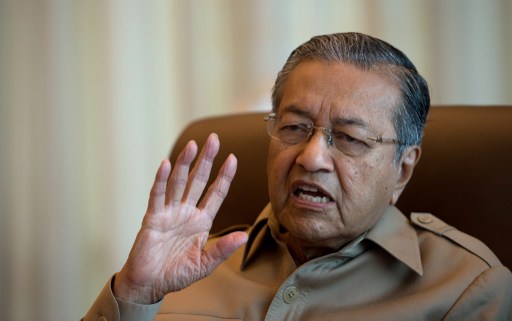


KUALA LUMPUR, April 6 — Tun Dr Mahathir Mohamad is on new crusade against Putrajaya but is unlikely to sway the crucial “middle ground” in the same way he did ahead of Election 2008, according to political observers.
While the former prime minister warned that Umno and Barisan Nasional (BN) risked losing the next general election over unresolved allegations involving 1 Malaysia Development Bhd and the murder of Mongolian Altantuya Shaariibuu, his remarks are seen resonating largely with hardcore opposition supporters.
Datuk Saifuddin Abdullah said of greater concern was the “middle ground” — youths, students, teachers, lecturers, intellectuals, professionals, technocrats and entrepreneurs — that form a third of voters who do not identify with Dr Mahathir.
“The middle ground looks for progressive political thoughts, for example on new politics, democracy, freedom and human rights. Dr M does not represent those thoughts.
“If the middle ground is not voting BN in GE14, it is not because of Dr M,” the former deputy higher education minister told Malay Mail Online when contacted yesterday, referring to Dr Mahathir by his nickname as well as the 14th general election due by 2018.
Saifuddin also said that unlike the time of Tun Abdullah Ahmad Badawi whom Dr Mahathir hounded out of office, Prime Minister Datuk Seri Najib Razak was “still very much in control” of Umno.
Political analyst Wan Saiful Wan Jan said that while Dr Mahathir’s remarks would affect public perception of the ruling administration and the prime minister, these were unlikely to affect voter support towards BN in a meaningful way.
According to the chief executive of the Institute for Democracy and Economic Affairs (IDEAS) think tank, this was because Malaysians have a very entrenched sense of politics and many are already firm on the parties they support.
“I don’t think it’ll have that big of an impact even to the fence-sitters,” Wan Saiful said.
According to Wan Saiful, Dr Mahathir’s criticism was now directed specifically at Najib and concerning the party’s political survival, thereby limiting the relevance of his criticism to within Umno’s members and supporters, with only an “indirect influence” further afield.
While a favourite with the media for his acerbic comments and brutal assessments, Dr Mahathir’s clout may also not be what it once was; over a decade in retirement has eroded much of the deference that he previously commanded.
Once either feared or respected by government leaders, Dr Mahathir has increasingly found himself on the receiving end of public rebukes that would have been imaginable during his 22-year rule.
“He still has some influence but less than the media tends to give (him) credit for. Blog hits are not a good indication of support from the key players in our politics and society,” Dr Lim Teck Ghee, the director of the Centre for Policy Initiatives, told Malay Mail Online.
But not all are prepared to discount the worth of Dr Mahathir’s remaining influence and some are banking on the fact that the former prime minister still wields a loyal following among supporters.
DAP MP Zairil Khir Johari said those who underestimate Dr Mahathir do so at their own peril, pointing out that the latter was “responsible, in one small way or another, in the downfall of every single prime minister this country has ever had, except for Tun Razak”.
“You do not make headlines if you are irrelevant,” Zairil said, noting that questions the opposition have asked for years have been given new weight simply because they now came from Dr Mahathir.
“However, whether it has an effect come GE14 is something no one can predict. It all depends on how long the pressure is sustained. However, what is clear is that the questions cannot go on unanswered,” the executive director of think-tank Penang Institute told Malay Mail Online.


