


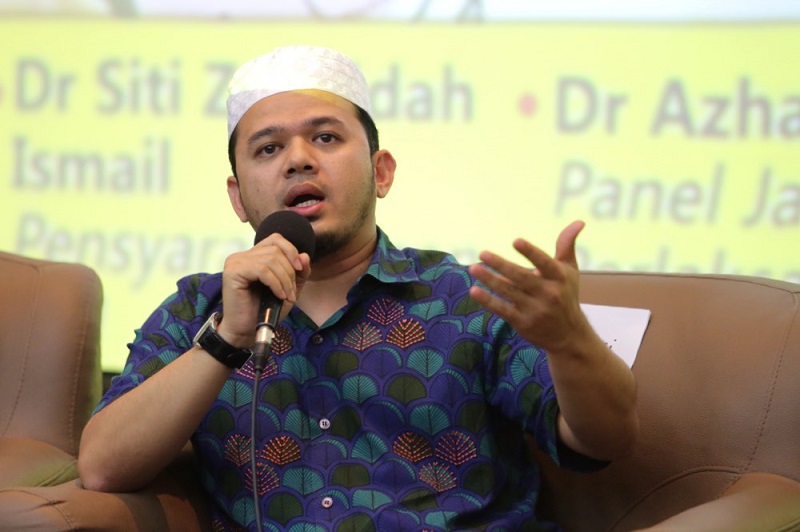


KUALA LUMPUR, April 2 — Islamic cleric Dr Fathul Bari Mat Jahya is the latest person to support the proposal to impose Shariah criminal law on all Malaysians regardless of their faith.
Echoing calls by some Islamist groups in the country, the Umno cleric however cautioned against its hasty enforcement at a forum last night, saying Muslims are not in a race to see which government will be the first to roll out the Islamic penal code.
“There are some things on which my opinion differs, especially involving making the punishments reserved solely for Muslims,” Fathul said at the forum organised by the University of Malaya Muslim Students Association here last night.
Fathul said he disagreed with PAS-led Kelantan’s Shariah Criminal Code (II) Enactment which was passed this month, in which only Muslims will be subject to the strict Islamic penal code
The Umno Youth executive councillor said hudud should also apply to non-Muslims for crimes that involve the public, unlike offences that do not, such as consuming alcohol.
“We cannot have an act where some people are amputated, but some are not. If we have five people stealing, three Muslims and two not, are we going to amputate the hands of the three, but not the two?” Fathul asked.
Islamist groups Ikatan Muslimin Malaysia and Hizbut Tahrir Malaysia have been among those who have not only called for hudud to cover both Muslims and non-Muslims, but urged for it to be implemented at the federal level.
Despite that, Fathul mooted for an independent commission comprising experts in the Federal Constitution, judiciary, security and economy to scrutinise the implementation of Shariah laws and hudud.
“What we want is not the question of who wins and who is the fastest… This is for non-Muslims to not view us as just to punish others, to amputate others, to decapitate others, to whip others,” added Fathul.
On March 19, the Kelantan state assembly approved the Shariah Criminal Code (II) (1993) 2015 Enactment with 31 votes from PAS lawmakers supported by 12 from Umno.
PAS now plans to put forward two private members’ bills in Parliament to enable Kelantan to enforce hudud ― one will seek approval for the state to legislate punishment for crimes under the Penal Code.
The other seeks to amend the Shariah Courts (Criminal) Jurisdiction Act 1965 to enable Islamic courts to mete out punishments like the death penalty for apostasy and amputation of limbs for theft.
University of Malaya’s head of Shariah Law Department Dr Siti Zubaidah Ismail told the forum that should the bills get passed in the Parliament, other states would swiftly seek to change its own Shariah laws to implement hudud punishments.
“If the amendment succeeds, this will affect the laws nationwide. The 14 states’ enactment, they will not just sit and stare. They will amend their offences provisions according to Islamic principles,” Siti Zubaidah suggested.
Lawyer Datuk Ambiga Sreenevasan however insisted that she will never support hudud laws in Malaysia even when their implementation is just, pointing out the unconstitutional nature of such laws.
“Sorry, but I cannot agree with hudud. Even when fairness is added to it, because in my opinion it is contrary to the Federal Constitution.
“The question is, do we want to follow the Federal Constitution or not?” Ambiga asked the audience
Ambiga took issue with the way Kelantan tabled the bill, since the state is trying to legislate a federal matter, and the secrecy that shrouded it prior to its debate.
“None of us saw the bill. If we didn’t see it, how could we determine whether the bill was in accordance to the Federal Constitution or not?
“Without us knowing, it was passed. Don’t you think we all have the right to see the bill and discuss it?” she asked the lecture hall, and received a resounding “Yes” in reply.
Several legal experts have voiced similar arguments, including former Chief Justice Tun Abdul Hamid Mohamad who asserted at a separate forum in Putrajaya yesterday that Kelantan’s Shariah Criminal Code 1993 tabled on March 19 is unlawful as the PAS-led state government did not obtain parliamentary approval for its draft.
“My issue is if you want to implement hudud, do it properly, the legal way. That’s what I’m asking for. Bring it over to the Parliament, and debate it,” Ambiga added.
Other panellists at the forum were Dr Azhar Abdullah, a member of Kelantan’s hudud implementation committee, and Prof Dr Nazari Ismail, the dean of the University of Malaya’s Business and Accountancy Faculty.


