




KUALA LUMPUR, May 23 — The team searching for Flight MH370 is convinced it is looking in the right location for the missing plane, even as the frustrating lack of physical evidence leads critics to question whether the hunt is in the wrong hemisphere.
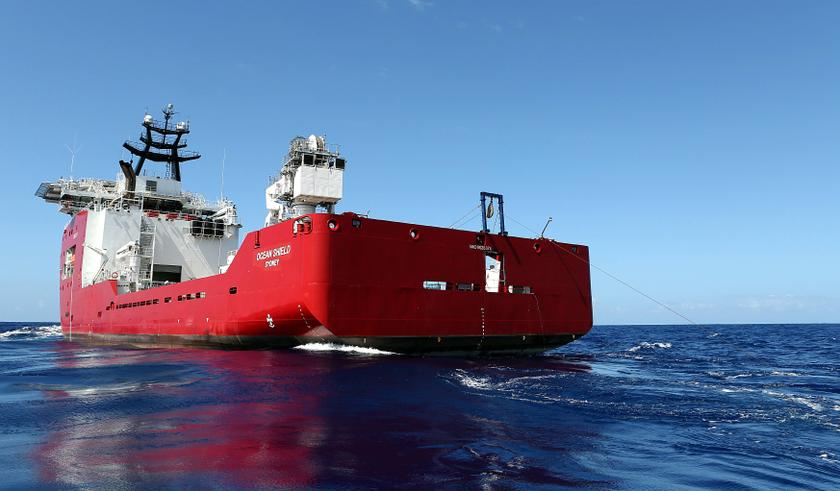
Speaking during a press conference in Australia, Joint Agency Coordination Centre (JACC) chief Angus Houston announced that the HMS Ocean Shield had now returned to the area in the Indian Ocean where four acoustic signals — previously believed to be from the plane’s voice and data recorders — were detected in early April.
The scouring of the location that did not previously yield any physical sign of the missing plane is, however, prompting more demands from observers and families of those on board the Malaysia Airlines (MAS) plane for justification that the search should be concentrated there.
“I know that there’s been speculation about whether it’s north or south.
“I’m absolutely certain that the southern corridor was the right corridor, that the aircraft turned left out of the Malacca Strait and we are looking in the right broad area,” Houston said yesterday.
Recordings of the four pings are part of a cache of information that includes satellite communications data used to narrow down the search area for MH370 to its current location.
While information regarding the plane’s communications with UK firm Inmarsat’s satellite is being prepared for release, the refusal to also make available clips of captured acoustic signals is now leading to suspicions of their origin and relevance to the search.
Yesterday, Angus was less emphatic about the pings that authorities previously said could only have come from the “black boxes”, saying only that it was too early to discount them.
On Tuesday, the Malaysian Department of Civil Aviation and Inmarsat jointly said they will make public “the common descriptor” or the raw data from satellite information recorded when the flight disappeared on March 8, with the assistance of the UK’s Air Accidents Investigation Branch.
Previous refusal to disclose the proprietary data that defined the two divergent arcs — one between Thailand and Kazakhstan, and another from Indonesia to the southern Indian Ocean — and the methodology used in the “Doppler” analysis that ruled out the northern corridor has fuelled suspicions and conspiracy theories over the search.
This week, families of those on board MH370 also released a detailed 18-page report challenging much of the information previously released by authorities who are still to find a single piece of the plane that is now missing for over two months.
MH370 disappeared after leaving Kuala Lumpur for Beijing on March 8 with 239 people on board.
After two months of intensive search, the hunt has now been scaled back to an undersea operation in the southern Indian Ocean west of Australia that is expected to take between eight to 12 months.


