




KUALA LUMPUR, May 20 ― Malaysia’s Department of Civil Aviation (DCA) will be releasing to the public the set of communication logs that led to the belief that flight MH370 ended in the Indian Ocean.
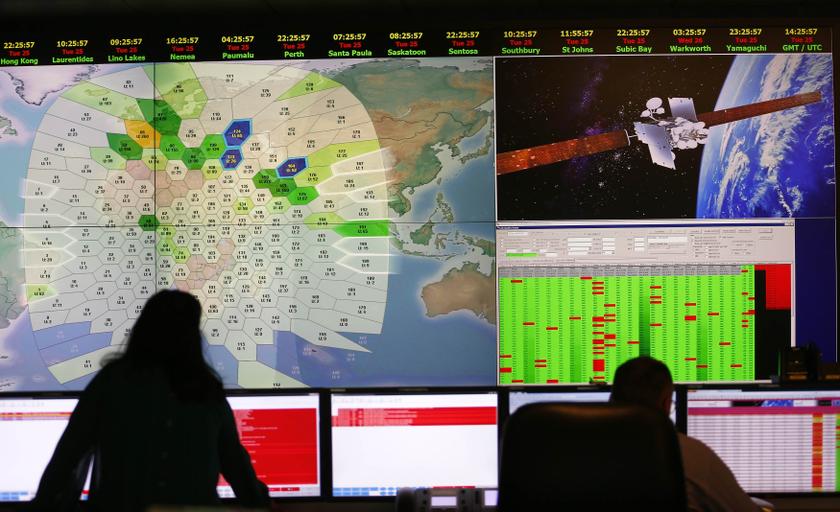
In a joint statement today, the DCA and UK based satellite communications firm Inmarsat said that they will make public “the common descriptor” or the raw data from satellite information recorded when the flight disappeared on March 8, with the assistance of the UK’s Air Accidents Investigation Branch.
“In moving forward, it is imperative for us to provide helpful information to the next of kin and general public ― which will include the data communication logs as well as relevant explanation to enable the reader to understand the data provided,” the statement said.
The data is one of “many elements” pertaining to the investigations, it said, adding that the parties are working together to ensure “greater transparency” by releasing to the public the logs and analysis of the technical descriptions.
Last week, Acting Transport Minister Datuk Seri Hishammuddin Hussein told a press conference that the raw data was not in Malaysia’s hands and that any request for its release should be communicated to Inmarsat. But the firm denied the minister's claim, and insisted that it had surrendered all information on MH370 over to the investigations team currently based in Malaysia.
“Inmarsat’s raw data was provided to the investigation team at an early stage in the search for MH370,” Inmarsat said in a statement, according to a news report by the American cable and satellite TV channel CNN, last week.
According to CNN, Inmarsat “blames” Malaysia for failing to release the information.
The firm also went on to defend its data, which has come under heavy criticism by foreign scientists and families of passengersaboard the aircraft, saying it has “high confidence” in its analysis of the plane’s last-known location.
It was the analysis of Inmarsat’s data that led to the conclusion that the Malaysia Airlines jetliner had ended in the wild waters of the southern Indian Ocean, thousands of miles away from the plane’s original flight path to Beijing.
The Boeing 777 aircraft has been missing for over 70 days since it left Malaysia with 239 people on board.
Initial search efforts were concentrated on the waters between Malaysia and Vietnam where MH370 lost contact with the Subang Air Traffic Control.
But Inmarsat later confirmed more than a week later that satellites picked up electronic signals or “handshakes” from the aircraft well after it disappeared from sight, and that these signals had likely come from somewhere over the southern Indian Ocean.
The international hunt for MH370 then moved to the large ocean swathe somewhere off the coast of Perth in Australia, despite doubts raised by experts over the aircraft’s drastic change of direction.
But until today, there has still been no sign of the missing aircraft.
The hunt has now gone underwater, after experts confirmed that the aircraft’s black boxes have completely run out of batteries and would no longer be releasing signals.
Some 350 family members of passengers aboard the jetliner have been demanding that raw data be released for independent analysis, preferably to the Woods Hole Oceanographic Institution (WHOI), the non-profit research facility responsible for finding the remains of missing Air France Flight 447 in 2009, almost two years after it crashed into the Atlantic Ocean.
Amid questions about how the investigation has been conducted, the family members made the demand in an open letter sent to the leaders of Malaysia, China and Australia on May 8.


