




KUALA KEDAH, May 19 — Mohd Zamani Yaakob, 38, an electronics engineering graduate from the University of Kuala Lumpur toils hard to earn as little as RM5 a day fishing in the sea off Kedah, Malaysia’s rice bowl state.
“I pay RM87 a day for fuel to get me out fishing for a day and that is if it is subsidised. If it’s not then I have to pay RM126 … and I sometimes don’t even earn enough to pay for fuel.
“My life is a wreck… so to me my rice bowl is definitely more important than hudud,” a weary-looking Zamani told The Malay Mail Online as he prepared to head out to sea.
Rival parties Umno and PAS are vying for support in Malaysia’s Malay heartlands but struggling to make ends meet, Zamani and many rural voters like him feel disconnected from the politicians in Putrajaya and elsewhere.
For decades, though, Kedah has been a key voter base for the ruling Barisan Nasional (BN) coalition.
While the Islamist PAS was adopting moderation in its attempt to broaden its appeal, Umno grew more conservative to win over supporters turned off by its rival’s shift. And it paid off.
In the general election last year, Umno won 88 seats, 9 more than in 2008. Its improved performance was largely credited to support from the rural voters in the Malay heartland.
But PAS is pushing back, fighting for the hearts and minds of the Malay-Muslim voter with a renewed emphasis on religion.
Its ace in hand — the party believes — is hudud, which it is now agitating to impose in Kelantan, some two decades after passing state laws to implement the strict Islamic penal code.
Rice bowl reputation weighs on state
Kedah, the home state of two of Malaysia’s prime ministers, has been under BN rule since the country gained independence from the British in 1957 save for a single term between 2008 and 2013.
But the state remains one of the country’s poorest.
According to official data, average household income in Kedah is RM3,425, the second lowest in Malaysia.
The only state where residents earn less is Kelantan, with an average household income of RM3,100 a month.
Yet the Kelantan government appears to be concentrating its energies to push for hudud.
A straw poll conducted by The Malay Mail Online during its visit here found that most saw hudud simply as politics.
“This hudud issue is only used to get support. Bread-and-butter issues should be the main agenda. While you talk about hudud Malays here can’t even find jobs,” Zamani said.
According to the state’s Malay Chamber of Commerce chief, Ahmad Fitri Othman, the federal policy to keep Kedah an agricultural “rice bowl state” is constraining business efforts.
Ahmad Fitri said policies and red tape in the Kedah state government have made it difficult to re-zone the paddy fields as industrial areas, deterring manufacturers from setting up shop here and costing jobs.
“Kedah has been about agriculture but industry is really the way… but it’s really hard. Investors cannot invest here because of the policies,” he told The Malay Mail Online in a brief interview at his office in Alor Setar.
Ahmad Fitri said hudud would further compound Kedah’s economic problems as it might spook investors.
“If the non-Malays are educated about hudud then maybe they would say its ok but we have a weak information system so they won’t understand and this would make them run away,” he said.
Bread and butter issues
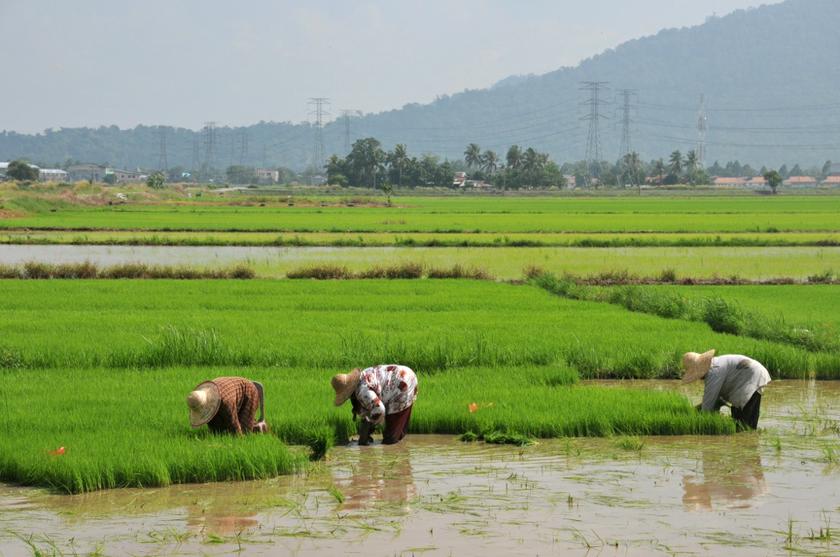
Din, a middle-aged man working on his paddy field, told The Malay Mail Online that life for people like him remains tough despite the government’s pledge to help rice growers.
“We have to keep on borrowing. Sometimes the harvest is not good enough,” he said.
Amid such pressing concerns, Din and others like him said hudud and other controversies such as the oft-reported threat of Christian proselytisation were far from their minds.
Rather than religious issues, those polled by The Malay Mail Online felt that the government should work on convincing voters that the introduction of the goods and services tax (GST) in April next year will not lead to a surge in inflation.
“I don’t care about hudud. What I care about is my livelihood and how to stretch my income to cover costs. Now, GST is really an issue that I’m more worried about because it means I have to pay more for things,” said Ismail Rahman, a 31-year-old salesman.
Even a civil servant from the middle income bracket believed that hudud or religious issues are secondary next to the economy.
“I am worried about the cost of housing. The GST. Hudud is a religious thing we as Muslims know but they are things we deal with personally,” Muhyiddin Yusof, a 29-year-old lecturer at a public university said.
In 1993, the PAS state government passed the Kelantan Syariah Criminal Code Enactment II, allowing it to impose the strict Islamic penal code in the state. But the laws have not been implemented.
PAS is now looking for parliamentary approval to implement hudud. It plans to put forward two private members’ bills in parliament. One seeks approval for unconventional punishments, some of which are for offences already covered in the Penal Code. The the other seeks to empower Sharia courts to mete out the unconventional punishments.
In all previous attempts, PAS had been frustrated by BN tactics to prevent any vote by employing a “talking out” tactic where BN MPs have been allowed to speak for an extended period of time to prevent such private members’ bills from even being debated.
However, Umno leaders have now said they have no objections to the implementation of hudud and have constantly challenged PAS to try to introduce the law.


