


BEIJING, June 7 — There is a version of Chinese fine dining that the world has long been sold: elaborate banquet halls, exotic ingredients like shark’s fin, lazy Susans the size of a small satellite dish, and a deep reverence for tradition.
Beijing, as the country’s capital for eight centuries, has perhaps been an unlikely, yet historically fitting custodian of this idea.
The city’s culinary identity has long been defined by the grandeur of its past: the Forbidden City’s kitchens, the Qing dynasty’s elaborate court cuisine, and, of course, Peking duck, the roasted icon of Chinese cuisine that’s recognised the world over.
But the fine dining landscape in Beijing in 2026 couldn’t look more different.
The buzzy Sanlitun area in the city’s Chaoyang district is filled with restaurants, bars, and what I call monuments to consumerism: huge multi-storey standalone boutiques for brands like Dior, Hermès and Louis Vuitton.
At one point, it was also home to the world’s largest Adidas store.
Amid all of this, two restaurants are pushing the boundaries of what modern Chinese fine dining looks like, in ways that could hardly be more different from each other.
Old Tower
Despite the name, Old Tower is a relatively new restaurant that opened only in September last year.
The name has two meanings: it is a reference to Beijing’s Bell and Drum towers, and it is also the Chinese nickname for its chef, Talib Hudda, 老塔, lao ta, literally meaning “old” and “tower”.
Hudda’s résumé reads like that of a chef destined for a different city entirely.
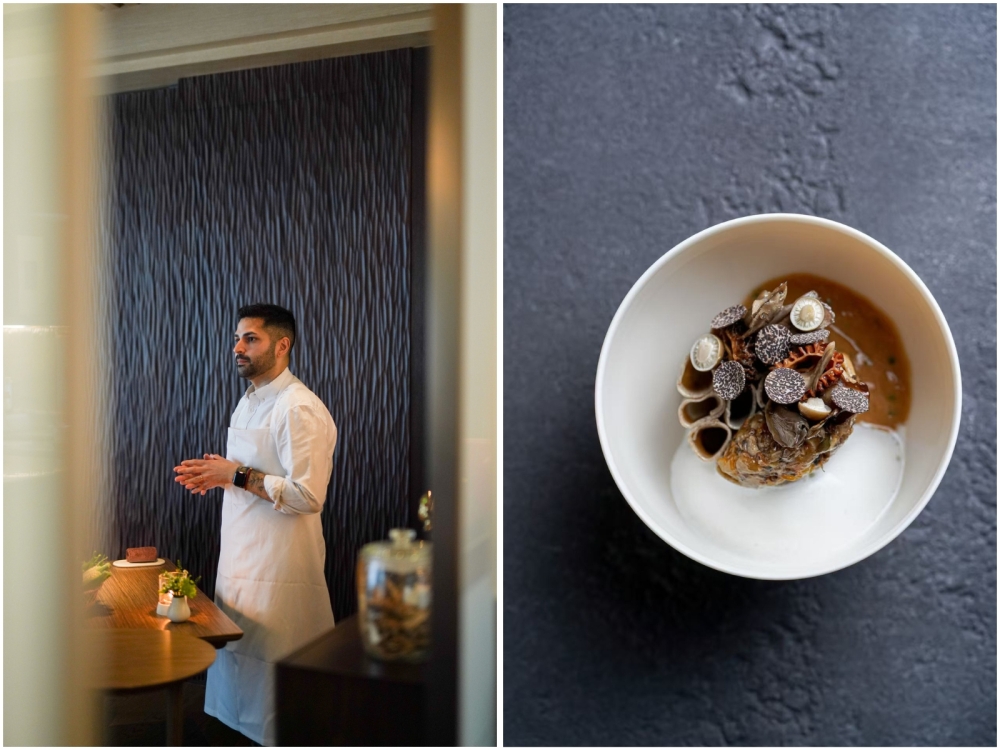
Trained in Copenhagen at Marchal and Marv & Ben, kitchens where modern French and Nordic approaches dominate, the Canadian arrived in China over a decade ago, cutting his teeth at The Georg in Beijing before eventually opening Refer, his first restaurant, in Sanlitun.
Weaving together Chinese produce with a Nordic-inspired approach, Refer became the first restaurant in Beijing to land on the Asia’s 50 Best Restaurants list.
Old Tower is his second act in the same neighbourhood. With Refer behind him, Hudda turns his attention to a more specific argument: that Northern China’s ingredients, many of them sourced from rural areas and fishing grounds that rarely make it onto fine dining menus, are undervalued and ripe for reinvention.
The pescatarian menu that results is neither European nor Chinese, shaped by 11 years of eating his way through this country’s larder.
What ties it together is a consistent respect for traditional technique and the original character of each ingredient, with influences that stretch well beyond any single culinary tradition.
That shows up in the details.
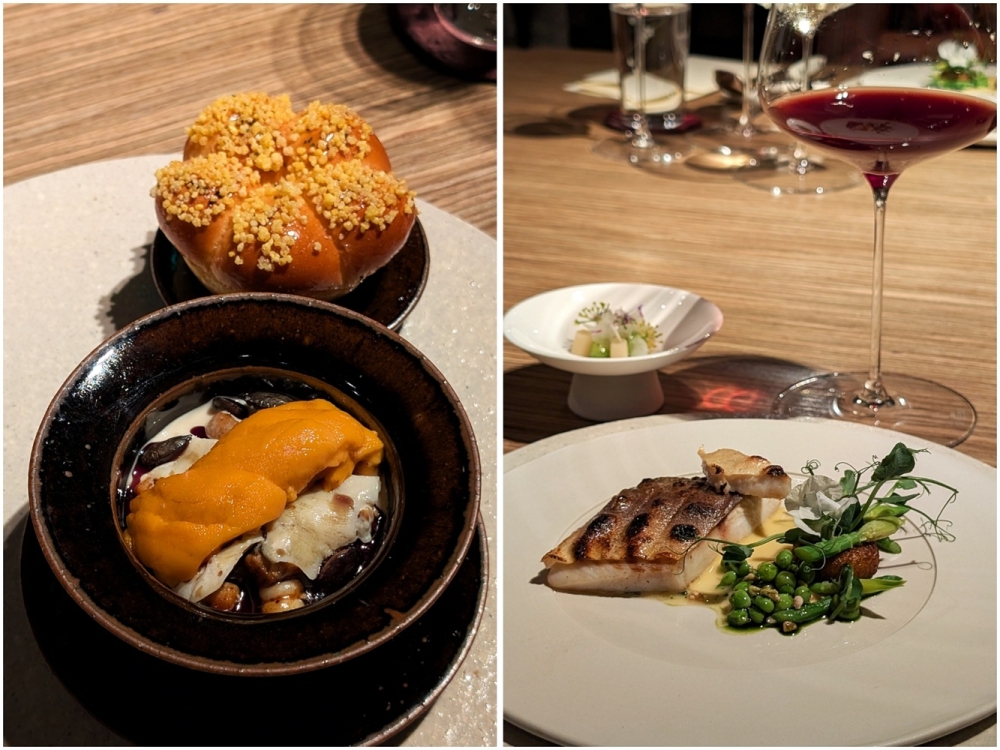
The yellow corn chawanmushi arrives with conch, roasted kohlrabi, Sichuan chilli oil, and a finish of Austrian pumpkin seed oil, with cornbread on the side — corn being one of the most important agricultural products in northern China.
The 栲栳栳 kao lao lao, a traditional noodle from Shaanxi, is reimagined as macaroni and cheese with 36-month-aged Comté and a wild mushroom ragù made from 台蘑 tai mo, a prized wild mushroom from Mount Wutai in Shanxi.
The grilled dry-aged pomfret belly comes with a seasonal Chinese vegetable that Hudda introduces to the table as “not asparagus, but like asparagus”, which tells you something about both his sense of humour and his relationship with the produce he works with.
The eclectic playlist, curated by the staff and jumping from Al Green to The xx, Springsteen to Men I Trust, reflects the creative, free-flowing spirit of the restaurant’s cuisine.
Lamdre
Lamdre takes its name from a Tibetan Buddhist meditative system, one that holds that the path and the result are inseparable — which sounds, on paper, designed to woo a certain kind of diner.
By the end of the meal, it feels less presumptuous than it did at the start.
It is a fully vegan restaurant, having made the shift from vegetarian in November 2025.
It is also one of the most decorated kitchens in Beijing, holding two Michelin stars and ranked No. 17 on Asia’s 50 Best Restaurants in 2026, the only Beijing entry on that list.
Headed by chef Dai Jun and opened in late 2022 by owner Zhao Jia, the restaurant’s rise has been built on a guiding philosophy that Zhao articulates simply: “中国是世界的花园” — China is the garden of the world.
Dai Jun’s path here was, by his own admission, accidental.
Classically trained in Cantonese and Chaozhou cooking, he went for an interview at King’s Joy, Beijing’s pioneering vegetarian fine dining institution, only to discover mid-conversation that the kitchen served no meat.
He took the job anyway, and the rest of his career followed from that moment.
At Lamdre, the menu leans on lesser-seen native Chinese produce, and the kitchen’s seasonal focus shifts by region.
On this visit, the menu drew from Fujian, with influences ranging from Fujianese to Fuzhounese to Hakka cuisine.
One course brings together bamboo shoots marinated in red rice lees and grilled, pickled radish, and Chinese toon with broad bean sauce.
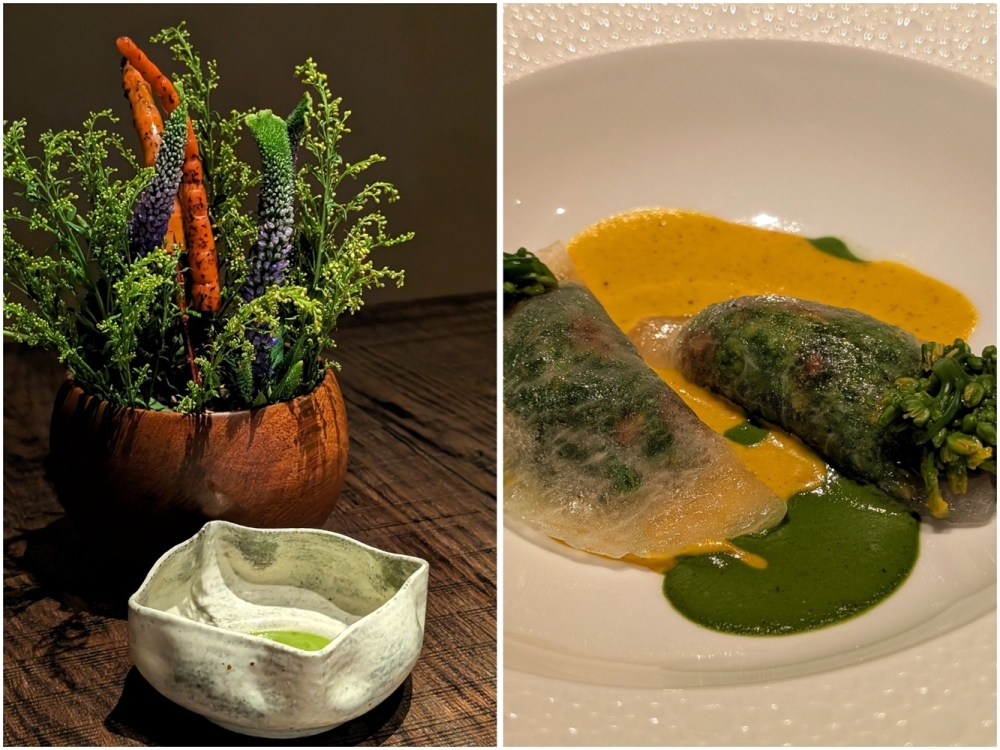
Another arrives as a dumpling, though not as one might expect: the wrapper is winter melon rather than wheat, filled with rapeseed blossoms, turnip, mushroom and olive, and served with basil sauce and fermented sweet pepper sauce.
What both restaurants share, beyond the same postcode, is a conviction that Chinese ingredients and traditions are not a constraint to work around, but the whole point — and that there is still plenty left to say about them.
Note: While Baidu Maps remains the most reliable way to navigate China, it can be a challenge for users who can’t read Chinese. Fortunately, there is an English alternative specifically for Beijing, available at https://web.beijingmap.cn/
Old Tower
4th Floor, Building N4,
Taikoo Li North Area,
Chaoyang, Beijing.
Open Wednesday to Sunday, 6-10pm
Tel: +86 139 1020 8150
Instagram: @oldtower_beijing
Lamdre
Room 01, 1F, Block 14,
Courtyard 4, Gongti North Road,
Chaoyang, Beijing.
Open daily, 11.30am-1.30pm, 6-10pm. Closed on Tuesdays.
Tel: +86 010 8597 8888
Instagram: @lamdre_beijing
* Follow us on Instagram @eatdrinkmm for more food gems.
* Follow Ethan Lau on Instagram @eatenlau for more musings on food and occasionally self-deprecating humour.


