




LONDON, June 5 — Emerging-market stocks rose, led by utility and financial companies, as the European Central Bank cut its deposit rate below zero to counter the prospect of deflation. Russia’s rouble rallied.
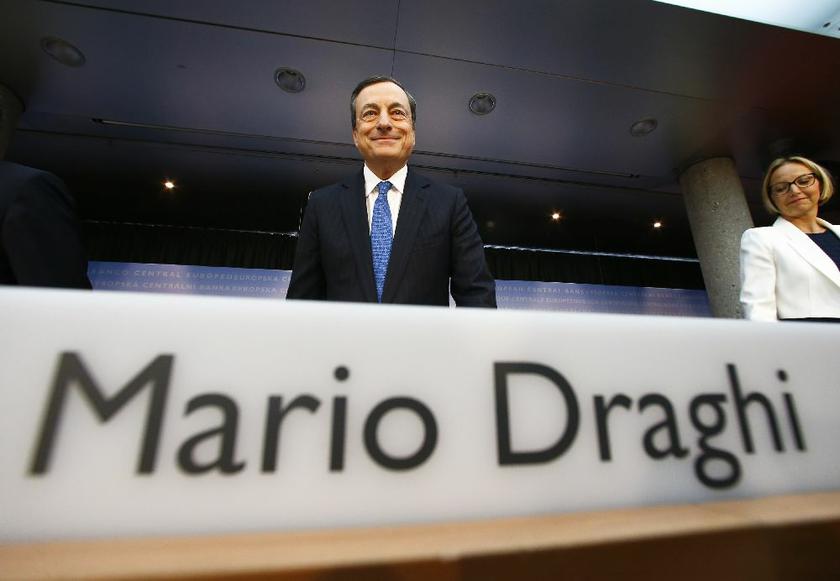
The MSCI Emerging Markets Index added 0.5 per cent to 1,035.79 by 1.45pm in London. ECB president Mario Draghi reduced the deposit rate to minus 0.10 per cent from zero, making the institution the world’s first major central bank to use a negative rate. The 21 nations in the gauge send about 30 per cent of exports to the European Union on average, data compiled by the World Trade Organisation show.
The rouble appreciated 0.5 per cent versus the dollar after the Group of Seven spared Russia more sanctions and the zloty was set for the highest since April 2013. Acer Inc and MediaTek Inc jumped after announcing a deal to develop wearable technologies. Samsung SDI Co climbed to a six-month high. Hungary’s shares advanced as industrial-output growth unexpectedly rose at the fastest pace in three years.
“The ECB’s decision is broadly in line with expectations,” Koon Chow, head of emerging-market strategy at Barclays Plc in London, said in an email.
The ECB cut its benchmark rate to 0.15 per cent from 0.25 per cent. Draghi said the ECB would introduce new, “targeted” offerings of liquidity to banks to encourage them to lend money to the real economy, with an initial size of €400 billion (RM1.8 trillion). Officials would also start work on purchases of asset-backed securities, he said.
US jobs
A report tomorrow will probably show US hiring slowed to 215,000 in May from 288,000 in April, according to a Bloomberg survey.
Emerging-market stocks should be able to trade “on a positive footing” after the ECB announcement, Chow said. “We warn against taking a more aggressive positive stance because of US payrolls data out tomorrow.”
The emerging-markets gauge has climbed 3.4 per cent this year and trades at 10.9 times projected 12-month earnings. The MSCI World Index has risen 3.5 per cent and is valued at a multiple of 15.1, according to data compiled by Bloomberg.
All 10 industry groups in the developing-nations index advanced, with measures of utility and financial companies increasing by at least 0.7 per cent. A sub-index of technology shares added 0.2 per cent, trading near its record-high reached on Tuesday. Acer rose 6.9 per cent to the strongest level since September 25, while MediaTek added 3.4 per cent.
Gauges in Turkey and Poland climbed, while the benchmark measure in Egypt jumped the most among more than 90 indices monitored by Bloomberg. The PX Index in the Czech Republic jumped 0.8 per cent.
Hungary gains
The BUX Index in Budapest increased 0.3 per cent, the most on a closing basis since Friday. Industrial production in Hungary expanded at a workday-adjusted 10.1 per cent in April, the fastest pace since February 2011, compared with the median estimate for 7 per cent growth in a Bloomberg survey of 13 economists.
Stocks rose in Qatar for the first time in four days, with the QE Index gaining 0.7 per cent, as the worst rout in the nation’s stocks in nine months was said to be creating a buying opportunity.
Egypt benchmark EGX30 Index jumped 4.7 per cent, the most in 11 months. Beltone Financial Holding SAE and two other investors is seeking to buy a 20 per cent stake in EFG-Hermes Holding SAE a day after Saudi Arabia’s King Abdullah called for an international effort to raise funds for the country’s battered economy.
The Borsa Istanbul 100 Index climbed 1.9 per cent, set for its highest close since June 2013. The WIG30 Index in Warsaw added 0.8 per cent, rallying for a fourth day to the strongest level in more than three months on a closing basis.
Zloty appreciates
Poland’s zloty strengthened 0.3 per cent versus the euro. South Africa’s rand added 1.1 per cent against the dollar after four days of declines, leading advances among emerging-market currencies.
The rouble rose for a second day as President Vladimir Putin prepared to meet European leaders at a G-7 leaders’ meeting in Brussels that favoured diplomatic efforts to resolve the Ukraine crisis.
The premium investors demand to own emerging-market debt over US Treasuries increased three basis points to 272, according to JPMorgan Chase & Co.
The Kospi Index fell 0.7 per cent in South Korea. LG Household & Health Care Ltd slumped 12 per cent in Seoul, the most since January 24. Vice chairman Cha Suk Yong sold 22,000 of his 32,000 shares, according to a regulatory filing on Tuesday. The sale might cause a “negative knee-jerk reaction” as the news was unexpected, Daiwa Securities Capital Markets wrote in a report.
Ringgit gains
Samsung SDI Co climbed 6.7 per cent to the strongest level since December 5, while Cheil Industries Inc surged 6.4 per cent. The companies said on Tuesday they would sell treasury shares to Samsung Electronics Co.
The Malaysian ringgit and Philippine peso strengthened for the first time in four days.
The Hang Seng China Enterprises Index of mainland companies climbed 0.5 per cent, while the Shanghai Composite Index rose for the first time in five days, up 0.8 per cent. Benchmark equity gauges in Taiwan, the Philippines, Malaysia and Thailand rose at least 0.1 per cent. — Bloomberg


