












KUALA LUMPUR, April 9 — When prices go up, will you stop ordering food deliveries first or stop eating outside at restaurants first?
In research unit Rakuten Insight’s latest monthly survey results on Malaysian consumers, the most popular choice for what they would cut down on first is dining out and cafes.
“When Malaysians have to choose between sacrificing the restaurant or the delivery app, they are consistently choosing to sacrifice the restaurant,” the research data arm of Rakuten Group said about its Malaysia Cost Pressure Pulse’s (MCPP) April 6 to April 8 survey results.
The survey showed that those who would reduce spending on meals outside increased from 52.9 per cent in March to 61.6 per cent in April (which is the category with the largest jump with 8.7 percentage points), while the food delivery and quick commerce category only had a 1.5 percentage point increase (30 per cent in March will cut this out first, 32 per cent in April).
Quick commerce refers to express delivery services offered on apps, such as for groceries or other goods.
So why will Malaysians still order food deliveries, but go out less to eat?
When asked by Malay Mail, Rakuten Insight Malaysia’s commercial research lead Min Yao Kong explained why Malaysians would cut back on dining out first, and less on food deliveries when they feel the financial squeeze.
“Dining out is a whole experience, you’re paying for the ambience, the occasion, the social element on top of the food. Moreover, it’s expensive.
“For instance, a meal for two in KL can easily run RM60-100. Delivery is RM25-50. So cutting the restaurant feels like an actual meaningful saving. Cutting delivery? Not so much,” he told Malay Mail.
“On top of that, you’re factoring in the fuel to get there and back. With RON95 prices adjusting and the general cost of driving increasing, that hidden cost of going out makes staying in, and ordering delivery an even easier decision to justify,” he added.
Ordering food deliveries has also become a necessity for those who do not have time to cook.
“Delivery is also just harder to give up because for a lot of households it’s not really a luxury anymore; it has replaced cooking.
“For dual income couples, parents, and people who commute long hours, the alternative isn’t just ‘cook instead’, it’s ‘find the time and energy to cook instead’,” he said.
Does the reduced BUDI95 quota affect you?
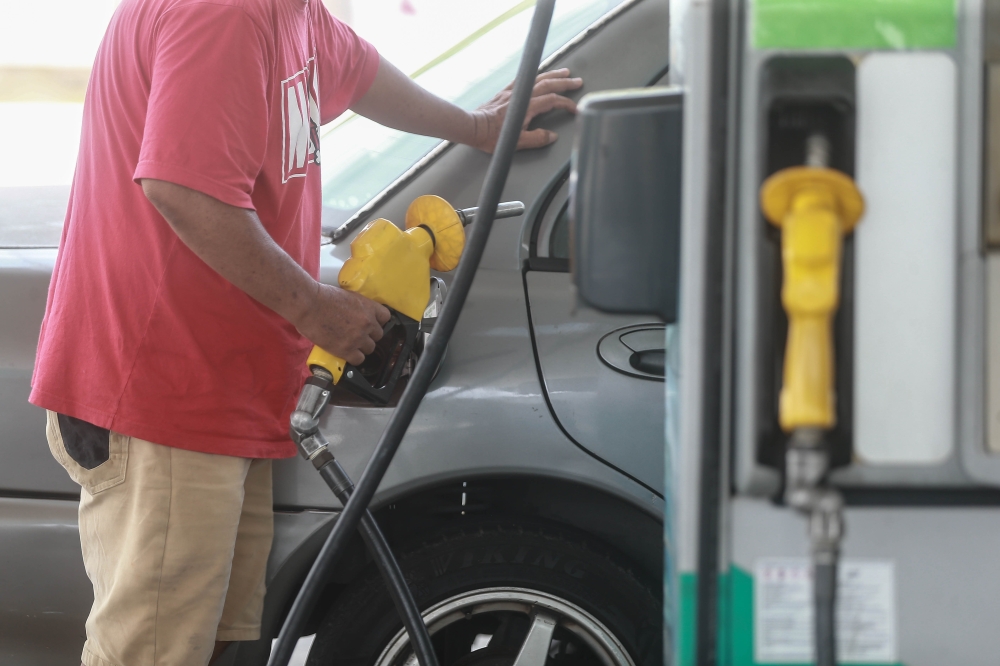
Among other things, Rakuten Insight’s April survey asked Malaysians if the recent reduction in the monthly quota for the government’s BUDI95 subsidy for RON95 petrol from 300 litres to 200 litres directly affected their household’s fuel spending.
Out of 1,052 respondents polled, 49 per cent said they were not affected as they typically use 200 litres or less a month, followed by 36 per cent (yes as they regularly use more than 200 litres per month), 11 per cent (not sure), three per cent (not applicable as they do not drive), and one per cent (prefer not to say).
The reduced BUDI95 quota kicked in from April 1, but with the government still keeping the subsidised RON95 petrol price at RM1.99 per litre for Malaysians amid the global rise in fuel costs due to the US-Iran war.
The government had said nearly 90 per cent of Malaysians use less than 200 litres of RON95 petrol per month and will not be affected by the reduced BUDI95 quota, with the average usage of BUDI95 being about 100 litres.
Rakuten Insight’s MCPP survey started in March, with 1,042 Malaysian adults polled online from March 16 to March 18, and the latest and second edition polling 1,052 Malaysian adults from April 6 to April 8.
Recommended reading: