




KUALA LUMPUR, April 8 — Amendments to the Security Offences (Special Measures) Act (Sosma) 2012 were passed by Dewan Rakyat today, despite objections from Pakatan Rakyat (PR) lawmakers.
The lower house also rejected opposition lawmakers suggested amendments to several clauses, including granting judges the power to determine the admissibility of evidence obtained by the police, in a bid to ensure that no elements of force or torture was used to secure the evidence.
The changes include the rewording of Sections 20 and 22 of the Act to specifically allow “all documents or things seized or howsoever obtained before or after a person has been charged for a security offence” to be admissible as evidence.
The two sections in their current form only recognise documents and items seized during a raid as evidence.
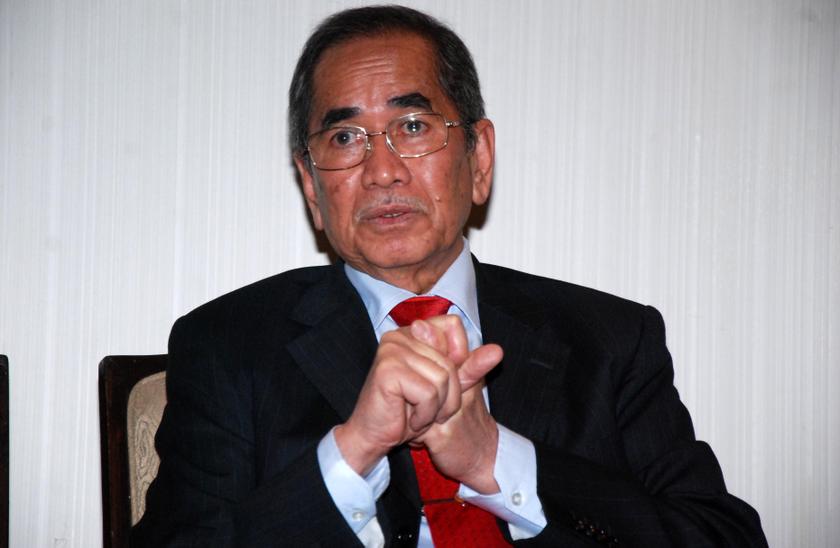
In his winding-up speech, Deputy Home Minister Datuk Seri Dr Wan Junaidi Tuanku Jaafar also expressed confidence that judges would use their discretion to assess the relevance of the evidence submitted to court, negating the need to include the change sought by PR MPs.
“Although the evidence is admissible in court, the court can reject it if the chain of evidence if deemed to be not relevant.
“The judge can decide whether the chain of evidence is acceptable,” he said.
The Santubong MP also added that any law enacted must be assessed from the Bahasa Malaysia version, with the English translation to be used only as reference, when admitting that certain terms used in the Bill are “loose” when read in English.
“I don’t see that this is something serious, but I agree that the term used is very loose… due to the translation process,” he said.
The Bill will also be applicable to the Special Measures Against Terrorism in Foreign Countries Bill 2015 passed on Tuesday.
The amendments also expand on the admissibility of intercepted communications under Section 24 of Sosma.
Another new addition is Section 18A, which states that “any statement by an accused whether orally or in writing to any person at any time shall be admissible as evidence”.
The amendments include a new provision that will require a spouse to disclose any communication made with a suspect over the course of their marriage under Section 18B.
“Yes, the Bill says that spouses will be compelled to testify, but that is only if the person hears and gets information from his or her spouse regarding his or her involvement in terrorism activities.
“What we are saying here is that the sanctity of the marriage will not be challenged through it… it is a very narrow point,” Wan Junaidi explained.
The Sosma Bill is part of a long list of amendments to existing laws seen to supplement enforcement powers under the Prevention of Terrorism Bill (Pota) 2015 that was passed on Monday.
The controversial Pota has come under heavy criticism by opposition lawmakers, who claim that the new law is a rehash of the repealed Internal Security Act 1960 (ISA) that had been enacted specifically to deal with the Communist Insurgency, but later used to silence dissent, most notably during the 1987 Ops Lalang security crackdown.
Pota allows terrorist suspects to be detained without trial for two years at a time, but the Prevention of Terrorism Board may extend the detention period in two-year increments indefinitely.


