


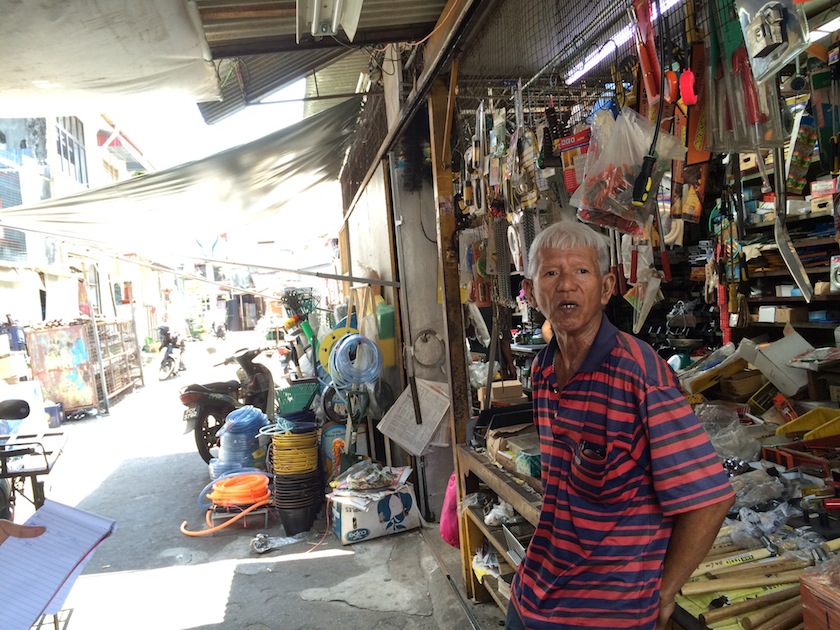


GEORGE TOWN, March 10 — Off busy Chulia Street is a small narrow lane that, frankly, not many people will pay much attention to.
This is Lorong Cheapside; ramshackle hardware stalls line both sides of the lane and for decades, this is the place George Town city dwellers head to if they want to buy any manner of hardware from padlocks to screwdrivers to machetes.
Believed to be named after Cheapside Lane in London, this is also the home of a row of six pre-war shophouses tucked several metres beyond the rows of hardware stalls.
Unsurprisingly, the people who ran the hardware, locksmith and key smith businesses along the lane lived in these shophouses.
Over the years, residents of five of these shophouses moved away even while they continued to run their businesses there. Conveniently, they turned the shophouses where they used to reside into warehouses.
Only one resident—Loh Eng Khoon—remained but soon he too will have to move as they have all been issued eviction notices and given until the end of this month to move out.
The 55-year-old, whom many would recognise as the friendly key smith manning the stall at the top of the lane, was born in the house he’s living in and has never lived anywhere else.
“My father lived here for 10 to 20 years before I was born so our family has been here for at least 70 years,” Loh said.
As with many pre-war shophouses in George Town, the row of six shares one deed and belonged to one owner.
It is believed the original owner died last September. The tenants aren’t sure if the shophouses were sold immediately after or if his heirs decided to develop the shophouses since they received eviction notices in late September, a few weeks after the owner’s funeral.
Loh negotiated with the lawyer in December for an extension.
“We asked to be allowed to stay on for another six months but they only allowed us three months so we have to move out by the end of this month,” he said.
He has not even started packing and hopes to be given more time to find another place and to bid farewell to his childhood home.
The narrow lane, though obscured by the rows of hardware stalls, has an interesting history as it was originally built in the 1900s as part of the Indian and Muslim enclave which spreads out from the nearby Masjid Kapitan Keling.
A few decades after that, there was an influx of Chinese immigrants and the area became a mix of Chinese and Indian Muslim communities and Cheapside Lane became more Chinese Hokkien.
According to another long-time resident, Yeoh Ken Hock, the lane was nicknamed Lorong Pencuri decades ago due to its notoriety.
The 70-year-old, who runs the hardware stall Syarikat Chooi Tee along the lane, also grew up in one of the shophouses before he moved out recently.
“In the old days, you can tell anyone Lorong Pencuri and they’d know it is here,” he said.
Yeoh said the eviction is inevitable especially when there is a high demand for heritage shophouses.
“We can’t stop development so we have to make do and adapt but fortunately, all our stalls are on government land so we are not being evicted,” he said.
Loh and Yeoh are not the first ones to have to give way to new developments as many heritage shophouses within the Heritage Zone have been sold and turned into boutique hotels or eateries in recent years.
According to a population and land use change survey commissioned by Think City, more than 700 residents have moved out of the Heritage Zone between 2009 and 2013.
The survey drew similarities of the outflow of existing residents from George Town to that of other Unesco World Heritage sites where tourism took prominence and undermined the characteristics of the sites.
The survey warned that George Town is at risk of experiencing the same thing and proposed improved management and policy frameworks to preserve the site’s living heritage along with its built heritage.


