




KUALA LUMPUR, June 16 — Malaysia is not a secular state, the federal government said today as the country continues to debate the possible introduction of hudud, the Islamic criminal law.
While the assertion would diminish a key argument against the implementation of the controversial religious law, Putrajaya stopped short of declaring that Malaysia is an Islamic state.
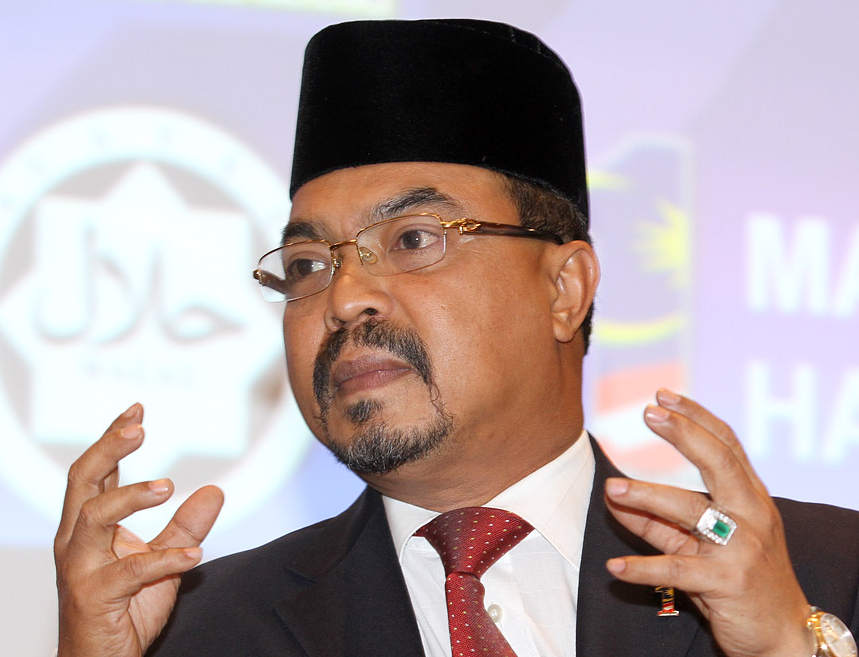
Minister in the Prime MInister’s Department Datuk Seri Jamil Khir Baharom stressed that the formation of Malaysia was based on the Islamic administration of the Malay Sultanates and that the Malay Sultans were heads of Islam in their respective states.
“This was reinforced by Article 3 of the Federal Constitution which places Islam as the religion of the federal, though other religions can be practised peacefully anywhere within the federation,” he said in a written parliamentary reply.
Jamil laid out five arguments for the federal government’s position based on the country’s apex law, which includes clause 4 of Article 11 covering the prohibition on the spread of any religious doctrine or belief among Muslims under state or federal laws.
He also cited clause 1A of Article 121 that excludes the civil courts’ purview over any powers within the jurisdiction of the Shariah courts, and the Ninth Schedule of the Federal Constitution outlining Shariah laws that govern Muslims and limit the spread of doctrines among Muslims.
The Fourth Schedule of the Federal Constitution also covers the pledge by the Yang di-Pertuan Agong to defend Islam at all times, while clause 2 of Article 12 permits either federal or state governments to establish or help fund Islamic institutions and Islamic education, he added.
“Hence, this position differs from secular countries that have not established a religion of state but allow their citizens to practise their own religions. Their religions are separate and private,” he said in response to a question by DAP’s Sibu MP Oscar Ling Chai Yew.
Ling had asked for Putrajaya’s position on whether Malaysia is a secular state, if the implementation of hudud law would go against the Federal Constitution and whether the federal government has plans to implement the Islamic penal code.
Jamil, who is in charge of Islamic affairs, said the federal government takes a measured approach in enforcing Shariah law, which includes widening of powers of the Shariah court, upgrading the Shariah legal system and reviewing the position of Shariah judges.
“The government is aware of the Kelantan government’s wish to implement Shariah criminal law. Hence, before that can be implemented, existing laws need to be studied to make sure the (Shariah) laws are in line with the Federal Constitution and laws that are currently in force,” he said.
The hudud issue resurfaced earlier this year, following talk that a few PAS lawmakers had intended to table a private member’s bill in Parliament to debate the implementation of Islamic criminal law.
The Kelantan state assembly passed a bill to implement hudud in the state in 1993, but it has been put on hold until now as was considered to be in conflict with the Federal Constitution.


