


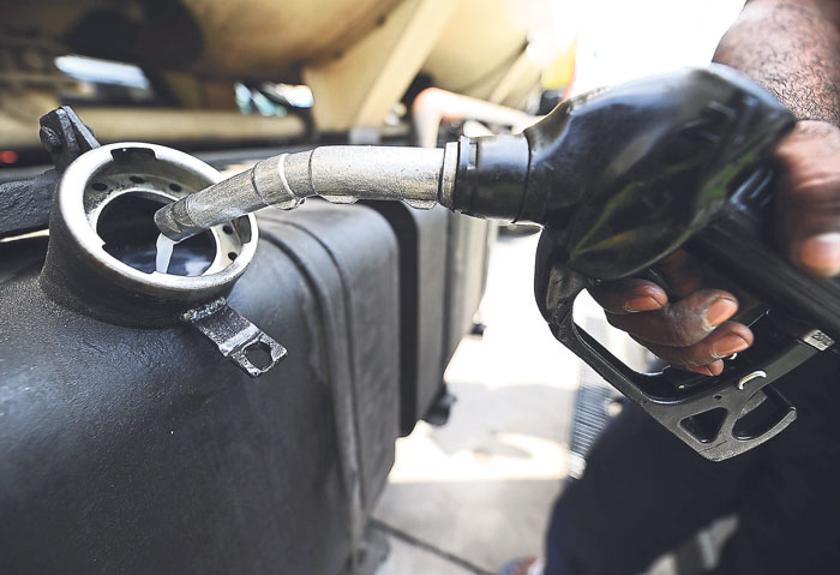


KUALA LUMPUR, June 6 — Malaysian motorists may end up footing an extra RM3.1 billion to fuel their vehicles next April when the government rolls out the Goods and Services Tax (GST), PKR’s Rafizi Ramli said today.
The Pandan MP pointed out that neither petrol nor diesel have been included in an exemption list of goods under the controversial consumption tax, which he said means the price will likely be hiked.
“This additional tax burden of RM3.1 billion a year imposed on the rakyat just from the purchase of petrol and diesel is a shockingly huge number and will surely have a multiplier effect on the price of goods.
The lawmaker, who had previously advised the Selangor government on economic matters, said Malaysians has collectively used 14.05 billion litres of petrol and 23.69 billion litres of diesel in 2013 alone, based on figures from a reply to a question he posed in Parliament at its last sitting.
If consumers were charged 13 sen per litre based on the proposed 6 per cent GST rate, it would translate to RM3.1 billion in taxes paid by all consumers over the whole year, he said.
“Imposing GST on the purchase of petrol and diesel is no different from raising the price of petrol and diesel by 13 sen per litre.
“I urge Datuk Seri Najib Razak to immediately announce that the purchase of petrol and diesel will not be subject to GST,” Rafizi said, referring to the prime minister, who also helms the Finance Ministry.
Deputy Finance Minister Datuk Ahmad Maslan has said the government has yet to decide whether or not it will impose GST on RON95 grade petrol and diesel when the new tax system kicks in in April.
He told journalists at a GST forum for entrepreneurs today that any decision on the matter will be tied closely to the government’s future cuts on fuel subsidies and the final list of goods that will be covered by GST.
Rafizi had earlier claimed that Malaysians will be hit with a double whammy next year when GST rolls out in April, on top of plans by the government to rationalise subsidies further in a bid to reduce public spending.
Chinese-language paper Sin Chew Daily reported this week that a new petrol subsidy system is in the works, claiming that those earning under RM5,000 a month and own cars with displacements below 2,000cc will be eligible to buy unlimited subsidised petrol.
The report, citing an unnamed source, noted however that those earning between RM5,000 and RM10,000 a month will be restricted to 300 litres of RON95 grade petrol — sold at RM2.10 per litre — or subsidised diesel every month.
The federal government has disputed the claims in the Chinese daily’s report.
Malay rights group Jaringan Melayu Malaysia, however, accused Sin Chew today of colluding with fuel thieves to foil the government subsidy rationalisation plans.
GST was first announced during Budget 2005 and was originally scheduled to be implemented in 2007 before it was deferred due to fierce public opposition.
It was finally announced in Budget 2014 last year, a few months after the May 5 general election, and will be enforced starting April 1 next year.
Once in effect, it will cover goods and services at every production and distribution stage in the supply chain including imports.
Malaysia’s proposed GST rate of 6 per cent is the lowest in the region, as most countries implement a 10 per cent value added tax (VAT).


