


COMMENTARY, June 8 — You often hear people talk about being transported — to a time or even a place — by something they ate.
Remember that iconic scene in Ratatouille where food critic Anton Ego’s taste memory was triggered after one bite of Remy’s ratatouille?
Well, I had a somewhat similar experience — with a twist — at a dinner in Chipta11A recently. But first, a little about the restaurant for those who are unfamiliar with it.
Helmed by Chef Jack Weldie, it brands itself as a “curated dining restaurant” but since its opening in 2019 it has been known for its Japanese omakase style menu using Japanese-Malaysian ingredients.
And that was exactly my previous experience with Chipta11A. Very Japanese-forward. Not surprising since Chef Jack spent many years working in Japanese restaurants.
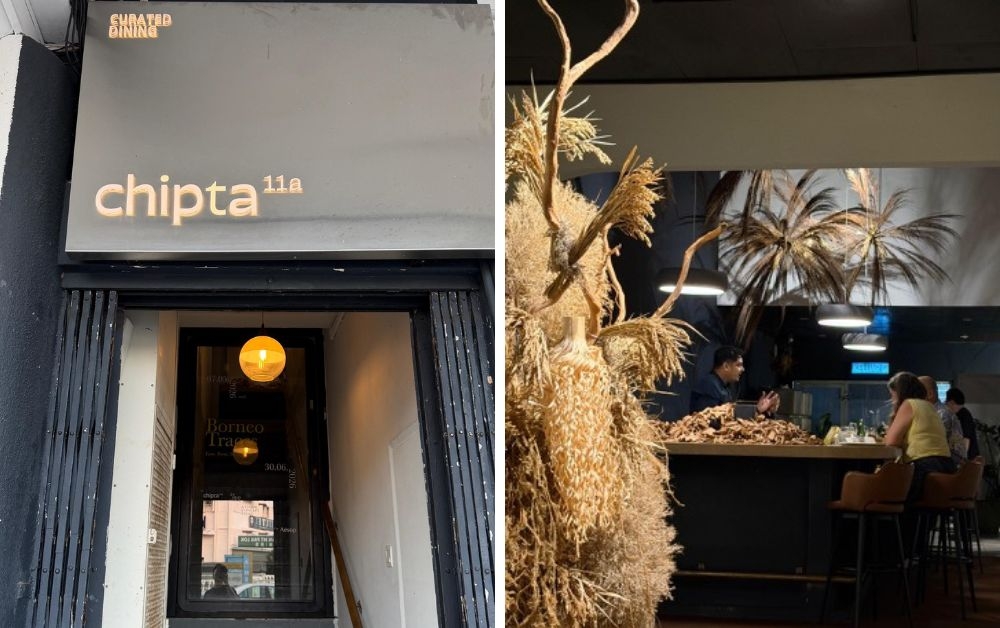
Till this recent dining experience called “Borneo Traces” where he takes a totally direction... choosing to go closer to home as he is a Kadazan-Dusun from Sabah.
I thought I was kind of familiar with Sabah. After all, I have been there several times over the years for work.
But what did I know of its cuisine? Sang yoke mian (Sabah pork noodles), Tuaran mee (egg noodles from Tuaran), latok (sea grapes), cheap and fresh seafood and perhaps ngiu chap (beef noodles).
Much of this is Chinese-centric because that was what I saw in Kota Kinabalu... but what of its more traditional food?
I was very proud that I had even heard of and tried some ingredients like tuhau (a wild ginger), midin (a wild jungle fern) and buah kulim (a jungle garlic).
But truth be told, I mostly dismissed these ingredients as not particularly memorable.
How rude and totally ignorant of me, right? I never thought I’d be part of the legion of West Malaysians (peninsular people) the Sarawakians and Sabahans generally despise.
But there it is.
That night, the dinner at Chipta11A just blew my mind... and all my prejudices out of the water.
Every one of the nine courses was thoughtful, delicious and featured ingredients from Sabah. Not in a gratuitous manner just to add it in but fully and creatively used to make a dish.
“Borneo Traces” should be experienced and not read about because really, the dinner is like nothing most of us have ever eaten before.
Even if you are from Sabah and familiar with some of the ingredients.
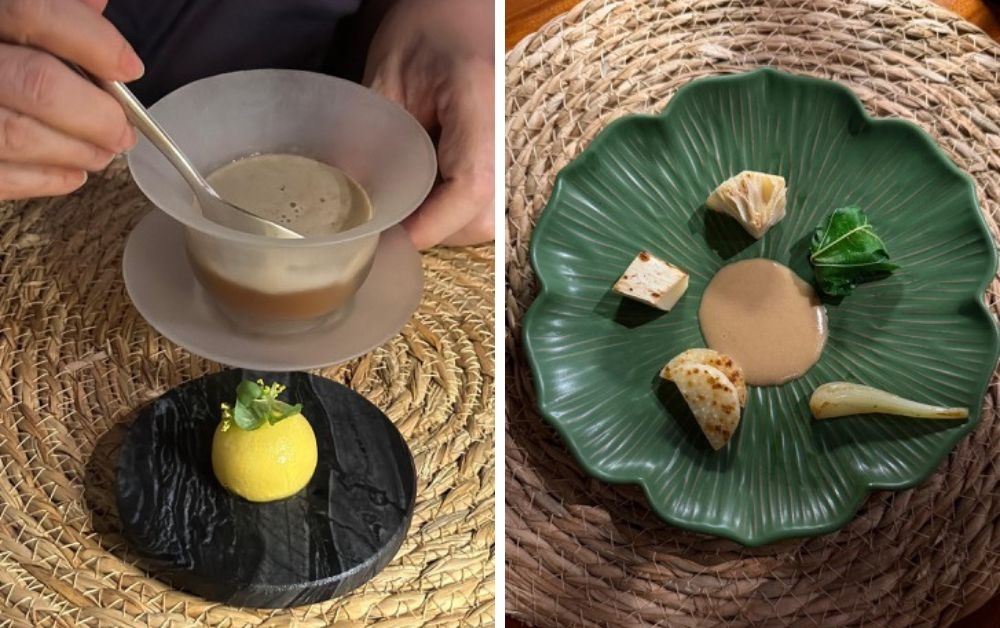
Like the Pickles course: there was sengkuang, losun, palm heart, unripe soursop, mulberry leaf and coconut sprout.
Losun is a wild spring onion native to Sabah, and totally new to me. The whole course was simple, new and so alive.
Or the Mushroom Consomme. How boring on paper but this one with a kodop mushroom foam, mango and fish sauce film was something else.
Kodop is a wild mushroom that grows on rotting rubber tree trunks and is a traditional food in Sabah.
The dish was so refined and yet holds a personal memory for Chef Jack of gathering the mushrooms when he tapped rubber as a young boy back home.
What Chef Jack and his team did is to present his story, his food memories and the ingredients from his homeland in a way us snobby peninsular Malaysians are familiar with: fine dining Western style.
Beautifully plated and presented with explanations that don’t go too long but tell you enough... you will be charmed.
Me? It was a dinner that was at once humbling and revelatory. I now know I know nothing.
Chef Jack Weldie has finally found his voice in “Borneo Traces” and I have been schooled.
* “Borneo Traces” is on till June 30 and costs RM480++ per person.


