


JANUARY 12 — On the 14th of January 2026, Malaysia will mark the 50th anniversary of my father’s passing. For many, Tun Abdul Razak Hussien remains a figure etched in stone, a name on a building, a face on a monument, or a chapter in a history book. For most Malaysians today, 1976 is no longer a lived memory but a historical reference point. So, as we reach this half-century milestone, it is timely to reflect on how Tun Razak’s legacy should best serve the nation.
For fifty years the Tun Razak Foundation, of which I am honoured to be the new chair, has been a most effective custodian of the Razak legacy. With this milestone, we have the opportunity to evolve, and intend to shift from being primarily a custodian of Tun Razak’s memory to a steward of his leadership values and methods. Our focus will be less on revisiting the past, and more on how those founding values and leadership methods can be meaningfully carried by a new generation of leaders navigating very different challenges.
In my reflections as a son and a corporate leader, I have come to realise that every great architect leaves behind a master plan, but the world around that plan inevitably changes. Judging by what I know of him, I can even hear Tun Razak saying, “if the context has outgrown my plan, then you must write a new one”. Just as he dedicated his life, he would want his legacy to also be in service of nation building and progress.
The founding generation, Tun Razak and his contemporaries, built the architecture of our nation under immense pressure and without proven templates. They succeeded in lifting a fractured society, facing multiple existential threats — communist insurgency, Konfrontasi, and ethnic tensions — to become a viable nation to be nurtured and developed. By the end of Tun Razak’s life, we had Malaysia but not yet a Malaysian nation. And that project remains a work in progress.
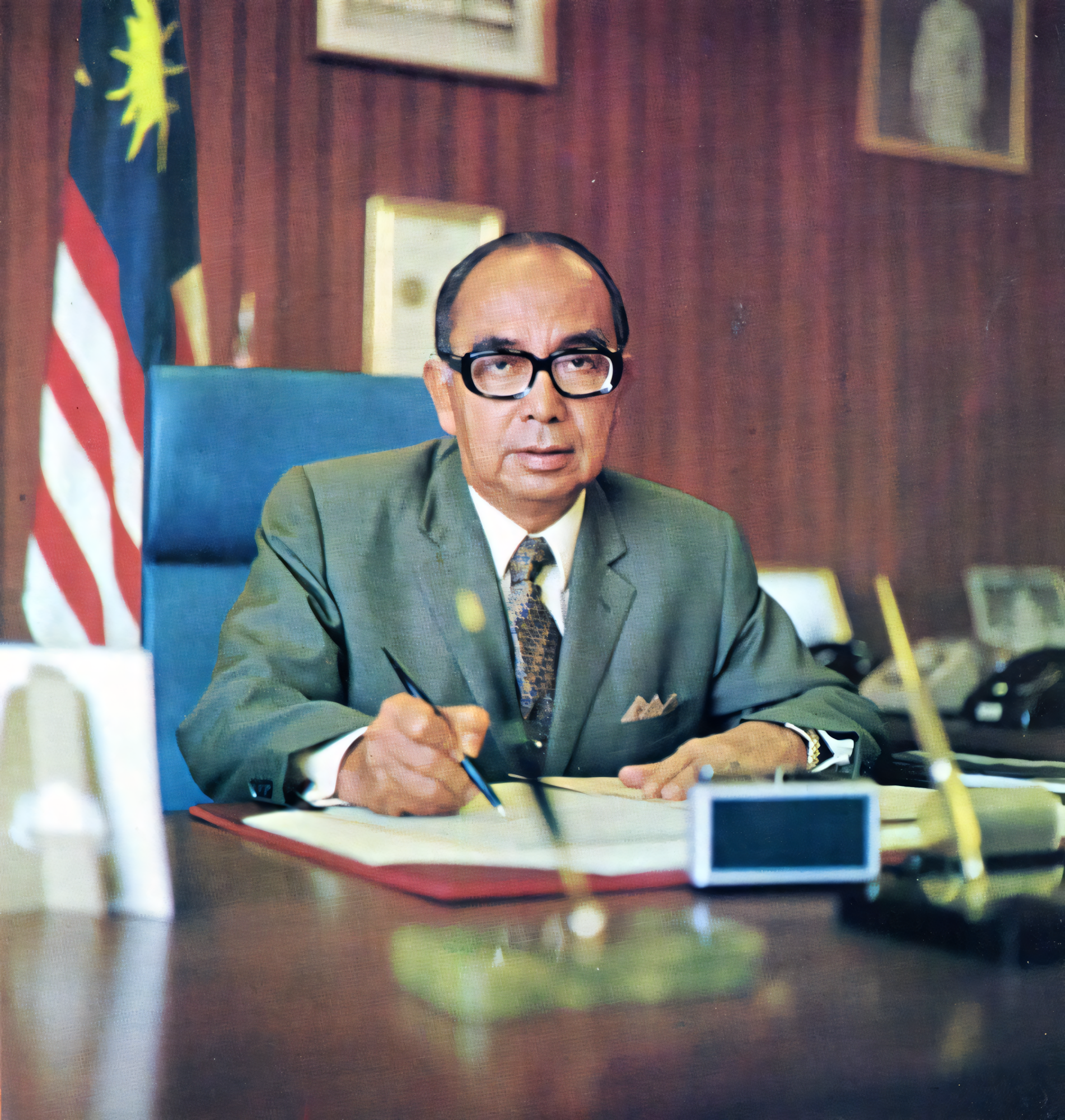
Legacy is not sustained by celebrating what was built. It endures when we cultivate the capacity to solve new problems in the spirit that enabled those achievements in the first place. Stewardship today means equipping current and future leaders with the intellectual rigour and moral courage to diagnose new challenges swiftly and act with the same determination that defined the 1970s. We also seek to cultivate the spirit of consultation, empathy, humility, and pragmatism, traits that distinguished Tun Razak as a leader.
These values were never intended as abstract ideals. They functioned as practical mechanics of trust. Humility expressed itself through a willingness to consult widely and to recognise when course correction was necessary. After the young Malaysian nation broke down in the flames of May 13th, Tun Razak ruled by decree for 22 months. He set up the National Consultative Council to help him diagnose why the riots happened and decide on the systemic recalibrations needed such as the New Economic Policy, Rukun Negara and the unity government. Then he became the rarest of dictators; one who voluntarily returned power back to the people, to parliament.
Pragmatism meant prioritising the welfare of the rakyat over rigid political dogma. He believed in market forces but also that the might of the state should be deployed to not only accelerate development but to do so in a more equitable way than unfettered laissez faire economics would. Felda, MARA, Bank Pembangunan and Petronas were some of the government-owned enterprises he deployed for this purpose. That said, the question for each generation is, how well do these structures and practices remain aligned with today’s needs? Tun Razak’s “jihad” was poverty eradication and rural development, today’s leaders must prioritise urban inequality and cost of living.
Tun Razak’s leadership was also distinguished by his insistence on disciplined implementation. He understood that sound ideas count for little without rigorous execution. Policies were closely monitored through methodical oversight mechanisms, most notably the Red Book system, which tracked development priorities, delivery timelines, and accountability at every level, from the kampung to the Prime Minister’s office. This reflected his belief that leadership was not merely about setting direction, but about remaining personally engaged in whether outcomes were actually achieved.
Equally central to his approach was the careful selection and empowerment of talent. Tun Razak placed strong emphasis on identifying capable individuals, entrusting them with responsibility, and giving them the authority to act — while holding them to clear standards of performance and integrity. Institutions mattered, but people mattered more. His legacy reminds us that nation-building depends not only on sound policies, but on leaders willing to invest sustained attention in systems, teams, and delivery.
Integrity served as a clear boundary, ensuring that public power was never conflated with private interest. There are many humorous reference narratives of how Tun Razak was diligent to the extreme in separating personal and state finances, like the way he took one aide to task for accidentally expensing his toothpaste as official spend or how he moved his whole official entourage out from a luxury into a modest hotel in Switzerland after he had studied the room rates and food and beverage prices for himself.
Understanding how Tun Razak’s values operated in practice is essential if they are to remain relevant within a far more complex governance environment today.
This 50th anniversary provides us with a timely opportunity to recalibrate and re-examine our approach, asking how the Foundation can best evolve its programmes to serve the Malaysian public in a changing world.
As part of this work, the Foundation is strengthening our youth leadership programme (TRF LEAP) which over the last 30 years has produced over 1,300 alumni members and leaders. We will also create additional avenues for a wider audience to learn from Tun Razak’s leadership — his successes, the limitations he encountered, and his failures too. The aim is not academic interpretation, but practical leadership development. We are translating legacy into a contemporary framework that equips leaders with the analytical discipline to understand complex systems, the moral clarity to navigate competing pressures, and the operational focus to deliver outcomes responsibly.
As we mark the 50th anniversary, let us move beyond the buildings and the street names. The greatest tribute we can pay to Tun Razak is to use his legacy to cultivate leaders able to master the problems of the future with courage, humility, empathy, pragmatism, and commitment to consultation and implementation. Hence, the Tun Razak Foundation is shifting from commemoration to cultivation.
* This is the personal opinion of the writer or publication and does not necessarily represent the views of Malay Mail.


