


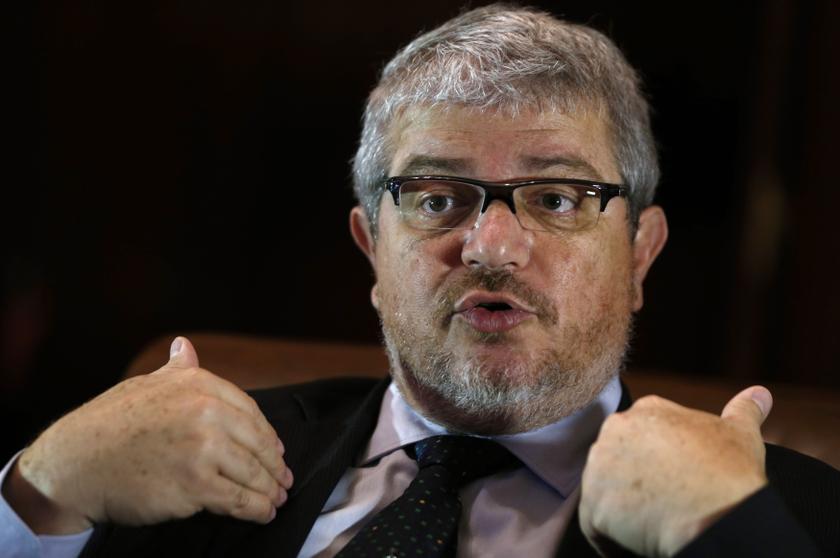


RIO DE JANEIRO, Nov 12 — Protesting Brazilians have been urged by the head of the organising committee for the 2014 World Cup not to vent their anger on visiting fans during next year's tournament.
In an interview with AFP, Ricardo Trade admitted that he didn't know to what extent social protests might overshadow the month-long competition, which runs from June 12 to July 13, but said that he believed most Brazilians were in favour of the World Cup and called for supporters and tourists jetting into the country from around the world to be allowed to enjoy the football.
“They are democratic protests in a democratic country, except for the acts of violence and vandalism that nobody wants,” Trade told AFP, while playing down their impact upon the organisation of the tournament itself.
“They have been ongoing since the Confederations Cup in June. The protesters want better public services (health, education, security), which is quite legitimate.
“We don't know what will happen during the World Cup. A recent survey showed that 70 per cent of the population is in favour of the World Cup and believe that it will be good for Brazil.
“Protest for what you believe is right, the country is progressing and still needs to reduce inequality but don't forget that we are bringing an important event to our country,” added Trade when asked if he had a message for those who plan to protest during the World Cup.
“Be nice to those who come here. During the Confederations Cup, people were able to go to stadiums and watch the matches.”
The recent cancellation of the Soccerex global football convention in Rio de Janeiro - for which Soccerex and the Rio state government were left blaming each other - was the latest blow for the country ahead of the tournament, but Trade insisted that it should have no impact on the World Cup itself.
“Soccerex is a private event that had the support of the Rio state government,” he said.
“I don't know the causes of its cancellation. There was a commercial agreement which was broken, I think. I don't think that will affect the World Cup because the Confederations Cup, or the New Year's Eve celebrations on the Copacabana beach, or the Carnivals of Rio, Bahia and Recife and World Youth Day (organised by the Catholic Church) are all proof that we are capable of organising events and welcoming people.”
Logistical challenges
However, the size of the country, the fact that the 2014 World Cup will have a record 12 host cities, and the exorbitant prices of accommodation do all present major challenges to organisers.
“The large distances and logistics are among the challenges that we have,” Trade said. “We also need to reach agreements with 12 state governments and 12 city councils and that is not easy. The government is working with airlines to open up direct flight routes during the World Cup between cities that do not currently have links because of a lack of demand, as is the case between Manaus and Cuiaba for example. The airlines have shown an interest.
“Brazil receives fewer tourists than New York City. The government has created a committee that will produce a study on this in conjunction with the private sector so that things are controlled better during the World Cup.
“As a Brazilian citizen, I think the country needs better services and more affordable prices. Hotels in Rio are very expensive but there used to be no investment in this sector. With the World Cup and the 2016 Olympics (in Rio), we are investing a lot and prices could drop as availability increases.”
As for the venues themselves, Trade said that six stadiums still had to be completed but was hopeful that almost everything would be ready by December 31.
He believes that this year's Confederations Cup was a success but knows there is still room for improvement.
“The late completion of the stadiums for the Confederations Cup - which was not my responsibility - delayed the opening of accreditation centres, while volunteers did not have time to familiarise themselves with the stadiums and catering services could not be organised until the last minute,” he said.
“Not enough volunteers were able to speak foreign languages and we are investing in these things for the World Cup.” — AFP


