NEW YORK, May 18 — When Mortimer B. Zuckerman plunked down US$36 million (RM128.23 million) in cash to rescue The Daily News from bankruptcy in 1993, he was convinced that he could make the paper successful. “I’m not suicidal,” he said.
Maybe not, but he appears to be at least a little bit masochistic. Over the past 20-plus years, Zuckerman has watched circulation and advertising plummet, turning a marginally profitable asset into a big-time money loser. All the while, he has been engaged in a bruising newspaper war with a rival press baron, Rupert Murdoch, owner of The New York Post. In the face of all this, Zuckerman, 77, has been criticised, repeatedly, for taking The Daily News down-market in an effort to attract readers.
Zuckerman, who earned his fortune in commercial real estate, decided recently that enough was enough. This year he put the paper up for sale, retaining the Wall Street firm Lazard to help advise him in the process.
Final bids are due this week, though this is less a bidding war than a matter of how much liability a potential buyer is willing to assume. Interest seems light. Wealthy people are typically drawn to media properties as a means to expand their influence. But as the influence of a property diminishes, so does its appeal to prospective owners.
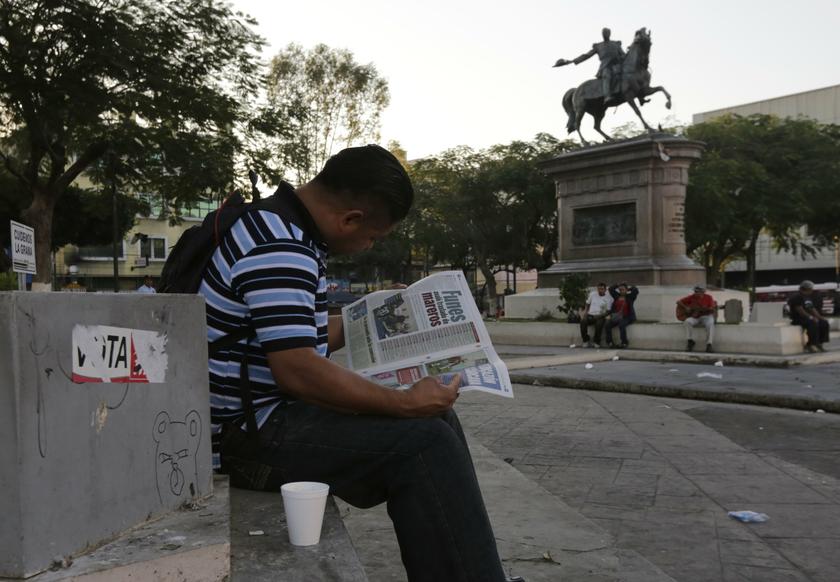
Only 25 years ago, The Daily News had more weekday readers than any other newspaper in America, with a daily paid circulation that easily exceeded 1 million. As of March, that number had dropped to 312,736.
These days, a struggling newspaper hardly qualifies as news; dozens of papers around the country have shut down in recent years. But the fate of The Daily News carries a unique symbolic weight. The News is the model of the big-city, elbows-out tabloid, a local paper with a national profile. Superman worked there, or Clark Kent did, anyway: The lobby of the Daily News Building on 42nd Street, with its massive, rotating globe, was the basis for the headquarters of The Daily Planet in the movie “Superman.” The paper was the inspiration for the 1994 movie “The Paper.”
So who wants to buy this journalistic institution? For years, the most likely candidate appeared to be Murdoch, the assumption being that he would simply shut it down. But Murdoch, 84, loses tens of millions of dollars a year on The Post. And judging from the most recent acquisitions of the Murdoch-controlled media company News Corp. — a real estate listings site and a romance novel publisher — his interest in newspapers is limited.
Last week, Reuters reported that James Dolan, head of Cablevision and Newsday, had withdrawn his US$1 bid for the paper. (A Daily News spokesman said Dolan never made a formal bid, so there was nothing to withdraw.)
That leaves three likely bidders: John A. Catsimatidis, the supermarket magnate; Jimmy Finkelstein, a New York entrepreneur; and Jon Peters, a hairdresser-turned-Hollywood mogul. None has ever run a daily newspaper. The closest is Finkelstein, the owner of The Hill, which reports on Congress.
Zuckerman declined to be interviewed for this article, and the sales process for The News is secret, making it tough to handicap. It is clear that Catsimatidis, the founder of the New York City grocery store chain Gristedes, is not afraid of expensive, quixotic quests. He spent US$11 million on a long-shot mayoral candidacy in 2013, proposing, among other things, an alternative to extending the city’s subways, a monorail system he called the Aboveway.
Catsimatidis is the only bidder to publicly acknowledge his interest in The News, and the only one to take or return a call seeking comment. What sort of appeal does a money-losing newspaper hold? “Maybe I want to be Walter Cronkite when I grow up,” he said.
Over the decades, the paper’s populist spirit has been manifest in its aggressive coverage of the city — always delivered with the maximum amount of drama — and channelled by a chorus of columnists like Jimmy Breslin, Pete Hamill and Michael Daly.
“When The News was really trying to do stories that resonated with the great middle class of New York, they could do it better than anybody,” said Tom Robbins, a long-time investigative reporter at the paper. “You felt a visceral connection with your readers, and that was a precious thing to have.”
The News has not abandoned hard-hitting journalism; when it lands a punch, it is still felt in the corridors of power. Last year, a series on the low wages of airport workers prompted Gov. Andrew M. Cuomo to demand raises on their behalf. In more recent years, though, Zuckerman has imported a series of British-style tabloid editors to spice up the paper, which has struck some News veterans as a betrayal of its legacy.
If the paper has at times seemed conflicted about its identity, the Daily News website has shown no such ambivalence about fully embracing Fleet Street sensationalism. (“Magazine in hot water over sexy pic of ‘YouTube Sensation,’” read one prominent headline Saturday.)
This has been a boon for Web traffic, bringing in as many as 40 million visitors in one recent month, according to The News. But it has not solved the paper’s economic problems. The Daily News won’t discuss its finances, but it is said to be losing about US$20 million a year. It has not helped matters that Zuckerman made a costly gamble on print in 2007, committing to spend more than US$150 million on new high-speed presses that started operating in 2009.
It is a tense time at The Daily News, but the paper has been on the brink before. In 1991, it was rescued from a 21-week strike by the British press baron Robert Maxwell. (“ROLL ‘EM,” read the front-page headline on the day the paper resumed publication.) In a matter of months, Maxwell had become a tabloid story in his own right; his body was found floating in the Atlantic after he had disappeared from his yacht. It soon emerged that he had plundered more than US$1 billion from his companies’ pension funds.
The paper was put into bankruptcy protection. It continued publishing, but before Zuckerman came along, things were looking dicey. A group of reporters had buttons printed: “Daily News: Too Tough to Die.”
They might come in handy in the coming weeks. — New York Times