






SEOUL, March 25 — The US and Israeli strikes on Iran last month plunged the Middle East into crisis, disrupted global shipping routes and spawned a series of headaches for Umar Ali Hyder Ali’s used-car business in Japan.
Hyder Ali, who has lived in Japan for two decades, ships used cars from his adopted home to South Asia, the Middle East and Africa, where the vehicles are highly sought for their durability and relatively good condition, thanks to strict Japanese regulations that require regular inspections and maintenance.
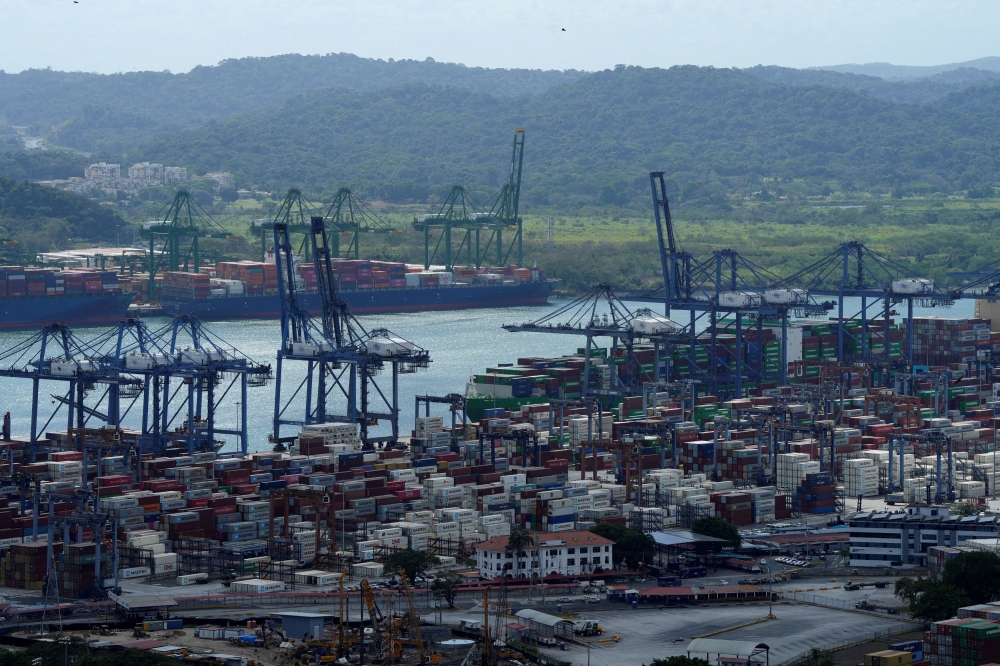
Days after the war broke out, he woke up to news that one of his shipments of more than 500 cars was stuck at sea — the vessel was unable to get into Sri Lanka because the port had filled up with cargo diverted from Dubai.
“The cars that we already shipped to Sri Lanka were kind of idling in the ocean, waiting to enter because there was no space,” he said, adding the vehicles were eventually offloaded at the Hambantota port last week, more than 10 days late.
Hyder Ali’s woes illustrate how the Middle East crisis and the near-closure of the Strait of Hormuz are upending business for used-car traders in Japan and South Korea, mostly small businesses that together make up a large, global-spanning industry.
Port congestion causes ‘panic’
The port congestion sparked “panic” among some Japanese shipping companies, some of which cancelled shipments, Hyder Ali said. Others proposed diverting cargo to ports in Pakistan or China. One asked for a US$5,000 (RM20,000) deposit on each car. Some of his vehicles may end up being brought back to Japan, he said.
His Yokohama-based company, Kobe Motor, ships around 18,000 cars a year, mainly to his native Sri Lanka, where compact Toyotas and Hondas tend to be popular. At the moment, he also has around 50 second-hand luxury vehicles — including Rolls-Royces, Lamborghinis and Ferraris — offloaded in Sri Lanka and China because the shipswere unable to get to Dubai where customers in the Middle East were waiting.
Air freight could be an option for some clients, he said, but the high cost would only make it possible for the wealthiest, he said.
Japan and South Korea exported a combined US$19 billion worth of used cars last year, with Japan accounting for a little more than half of that. More than a third of the 883,000 used cars South Korea exported last year went to the Middle East, trade data showed.
The UAE was Japan’s single biggest destination for used cars last year, accounting for 224,000 units, or about 15 per cent of total used-car export volumes, finance ministry data showed.
The Strait of Hormuz, a narrow shipping lane between Iran and Oman, is a bottleneck for shipments routed through Dubai. If the war drags on, exporters face compounding pressures, from higher oil and freight costs to currency swings, weaker auction prices and possible cuts to shipping routes.
Shipments from South Korea halted
In South Korea, the conflict has halted shipments during what is usually the busiest season for used-car dealers, as demand usually peaks in March-September, due to travel and construction activity in the Middle East and elsewhere.
At a vehicle storage complex in the port city of Incheon, where about 80 per cent of cars are normally bound for the Middle East, activity has slowed sharply, said Kang Tae-yang, a shipping company official.
More than 70 per cent of his vehicles are stuck in storage right now, Kang said, adding that some vessels already at sea were either pausing or diverting their voyage rather than continuing to their original destinations. Vehicles parked at storage facilities in Incheon have been unable to move due to transportation disruptions, while those already loaded onto ships have not reached their planned destinations.
Some ships plan to unload cargo at alternative locations in the Middle East or further afield to avoid the Strait of Hormuz. Dealers said this was largely a decision made by shipping lines, with dealers in discussions to understand contingency measures.
“Whenever war breaks out, we have no choice but to go into a wait-and-hold mode,” said Jin Jae-woong, president of used-car dealership Automobile International.
Models such as Hyundai Motor’s Avante MD and Kia’s K3 are popular with Middle Eastern buyers.
Jin said the conflict erupted just as prices would normally begin to rise, adding that his company was paying about 40 million won a month to store vehicles it had already bought in South Korea.
He said he plans to pre-purchase cars during the downturn, betting demand will rebound once the conflict ends.
Some exporters are looking to alternative markets, but options are limited. “You can’t just simply redirect shipments to Africa or Latin America,” said Yun Seung-hyun, president at Ventus Auto, adding that those markets lacked the demand to absorb more sales.
Containers his company shipped in late January were supposed to arrive at Dubai’s Jebel Ali port in early March but remain delayed, with vessels operated by South Korea’s HMM stuck near Mumbai on India’s west coast. Rising oil prices have also pushed up freight rates, he said.
With more than half of Ventus Auto’s 6.6 billion won in annual revenue tied to the UAE, the disruption poses a major risk, especially from not knowing where cargo at sea will end up, Yun said. “There’s effectively no solution right now,” he said. — Reuters