


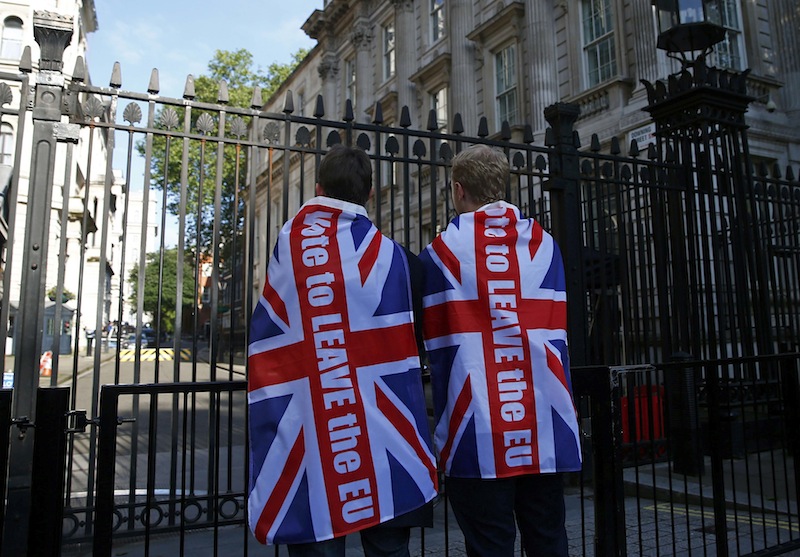


LONDON, June 24 — That’s what HSBC Holdings Plc sees in store for the UK following the vote to leave the European Union.
The mere threat of a Brexit was already weighing on economic activity in the UK, and this drag is poised to intensify over the next year and a half, according to Chief UK Economist Simon Wells.
“Given heightened economic and political uncertainty, we cut our UK GDP forecast to 1.5 per cent (from 1.8 per cent) for 2016 and to 0.7 per cent (from 2.1 per cent) for 2017,” writes Wells.
The economist expects a “sharp contraction” in investment in the back half of 2016, prompting this negative revision.
A reduction in import volumes, according to Wells, will somewhat offset this drag by fueling an improvement in net exports, in part due to the decline of the currency.
In a separate note, HSBC’s Global Head of FX Research David Bloom forecast that the British pound would fall to 1.20 relative to the US dollar by year-end.
The pair traded as low as 1.3229 as the results of the referendum were reported, its lowest level in more than three decades.
This foreign exchange depreciation will push inflation in the UK well above the Bank of England’s 2 per cent target, according to Wells, thanks to rising energy prices and more expensive imports.
“In the stagflationary environment we now forecast, the monetary policy committee will have to consider the economic and inflationary impact of three factors: a sharply lower exchange rate, an investment-led demand shock and a probable reduction in effective supply. Judging the relative magnitudes will take time and hard data,” writes Wells.
In the event that inflation does rise to the levels forecast by HSBC and that this vote spells the end of David Cameron and George Osborne’s time as British prime minister and chancellor of the exchequer, respectively, BOE Governor Mark Carney could find himself in the unenviable situation of having to enter correspondence with two different chancellors of the exchequer explaining why inflation is so far from target over the course of his term at the central bank — and for two completely different reasons.
Given that the first instance was caused by a collapse in the price of oil and the second, if realized, would be attributable to knock-on effects from the market reaction to Brexit, it’s hard to fault Carney for these outcomes.
In light of the Brexit vote, HSBC is no longer forecasting two interest rate hikes by the end of 2017.
“Clearly the referendum result means the BoE may come under pressure to offer support to the economy,” concludes Wells.
“It may decide a swift rate cut is the correct response. But our view is that a more prudent response would be to let any initial panic subside and make a more considered assessment, before taking rates lower.” — Bloomberg


