


IPOH, March 16 — A paperless world may be on the horizon, but political parties in Perak are not quite ready to abandon their tried and trusted campaign methods yet.
While they are starting to embrace technology for their efforts ahead of the 14th general elections (GE14), most told Malay Mail traditional methods such as community events, pamphlets and door-to-door canvassing remain as vital as ever.
Politicians from both sides of the divide agree such methods allow leaders to build a rapport with voters and keep their finger on the state’s pulse.
Parti Sosialis Malaysia (PSM) vice-president M. Saraswathy said building personal connections through traditional campaigning was a “purer” form of democracy as opposed to the facelessness of social media.
“Pure democracy comes from listening to the people and empowering them. We believe in discussing issues with the people and listening to them, instead of pushing our message on them,” she told Malay Mail.
“There is no question that social media has a growing role, but there has to be a mixture of approaches. We can’t neglect the human touch.”
For Perak Umno information chief Datuk Khusairi Abdul Talib, even events considered “minor” can present an important opportunity for politicians to get their message across.
He also believed that voters preferred meeting candidates upfront and enjoyed the chance to interact with them before they make up their minds.
Khusairi added that there was ample opportunity still for direct contact with voters, even with the advent of social media.
“There are so many different events that can reach the people. For instance, young people are very supportive of programmes centred around sports or career opportunities,” he said.

Perak MCA Youth chief Ting Tai Fook said traditional methods were better for approaching the older generations that may not have adopted social media.
He also said there were large sections of voters, such as the working class, that only used the internet sporadically.
“Community events may reach between 200 to 400 people, and dinner events can see up to 1,000 voters. At the same time, we also organise more intimate kopitiam chats which have around 15 to 20 voters at one time.” he told Malay Mail.
While traditional methods will remain the bedrock of campaigning heading into GE14, glimpses of the coming change are already showing.
Pictures and infographics that were effective during previous elections have now been eclipsed by videos, live streaming, teleconferencing and social media.
Although social media and modern technology lacks the personal touch of a face-to-face meeting, these have the potential to reach far wider audiences than would be possible with traditional methods.
For politicians, it becomes a question of quality versus quantity, of efficiency versus efficacy.
But for those keen on tapping technology must also be mindful of its limitations and pitfalls, explained Perak Pakatan Harapan information chief Chang Lih Kang.
“The content (on the various platforms) is different as well. On Facebook, we can put more photographs and write longer messages or articles but we need to be succinct on Whatsapp or Wechat because people don’t devote that much time,” he said.
MIC Youth chief C. Sivarraajh said social media blasts were effective to reach a mass audience in a short time.
He was another who highlighted the importance of tailoring the message to the medium.
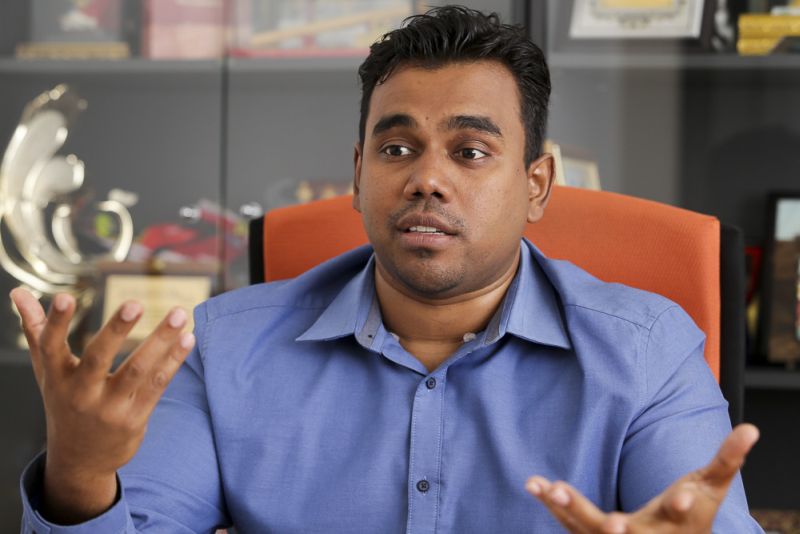
“The recipient only spends a few seconds on a message, and infographics are able to spread the information within a short time period. With this in mind, I tell my members to make the infographics as attractive and informative as possible.”
“When we go to the ground, we try to build a personal trust with the voters. But I also post some of the issues on social media, so I can get more public feedback,” Sivarraajh said.


