


KUALA LUMPUR, June 25 — Bursa Malaysia took an early beating yesterday following the Brexit vote but made a comeback in the evening to close at 1,634 points, losing only 5.93 points in the process.
The local market lost 23.84 points as of 2.45pm.The losses were registered right after it was clear the United Kingdom had voted for Brexit, but the market held on, with no further decline.
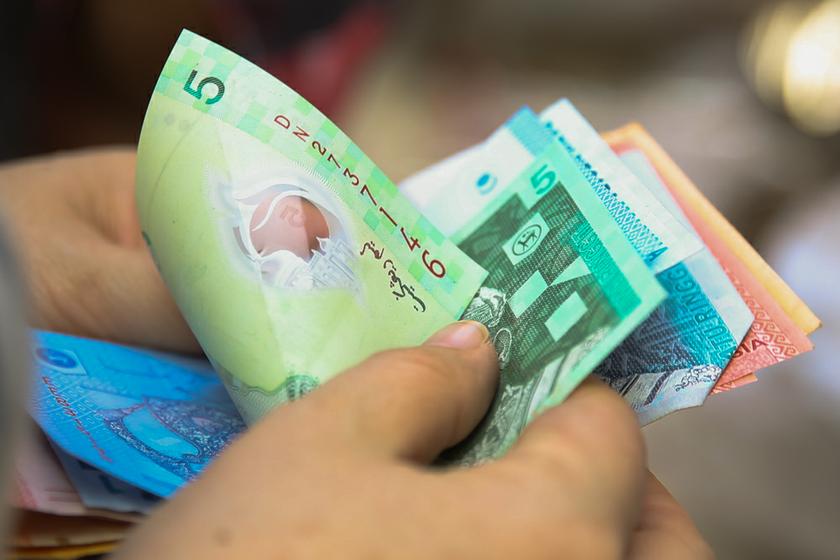
The ringgit also made a comeback late in the evening, after falling by 2.37 per cent to RM4.11 against the US dollar after the vote.
According to Bloomberg, this was the ringgit’s worst slump since the Asian Financial Crisis. It closed at 4.09, losing only 1.90 per cent.
Economists told Malay Mail that Brexit would have no substantial impact on Malaysia, given historical factors, but the local bourse and the ringgit are subjected to immediate reactions from the shockwave and negative sentiments that resulted from the vote.
Sunway University Business School professor of economics Yeah Kim Leng said it was likely for markets to over-react in the UK after the vote.
“We are likely to see markets over-reacting as the political and economic uncertainties over the UK economy and the long-term future of the European Union jack up after the exit,” he said.
The shock from the Brexit vote means the pound will continue to slide, while other emerging market currencies, including the ringgit, will be adversely affected by the ‘‘flight to quality’’ behaviour of global investors.
“The pound will take a further beating but the ringgit is expected to regain its value against the US dollar and other safe-haven currencies once the over-correction phase kicks in,” said Yeah.
He also said London will gradually lose its lustre as a global financial hub.
“This gives rise to opportunities for other financial capitals in Europe and Asia to capitalise on UK’s decline,” he said.
Yeah added many financial and non-financial groups are likely to leave the UK if rules become more onerous or it loses the preferential treatment under EU and related regional trade agreements.
“Businesses will migrate to countries offering the best regulatory, business and cost advantages.
“The erosion will be gradual depending on the out-migration of these conglomerates. On its own, the UK may take a long time to regain the benefits offered by trade and related agreements.”
He also said with less economic and political ties with Europe, the UK is unlikely to emerge as a major economic superpower given its limited resources and market size.
RHB Research Institute analyst Vincent Loo Yeong Hong said the impact of Brexit on Malaysia will not be substantial since Malaysia’s trade links with the UK is only at one per cent of total Malaysian exports.
“Exports to EU is about 10 per cent. However, Malaysia is negotiating with the EU to sign a free trade agreement (FTA),” he said.
“UK’s exit from EU will leave them out of the equation. And Malaysia and the UK will probably need to negotiate a new FTA from scratch, which will take a longer time.
“Medium-term prospects are likely negative for Malaysia-UK trade.”
On the ringgit-pound sterling exchange, he said the pound is an important factor for Malaysians sending their children to study in the UK, and when it is lower, it will be beneficial to this segment of society.
However, Loo said this will not be the case for investment in the UK.
“Companies or individuals who have invested in assets or properties in the UK may be hit,” he said, adding that it is hard to say if London will remain as a global financial hub.
“Financial flows with other European banks may be temporarily disrupted. UK banks’ relationships with European businesses may also be affected,” he said.
Chief market analyst at ForexTime Ltd Jameel Ahmad said existing bilateral ties between the UK and Malaysia will hold sway in the post-Brexit era.
“The UK is well-known for having strong bilateral ties with Malaysia and one of the possible advantages to the non-EU country, once the Brexit is finally implemented, is that the UK will need to diversify economic relationships across the globe,” he said.
“This could represent an opportunity for the UK and Malaysia to strengthen trading relationships in future.”
CIMB Group chief executive Datuk Seri Zafrul Aziz said given the globalised nature of financial markets, the impact of Brexit is expected to spread worldwide but the overall impact on Asean will most likely be contained as countries like Indonesia, Vietnam and Thailand do not have significant exposure to the UK economy.
“Only specific Asean companies that are heavily invested in UK assets or derive most of their earnings from the UK will be impacted in the short-term, but there are only a handful of them.
“We remain optimistic that the British government will be able to steer the UK economy towards steadier waters over time to allay investors’ concerns and market jitters,” he said.


