





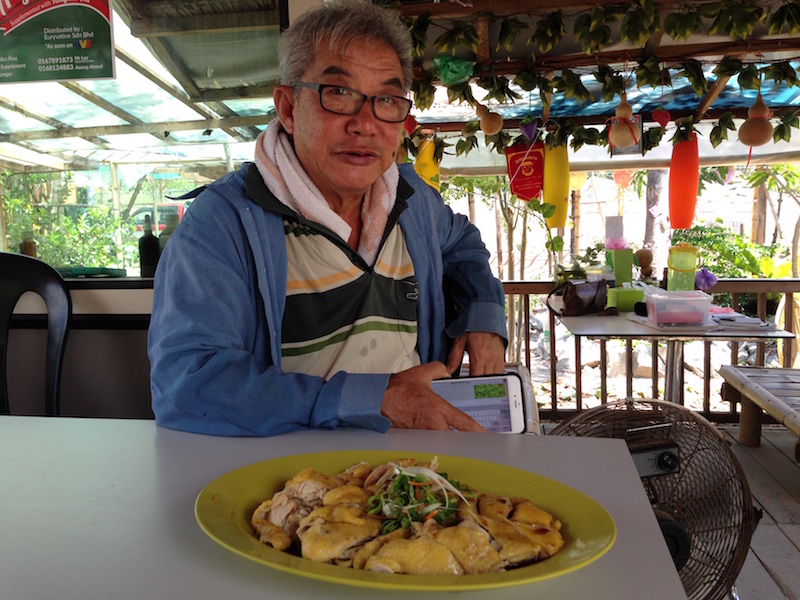
KOTA KINABALU, March 6 — At Signal Hill Eco Farm’s restaurant, you can be sure that minutes before you ordered your vegetables, they were still rooted to the ground.
And if you didn’t call ahead to make your reservations, your chicken was still clucking when you sat down at your table.
The family-run farm-cum-restaurant, tucked in a valley in Sabah’s capital city, takes the farm-to-table concept rather literally.
Its owner, Lee Thien Fook, a born-and-bred KK boy, prides himself on his natural farming techniques and wants to offer guests a truly fresh and different experience through food.
Lee, a 69-year-old self-professed “Jack of all trades” who has been a restaurateur, a contractor for Sabah Electricity Board, and even an aide to a politician, thought of this venture during a dark period when he had hit rock bottom.
A few years ago, his thriving restaurant business, which the family depended on was taken away, and around the same time, his mother died and his wife was diagnosed with Stage Three cancer.
“It was the toughest of times. While undergoing surgery and trying to recover, we found that cancer and other patients had problems trying to find healthy, organic food in KK. Their entire group, about 70 of them, wanted to find such food to help cure their disease through their diet,” he said.
Lee came up with the idea to work his mother-in-law’s ancestral land in Signal Hill to offer healthy, home grown organic vegetables to cancer patients, an idea that has grown into the thriving business that it is today.
“I split it into four components — the vegetable farm, livestock, fish farm and the restaurant,” he said, adding that the farm started some four years ago, but the restaurant only opened two years ago when everything finally fell into place.
The farm
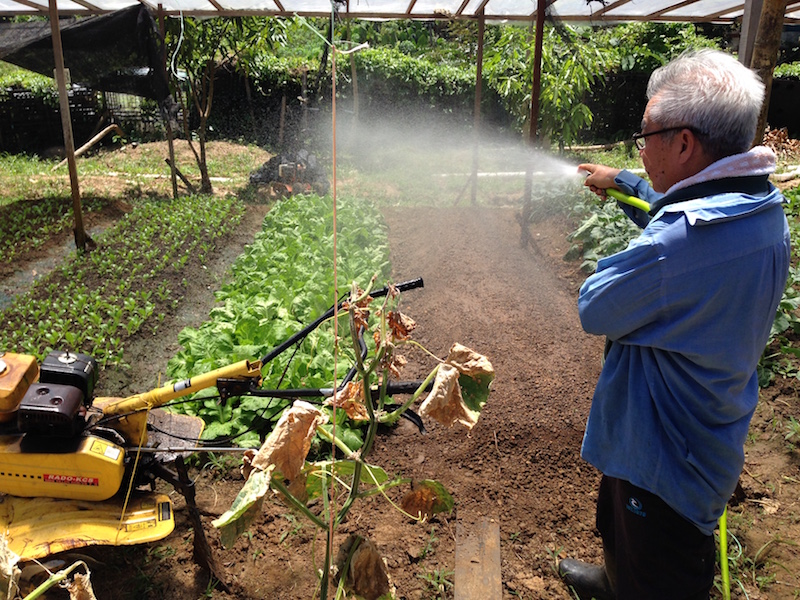
Arriving at the farm, guests might find Lee, dressed in his signature long-sleeved blue gardening shirt with a towel around his neck to protect him from the sun, tending to his miniature cucumbers or collecting the latest batch of chicken eggs.
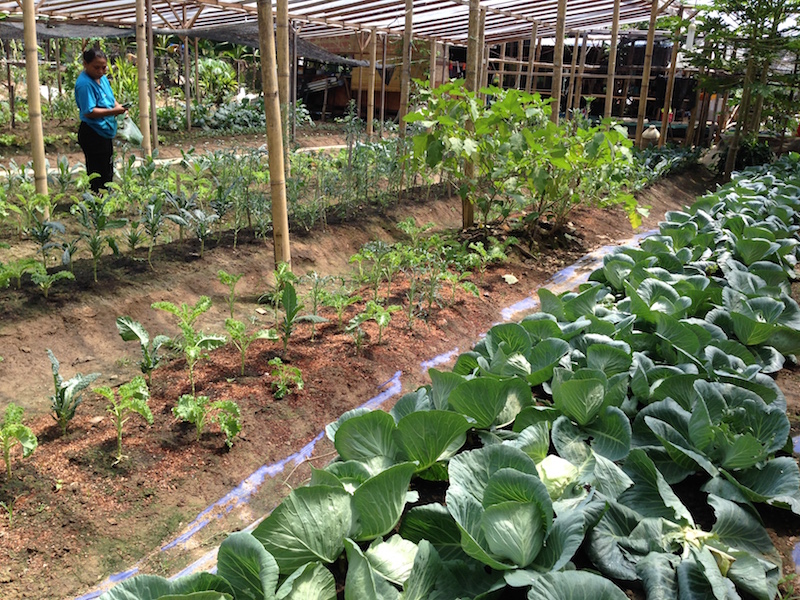
They have around 10 to 15 types of vegetables planted at any one time across the acre-large piece of land, but not all will be ready for harvesting.
Lee has made the most of the acreage, planting vegetables such as cabbages, pumpkins, cucumbers, snake beans, ladies fingers, various types of eggplants, ginseng leaves, arugula, bitter gourd, choy sum, lettuce, spinach, and even mushrooms.
“I try to plant vegetables which people say can only be planted in the highlands,” he said. His biggest success story is planting kale, a highly acclaimed nutritional winter vegetable which is rare to get here.
“Growing kale is what we are famous for. I was told I would not be able to, but after trying out several methods, I’m happy to say that not only do I grow it, but our kale is also very soft, leafy and extremely edible, unlike others grown elsewhere which can be coarse and rough and only used for juicing,” he said.
He attributes his success to several factors — “natural” farming techniques, by going back to nature.
“It’s like going back to our ancestors’ time, who didn’t suffer from so many illness and disease. Everything was grown naturally,” he said. His belief is that changing one’s diet can cure many illnesses, and testament to that is his wife, who is currently healthy, and even helps at the farm.
Among the methods he uses is restructuring his water supply by changing its PH level to a higher oxygen content, regular changes of soil fertilised by chicken dung, watering of plants three times a day and feeding his poultry extracts of ginseng leaves and tongkat ali — the last at the advice of researchers from Universiti Malaysia Sabah who have taken a keen interest in this farm.
“You can walk around here freely. Knowing where our food came from, and how we have nurtured it from the beginning gives our customers a deeper appreciation and happiness when consuming our produce, and we fully believe that that happiness leads to a healthier body, “ he said.
The farm doesn’t supply many shops — just a few select ones — but does supply a stream of regulars from his wife’s cancer days.
The restaurant
The restaurant is the farm’s way of reaching out and appealing to the mainstream crowd, showcasing his fresh produce.
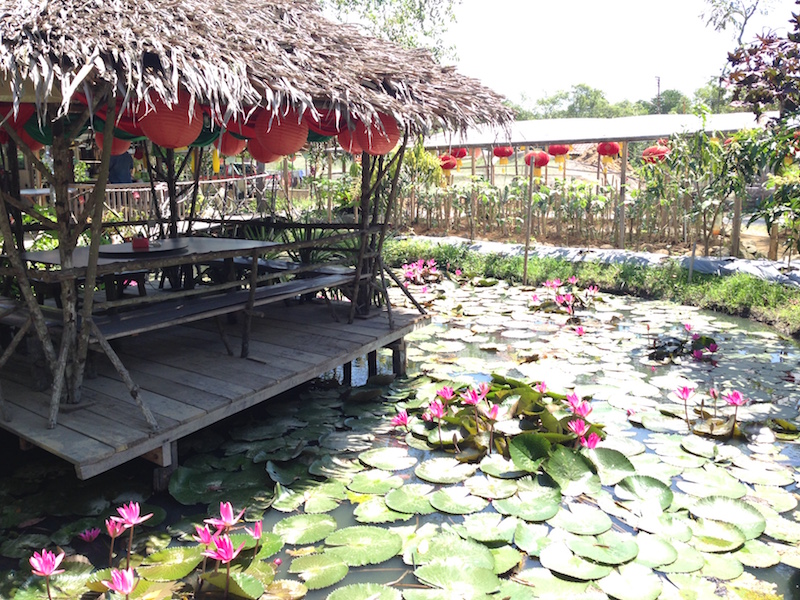
His produce is hard to miss. It is literally everywhere. There are miniature bitter gourds hanging from their vines as you step into the farm. Look below, under the wooden bridge are swimming tilapias. While you admire the blooming lilies, there are wild figs on the tree, while the smell of lemon basil hits your nostrils.
There are baby ducks and chicken roaming around, until they get too big, then they are put in the enclosure with the geese, who Lee said are known to be good “protectors” for the family against snakes.
Once seated in one of the few open-air bamboo or wooden huts set around a pretty lily pond which overlooks the poultry farm or fish pond, Lee or his son, Corvin, will reel off the list of vegetables available for picking at the farm.
“There is no menu here. You eat what we have,” said Lee.
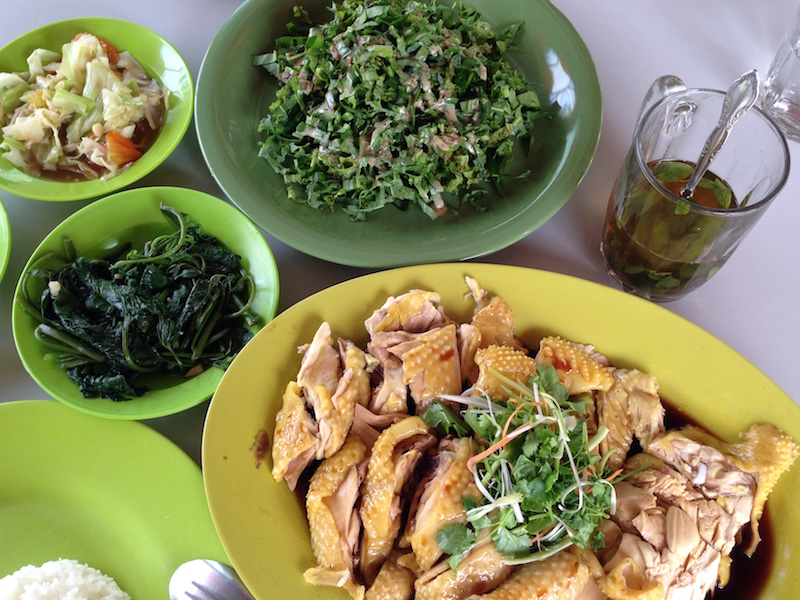
Almost everyone, but for vegetarians, will order the corn-fed chicken. Slaughtered an hour or so just before you arrive, it is kept in cold water and boiled before being seasoned. Neither new nor sophisticated, the dish is major comfort food that is a staple feature at Chinese New Year reunion dinners.
Diners can’t get enough of the moist, lean and deliciously salty chicken, even at RM130 per whole bird.
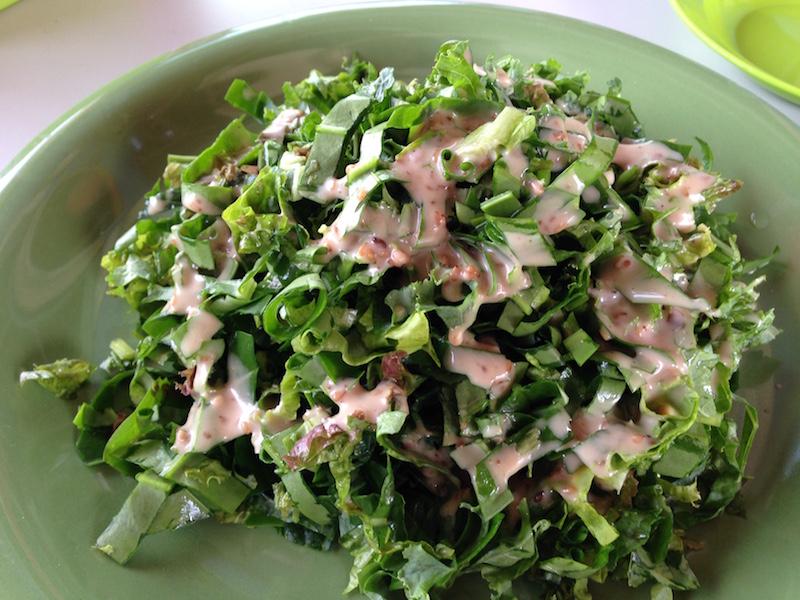
Vegetables here are also a big draw and as Lee pointed out, he recommends their kale salad, a simple combination of kale, arugula and lettuce, topped with store-bought roasted sesame dressing.
“We tried cooking it, but really this is the best way to get the most of its nutrients,” said Lee.
Other dishes are also cooked simply — with garlic and eggs — which Lee says is best to bring out the quality of the produce. Prices start at RM12.
The restaurant’s aim is to be self-sustaining, and the few things they do buy are garlic and ginger, both of which they use in copious amounts, and tomatoes — one of the few plants Lee has been unsuccessful at growing.
An exception to their otherwise very healthy offering is the deep-fried salted egg lotus root. Slices of lotus root, battered in deliciously golden salted egg yolk, are a favourite among the regulars.
Lee only offers a few drink options here — kale juice, tongkat ali tea with honey and lemon basil from the garden, tongkat ali coffee or Kangen-filtered water.
The food is fresh, healthy and delicious, the space is charming and characterful, but it is perhaps the personal service given by Lee that gives true value to each visit. Lee takes the time to greet most of his customers, and talks to them about any illness or health problems they may have.
He shares his wealth of information from his experience and research, and offers advice and anecdotes, whether given to him by his grandfather or the numerous researchers who visit him.
From a common cold to cancer, he names plants and herbs which could be of help and also shares his gardening experience.
“I think what I do gives people the confidence to cure themselves. I want people to come here and have a good experience. Take time to enjoy the surroundings, and make memories with their families. This will make everyone happy,” he said.


