


















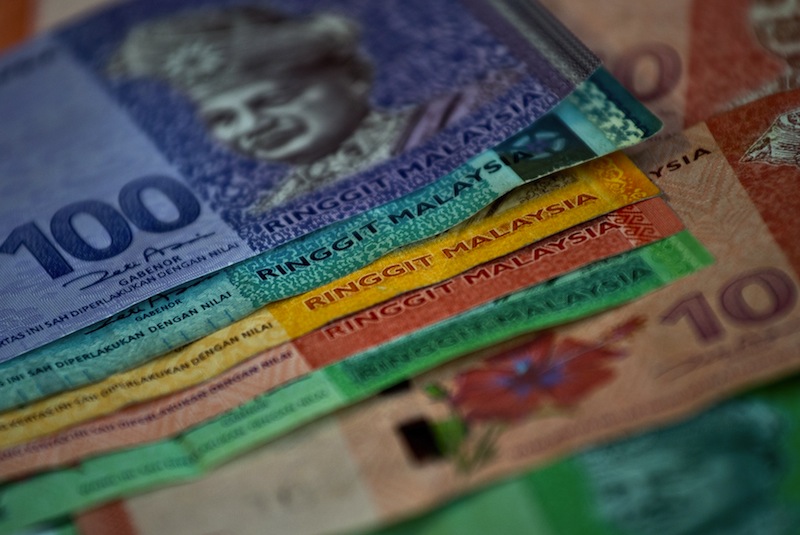


KUALA LUMPUR, Aug 6 — The ringgit and Malaysia’s stocks have fallen, but foreign investors are hesitant to snap them up due to troubling political developments in the country that has seen an shake-up in Cabinet amid the 1Malaysia Development Berhad (1MDB) controversy, analysts said.
Although local economists were constructive about the medium-term prospects for Southeast Asia’s third-largest economy, domestic political instability has curbed the appetite for Malaysian assets, Khoon Goh, a senior foreign-exchange strategist at ANZ, the Australia and New Zealand Banking Group, told US broadcaster CNBC in an interview today.
“Unfortunately, the fundamentals are being overshadowed by domestic political developments that have soured sentiment towards Malaysian assets,” Goh was quoted saying.
“Despite the currency being undervalued, we struggle to see how sentiment towards ringgit will improve in the near-term. The risk is that the ringgit continues to depreciate, particularly if oil prices remain under pressure and weak sentiment starts to impact on the real economy,” he added.
The US dollar fetched 3.8761 ringgit in early trade today, with the Malaysian currency at a 16-year low since 1998 during the Asian financial crisis, making it among the world’s worst-performing currency after dropping almost 11 per cent so far this year, according to CNBC.
CNBC also reported ANZ as saying in a separate report, citing the UN Conference on Trade and Development data, that foreign direct investment in Malaysia fell 11 per cent last year, with outflows exceeding inflows on a net basis.
The US broadcaster reported that Japanese financial research firm Nomura expected Malaysian assets to remain a tough sell.
“We believe political risks will continue to drive the market in the near term,” Nomura was quoted saying in a note yesterday after investor meetings in Kuala Lumpur.
Nomura reportedly noted that foreign ownership levels of Malaysian equities was less than 20 per cent of the total, the lowest of several peers in the region.
The financial research firm also expected Prime Minister Datuk Seri Najib Razak to remain in office and to retain policy direction, according to CNBC.
“This should mean that the uncertainty levels, even though they may rise further from here, will eventually fall in the coming months.The weak sentiment, though, is likely to persist, we believe, as the eroded trust will take a long time to rebuild (if at all),” Nomura was quoted saying.
Najib, who is under pressure to resign over the 1MDB controversy, is now facing criticism over a whopping RM2.6 billion donation to his personal bank account that the Malaysian Anti-Corruption Commission said came from the Middle East, without specifying who the donors were.


