


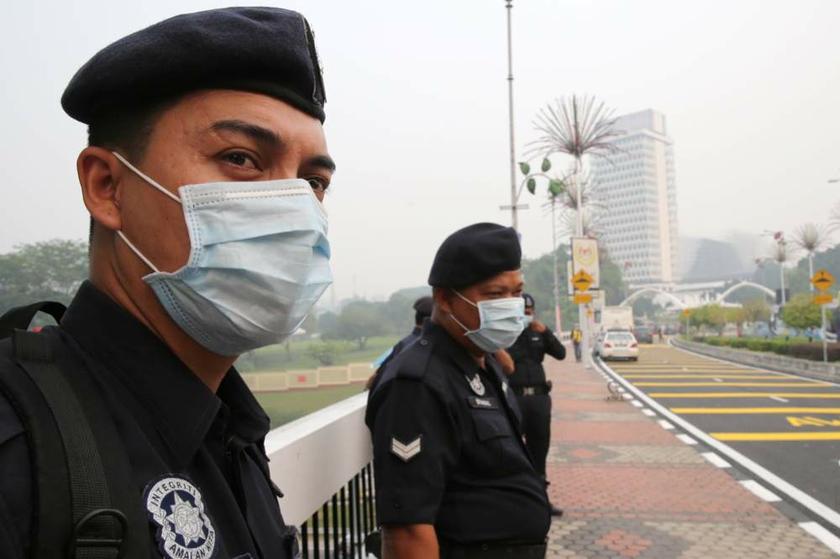


PETALING JAYA, July 9 ― Over three in four people polled viewed the police as corrupt, landing Malaysia’s law enforcers as the ignoble leaders of Transparency International’s Global Corruption Barometer for 2013.
According to the local result of survey on the effects of corruption, respondents viewed even politicians as less corrupt than the police force, with 69 per cent of those surveyed saying political parties were falling foul of corruption versus the 76 per cent that raised their hands for the police.
Civil servants and public officials came in third in the survey, at 46 per cent, just ahead of Parliament, which was seen as corrupt by 44 per cent of respondents.
But the police force’s ignominy was not consigned to just the number of people considering it corrupt, as it also topped the charts on the extent of corruption. On a scale of one to five, with one considered “Not at all corrupt” and five being “Extremely corrupt”, Malaysian respondents gave the police a score of four, with politicians coming in just behind at 3.8.
And despite the government’s efforts to combat graft, 70 per cent of those polled said that the campaign against corruption was not yielding results.
This was down from the 48 per cent of those from the previous poll in 2011 who felt the government was making headway in reining in corruption.
Prime Minister Datuk Seri Najib Razak had made battling bribery a cornerstone of his administration, and introduced an anti-corruption National Key Result Area (NKRA) as part of his Government Transformation Programme (GTP).
He also recently roped in the former president of Transparency International Malaysia (TI-M), Datuk Paul Low, as his minister in charge of integrity and transparency, in an apparent effort to burnish the government’s credentials in the area.
Speaking at the launch of the report today, TI-M president Akbhar Satar attributed the decline to the lack of prosecution against the so-called “big fishes” in high-profile incidents.
“Maybe, lately, there have been big cases that have been investigated but those involved were not charged,” he was quoted as saying by news portal Malaysiakini today.
Despite the poor report card Malaysians gave to the country’s institutions, however, local respondents were also some of the most involved and most optimistic on the war against corruption.
Eighty-seven per cent told pollsters that they believed ordinary citizens could make a difference in efforts to reduce corruption.
When asked about their preparedness to play an active role against corruption, 79 per cents said they would be willing to perform at least one task ranging from signing a petition to actively reporting bribery to authorities.
The survey also depicted Malaysian respondents as one of the least likely to offer bribes, with just 3 per cent admitting to having paid some form of inducement in the previous year.
The 2013 “Global Corruption Barometer” is the biggest ever conducted by the Berlin-based watchdog, with 114,000 people responding in 107 countries in the survey of opinions on corruption and which institutions are considered most corrupt.
Transparency International is a global organisation that campaigns against corruption. It has 90 chapters worldwide and tries to raise awareness of the damaging effects of corruption and works to develop and implement measures to tackle it.


