


KUALA LUMPUR, July 5 ― The term of the Cabinet’s interfaith panel has “expired” unnoticed just as ongoing debate erupted last week over a proposed law that would allow the unilateral conversion of minors to Islam.
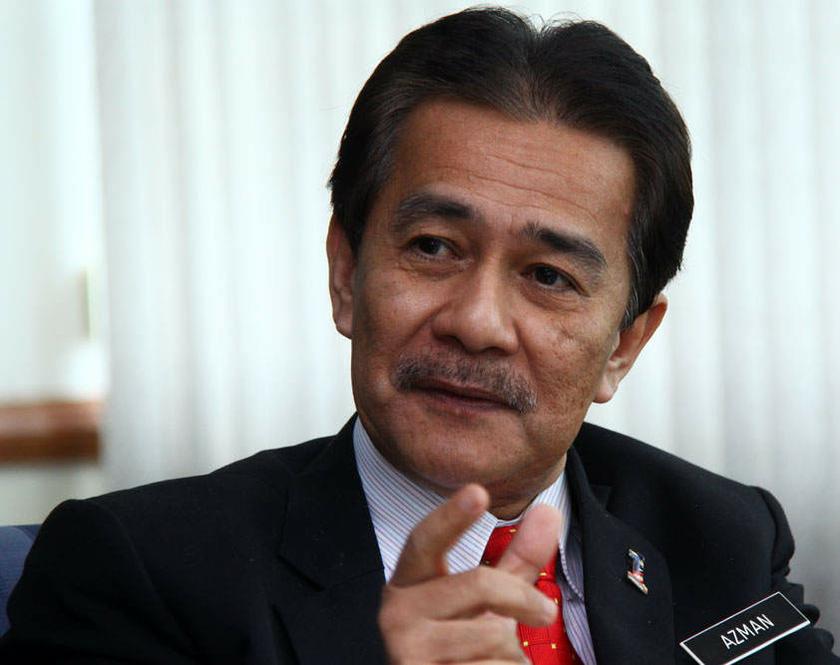 Datuk Azman Amin Hassan (picture), the appointed chairman of the panel, on Wednesday confirmed that its term ended on June 30 — just days after the Administration of the Religion of Islam (Federal Territories) Bill 2013 was tabled in Parliament.
Critics of the Bill’s controversial section 107 (b) complained that its attempt to legislate single-parent consent for the conversion of children to Islam is unconstitutional and against the Cabinet’s decision in 2009 banning such attempts without consent from both parents.
When asked if the Cabinet’s interfaith panel had met to discuss the controversial clause, Azman told The Malay Mail Online: “No, JKMPKA has expired last month.”
Azman explained that the Cabinet’s Special Committee to Promote Understanding and Harmony Among Religious Adherents (JKMPKA), which was set up in 2011, runs on a two-year basis.
But, he added, he remains the chairman of the defunct committee.
Azman, who is also National Unity and Integration Department (NUID) director-general, said JKMPKA was seeking to finalise the committee’s line-up for the new term soon.
Barely two months in his new role, Minister Tan Sri Joseph Kurup was last week handed his first major test in handling the concerns of a community of diverse ethnic groups and faiths, of which the majority are adherents of Islam — the country’s official religion.
Kurup had stepped into his shoes as the new minister in charge of national unity and integration along with the new Cabinet in May, taking over the post from Tan Sri Dr Koh Tsu Koon.
The newly-minted minister in the Prime Minister’s Department on Wednesday met the Malaysian Consultative Council of Buddhism, Christianity, Hinduism, Sikhism and Taoism (MCCBCHST) — the country’s largest non-Muslim interfaith group — and the Catholic Lawyers Society to hear them out on their views on the controversial law.
According to Azman, Kurup wanted to gather feedback at the grassroots level before bringing up the issue at the Cabinet meeting today.
On the same day, MCCBCHST also met with the MCA to share its concerns on section 107 (b) as well as clauses 51(3)(b)(X) and 51(3)(b)(XI) of the same Bill.
The MCCBCHST had previously asserted that clause 51(3)(b)(X) would empower the syariah court to declare that a person is no longer a Muslim, with clause 51(3)(b)(xi) authorising the syariah court to decide whether a deceased person was a Muslim or otherwise at the time of death.
Sardar Jagir Singh, MCCBCHST’s deputy president, said the jurisdiction in legal disputes over the religious status of individuals should lie with the civil courts instead of the syariah court.
“Any conversion needs witnesses, any dispute as of the conversion, the proper place (to decide whether a person is Muslim or non-Muslim) will be in civil court, not syariah Court,” he was quoted as saying by the fz.com news portal on Wednesday.
The Federal Constitution is worded such that Malays are legally Muslims. Islam also does not allow apostasy despite the constitutional guarantee on religious freedom, leading to legal complications — especially on the issue of jurisdiction — when Malays and Muslims seek to leave the religion.
Non-Muslims have also engaged in disputes with Islamic authorities over the religious status and possession of the remains of deceased family members who had converted to Islam.
Custodial tussles in cases of unilateral child conversion have been a growing concern over the years and provide a high-profile glimpse of the concerns of Malaysia’s religious minorities over perceived dominance of Islam in the country.
These legal battles also serve to highlight the complications of Malaysia’s dual legal systems where Muslims are bound by both civil and syariah laws, the latter of which do not apply to or recognise non-Muslims.


