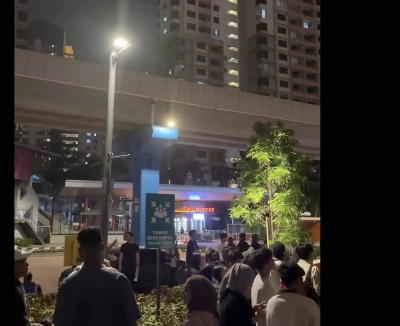












DEC 16 ― With the dissolution of Parliament after weeks of protest, Thailand is living through a political Groundhog Day, the Bill Murray movie in which his character has to relive the previous day over and over again.
But in the Kingdom, Groundhog Day is either Red or Yellow Shirt Day — depending on the political season. Whoever’s day it is, both sides are equally destructive and childish.
This time around (and much like in 2010), protests have paralysed Bangkok, choking economic growth and leading to fatalities. The lines between the Red Shirts and the Yellow Shirts are stark and the next polls, regardless of how decisive they might be, are unlikely to close the gap.
Even the increasingly desperate calls from the ailing yet still revered King Bhumibol Adulyadej for stability have had little impact. A lull was observed for his birthday, but strife has quickly resumed.
Clearly, the old sources of authority are losing their force. What will replace them is not clear.
The current cycle of violence was sparked when Prime Minister Yingluck Shinawatra attempted to introduce a political amnesty Bill which would have laid the ground for her brother Thaksin’s return. This ill-timed initiative set off a political firestorm. The Yellow Shirts, emboldened by the fallout of her miscalculation, are now endeavouring to remove a duly-elected leader.
Ms Yingluck has called for snap elections scheduled for February next year, ostensibly to let voters decide how the crisis should end. It is likely that, as in the past, her Puea Thai Party will emerge victorious. However, it is just as likely that the Yellow Shirts will still be determined to be rid of the Shinawatras — leaving Thais back at square one.
It has been seven years since Thaksin was removed by a military coup, and two general elections have taken place. Yet, Thailand remains crippled by unresolved political tension.
This is just the latest example of the extreme polarisation Thailand faces. Has democracy in Thailand failed?
The problem starts when players confuse the concept of “democracy” with political parties and elections. In effect, it becomes “democratic” if I get my way and “undemocratic” if I don’t.
But it is wrong to conflate “political parties” with “democracy”, as the two are, at times, very much at odds. Political parties are built on an emphasis of difference, while democracy is about how a society can successfully reconcile them. The tragedy for Thailand is that it is increasingly difficult for either the Red Shirts or Yellow Shirts to agree on anything important at all.
One key lesson can be drawn here: Politics and democracy involve much more than just parties. It is not enough for a country to simply hold free and fair elections — although no country can call itself a democracy without these. Rather, societies must accept that people will not always agree and that no government can ever be accepted wholesale by all its people.
This not only means that opposition parties have to accept legitimate election results. It also means that no government, regardless of their electoral majority, has the right to run roughshod over the rights of minorities, especially in societies undergoing fundamental change.
In the ending of Groundhog Day, Bill Murray’s character grows as a person and escapes the time warp cycle. It remains to be seen if Thailand can do likewise — but you can bet your last baht that the February polls will not bring this impasse to an end. -- Today
Karim Raslan is a columnist who divides his time between Indonesia and Malaysia.
* This is the personal opinion of the writer or publication and does not necessarily represent the views of The Malay Mail Online.