


MARCH 31 — Australia’s Cricket World Cup victory on Sunday — with their triumph over New Zealand in the final coming much more easily than anyone had expected — was just reward for a team which had clearly looked the best and most balanced throughout the tournament.
Whether with bat, ball or in the field, the Aussies were consistently excellent, suffering only one forgivable dip when their batting order collapsed in the pool stage meeting with New Zealand.
There were outstanding personal performances throughout the tournament, with seven different batsmen registering half-centuries and all four frontline bowlers delivering bundles of wickets at important times.
In the final, quickie Mitchell Starc — the best bowler in the competition — provided the most decisive single incident by dismissing dangerous New Zealand captain Brendon McCullum in the very first over.
From that moment onwards, New Zealand were up against it. Without the early flurry of runs they have come to expect from McCullum, the Kiwis were operating at a significant psychological disadvantage and the Australians did not let them escape.
A brutally disciplined display of bowling and fielding from the whole team was finally encapsulated when Glenn Maxwell took advantage of a moment’s hesitation from New Zealand’s Tim Southee to take the last wicket with a direct hit run out.
From the first over to the last, Australia had been collectively superb and there was never any real doubt that they would chase down the 184 needed for victory, even when opening batsmen Aaron Finch was dismissed early on.
Nobody deserves Australia’s success more than their captain, Michael Clarke, whose intelligent and quietly inspirational on-pitch leadership had been more than matched by his dignified response to the horror of his teammate Phillip Hughes’s tragic death after being struck on the head on the field of play towards the end of last year.
No mere sportsman should have to go through the awful ordeal as serving as the spokesman for a bereaved teammate, under intense pressure from the public and the global media, yet Clarke earned nothing but sympathy and admiration for his empathetic stoicism in the face of such a terrible incident, proving himself to be a top-rate human being as well as a world-class cricketer.
So it was entirely appropriate that Clarke provided a significant contribution to his team’s victorious innings in Sunday’s final, coming into bat with two wickets down — wearing a black armband bearing the initials ‘PH’ — and immediately looking composed, controlled and purposeful.
He had already announced that Sunday’s game would be his last in One-Day internationals, and with the quadruple motivation of playing his final game, captaining his team, winning the World Cup and honouring the memory of his fallen friend and colleague Hughes, Clarke can never before have felt such desire to succeed.
For many, it would have been too much pressure to bear. Not for Clarke, though, who controlled the adrenalin which must have been surging through his veins to play with beautiful class, initially setting himself and then, once he was feeling comfortable, providing runs at a steady rate.
The high esteem in which Clarke is held was clearly evident from the warm ovation he received — even from opposing New Zealand fans — when he reached his half-century, and there can’t have been many neutral fans watching worldwide who didn’t want Clarke to stay there all the way until the end.
As he advanced quickly towards the winning total, brilliantly hitting four consecutive boundaries off Tim Southee, the dream finish started to appear inevitable.
But sport rarely obliges with such perfect fairy-tale moments, and once again the ideal script was cruelly ripped up when, with just nine more runs needed, Clarke inside-edged a delivery from Matt Henry onto his own stumps, denying him the opportunity to crown his one-day career with the World Cup winning runs.
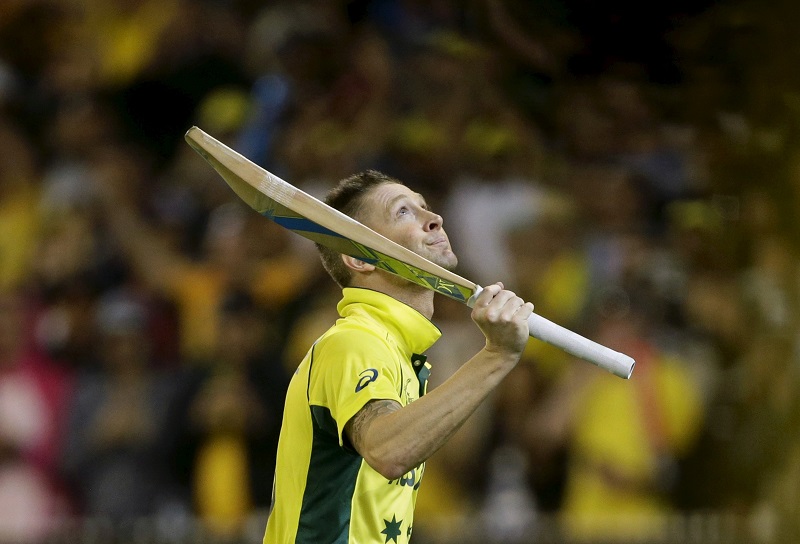
That did, at least, allow Clarke to walk off the field to a rousing standing ovation from the record crowd of 93,000, an intensely emotional moment which nearly had the Australia captain in tears as he acknowledged the rapturous applause and cheers with a gratefully lofted bat.
When Steve Smith hit the winning runs a few minutes later, Clarke was a picture of relieved gratification as well as exuberant joy.
As he congratulated his teammates and received the congratulations of the opposition, Clarke’s smiles were accompanied by more serious and intense emotions, and you knew that so many thoughts were flashing through his mind: 12 years of representing his country, four years of hard work to prepare for this tournament, bowing out as a world champion and, perhaps more than anything else, Phillip Hughes.
And Hughes was, inevitably, one of the first names mentioned in his post-match interview as Clarke dedicated the team’s success to their fallen comrade, drawing yet more warm applause from the watching crowd and, surely, television viewers around the world.
Nothing will ever compensate the Australian cricket community for the loss of Phillip Hughes, but winning a World Cup in his honour was the best they could do.
The fact that they achieved it with Michael Clarke, who unwittingly and unwillingly but admirably became the public face of his nation’s grieving just a few months ago, playing such a captain’s role in the final itself makes this one of the most satisfying sporting triumphs of recent times.
I’m sure any fair-minded fan will join me in sending sincere congratulations to Australia, and especially to Michael Clarke.
* This is the personal opinion of the columnist.


