
















TOKYO, June 27 — Japanese women are giving their husbands a reprieve, giving them larger monthly allowances to offset a rise in sales tax at the start of the financial year.
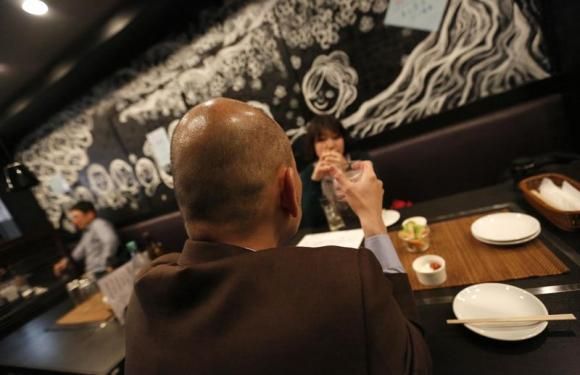
Spending money, often set by wives who control family budgets, rose 2.9 per cent to ¥39,572 (RM1,250) from last year, according to Shinsei Bank Ltd, a Tokyo-based lender whose data go back to 1979. Salarymen spent more on drinking sessions, spending ¥3,483 an average of 2.4 times a month.
While yesterday’s report suggests family budgets may be withstanding April’s 3 percentage point tax increase, allowances remain at about half the level in 1989 at the height of the asset bubble.
Prime Minister Shinzo Abe declared the end of deflation in an interview this week, and he now needs firms to dig into record cash piles and boost wages that lag inflation.
“The message is that it’s okay to raise allowances, but only by the amount of the sales-tax rise,” said Shinichiro Kobayashi, a senior economist at Mitsubishi UFJ Research and Consulting Co. “It’s clear that real income is falling.”
Allowances for men in their 20s fell 1.6 per cent, while those for men aged 30-59 rose. Women had ¥36,712 to spend, ¥2,860 less than their male counterparts.
The survey of 2,378 people was conducted online over three days from April 23. The poll included 1,048 male and 536 female full-time company workers, with the rest part-time workers of both sexes.
Even with the increased allowances, Japanese families have cut consumption since the tax rise. Spending by households of two or more people fell 8 per cent in May from a year earlier, according to data released today, after a 4.6 per cent drop in April.
‘One-Coin’ lunch
Men’s lunch money rose ¥23 to ¥541, roughly equivalent to Japan’s largest denomination coin plus the 8 per cent sales tax.
As the Bank of Japan conducts unprecedented easing as it targets 2 per cent inflation, restaurants near the bank’s central Tokyo building are offering “one-coin” ¥500 lunches.
“The number of lunches costing ¥500 is growing in this area,” said Lu Jianbo, 26, an owner of a Chinese restaurant on “BOJ Street”, named for the Bank of Japan.
Base wages, excluding overtime and bonus payments, fell in April for a 23rd straight month, while average overall pay for Japanese workers was ¥274,241, according to labour ministry data.
Accelerating inflation
The BoJ’s stimulus has spurred inflation. Overall consumer prices rose 3.7 per cent in May, the most in 23 years, according to data released today.
“Even if salarymen get bigger bonuses, they won’t be able to go drinking and dancing,” Mitsubishi UFJ’s Kobayashi said. “Their tough fight goes on.”
Yoshitaka Okita, a 61-year-old installation worker, doesn’t see any economic improvement under Abe’s reflationary policies.
“My allowance has been unchanged for at least 15 years,” Okita said outside Tokyo Station. “I switched from using a car to an electric bicycle because of higher gasoline prices.” — Bloomberg