
















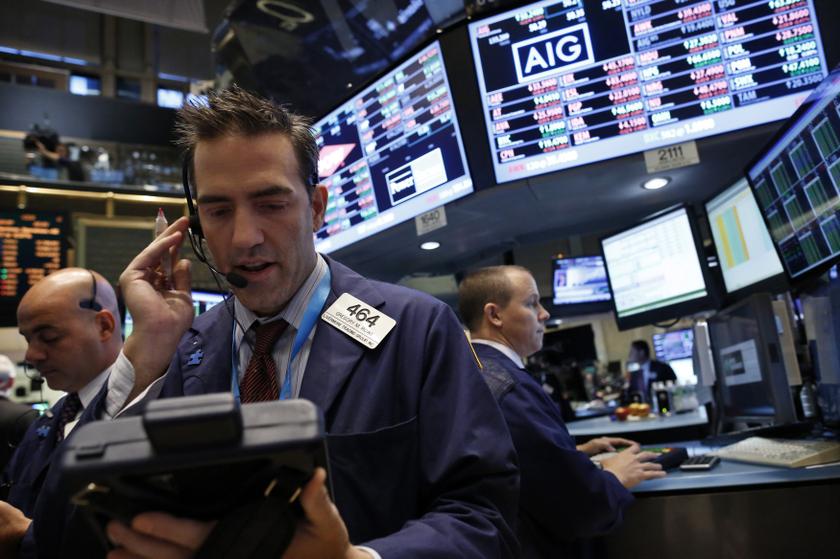


SYDNEY, Oct 14 — US stock index futures fell today and the safe-haven yen rose broadly, foreshadowing a rocky start for Asian shares after weekend talks in Washington failed to reach an agreement to avert a US debt default.
Adding to the gloom, data on Saturday showed China’s export growth unexpectedly fizzled in September, underscoring worries about flagging global demand.
US stock index futures fell 0.8 per cent in early trade. If the losses are sustained, it indicates that Wall Street would open lower later today.
US Treasury futures edged up 0.2 per cent, though the cash market will be shut due to the Columbus Day holiday. Japanese markets are also closed today for a public holiday.
US stocks had risen strongly in ahead of the weekend on hopes a deal to raise the US$16.7 trillion (RM53.1 trillion) federal borrowing limit was near. But US politicians remained at loggerheads.
Failure to break the stalemate before Thursday, the deadline to raise the debt ceiling, would leave the world’s biggest economy unable to pay its bills in the coming weeks.
This would raise serious concerns about US fiscal stability and potentially have a catastrophic impact on global financial markets.
Perhaps explaining why there is no major panic yet, many analysts have not ruled out a last-minute deal before October 17, believing even US politicians would not want to be responsible for the dire consequences of a default.
“Most likely, a solution will be found before, or be in the making, by October 17,” analysts at Nomura wrote in a client note.
“The tail risk comes into play if there is no clear framework for a solution by October 17. Entering this tail would see risk jump in terms of funding market stress and risk assets more broadly.”
In currency markets, investors reacted by seeking safety in the yen. That saw the dollar fall 0.3 per cent to ¥98.35, while the euro slipped 0.1 per cent to ¥133.22. The Australian dollar dipped 0.1 per cent to ¥92.74.
The dollar index, which tracks the greenback’s performance against a basket of major currencies, was only a touch softer. — Reuters