


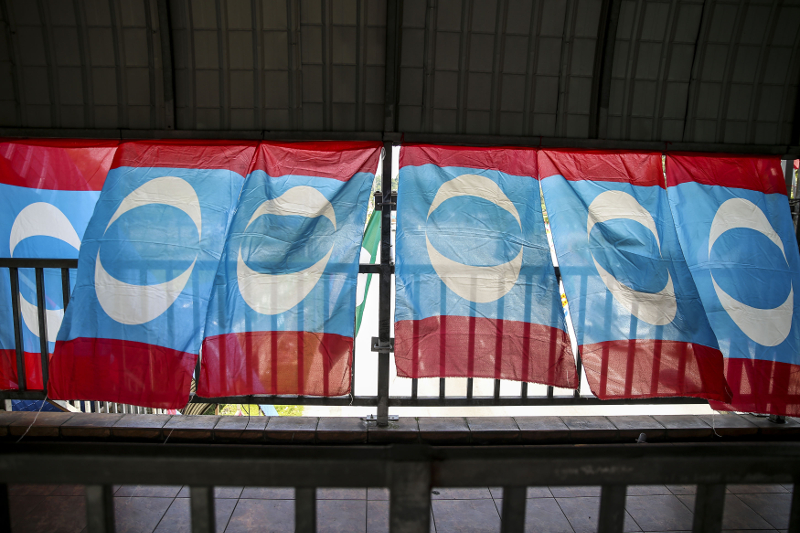
SHAH ALAM, May 4 — Pakatan Harapan (PH) will retain power in Selangor in the 14th general election (GE14), even as Barisan Nasional (BN) stands to gain more state seats there due to the latest redelineation exercise and postal votes, a think-tank said today.
Institut Darul Ehsan’s (IDE) chief executive Prof Datuk Mohammad Redzuan Othman said this was due to PH’s popularity among Selangor voters.
“BN can add seats, but Selangor will still be PH’s,” he told the media here when unveiling IDE’s latest survey findings.
“To me, it’s actually difficult for BN to take over Selangor because they aren’t as popular. They also have no leader and their leaders’ image does not reflect maturity,”
He said BN could offer promises for Selangor, but said voters are able to make their own evaluations after enjoying benefits during the two terms of rule under the federal Opposition.
“There are no major issues, although the MACC carries out raids, but it is clearly shown that they successfully proved integrity in terms of administration and ensure the people are able to enjoy maximum benefit from the policies made,” he said, using the initials of the Malaysian Anti-Corruption Commission.
He said BN’s initial assumption was that it could be confident of winning Selangor back after the redelineation exercise, but noted that was without taking into account issues such as the Goods and Services Tax (GST) and 1Malaysia Development Berhad (1MDB), and the increased Malay support towards PH, as seen in IDE’s latest survey.
IDE’s survey from April 21-23 showed that there was increased support for PH among Selangor voters across the three main ethnic groups.
In comparison to the survey results from January 5-7 on Selangor, PH support among Malay voters rose from 35 per cent to 43 per cent, and also increased from 63 per cent to 78 per cent (Chinese) and 49 per cent to 56 per cent (Indians).
BN suffered an across-the-board decline from 39 per cent to 33 per cent (Malay), 27 per cent to 19 per cent (Chinese) and 44 per cent to 41 per cent (Indian), while PAS had negligible or no changes to support levels among Selangor voters, IDE’s surveys showed.
There are currently 56 state seats in Selangor, with 29 seats required for a simple majority to form the state government.
In the 13th general election, BN won only 11 out of the 56 state seats in Selangor.
IDE’s study shows that BN could potentially win up to 25 state seats in Selangor, due to the shifting of voters in the latest redelineation exercise and three-cornered fights involving PAS.
Based on IDE’s survey and GE13 voting patterns applied to the latest electoral roll with the redrawn voting boundaries, the think-tank predicted that BN will be able to comfortably defend the seven Selangor state seats it won in GE13.
The seven seats are Sungai Air Tawar, Sungai Panjang, Hulu Bernam, Batang Kali, Sungai Burong, Jeram and Dengkil.
It said BN could potentially win 18 out of the 25 Selangor state seats due to three-cornered contests, including the four seats it previously won (Permatang, Bukit Melawati, Kota Damansara and Semenyih).
The remaining 14 out of the 18 seats are Sabak, Ijok, Gombak Setia, Pelabuhan Klang, Morib, Taman Templer, Dusun Tua, Paya Jaras, Sungai Kandis (Seri Andalas), Sungai Pelek, Sementa, Kota Anggerik and Selat Kelang.
Mohammad Redzuan indicated that the 18 state seats’ results will hinge on postal votes, which typically favour the ruling coalition.
In IDE’s number-crunching that does not include postal votes and advance votes, Mohammad Redzuan focused on some of the 18 state seats in Selangor, such as Sementa and Sungai Kandis, which were both won by PKR in Election 2013.
He said the redelineation exercise had boosted Sementa’s Malay voters from 46 per cent to 77 per cent, with post-redelination borders and GE13 voting patterns showing PKR winning by a 62-vote majority.
Based on IDE’s April survey and the latest electoral roll, PH could win by a marginal 1,192 majority against BN, a figure which could be higher if not for PAS taking up 5,829 votes.
Sungai Kandis, formerly known as Seri Andalas, also now has 73 per cent Malay voters as compared to 40 per cent in 2013.
Again, based on IDE’s April survey and the latest electoral roll, PH could win by a marginal 264 majority against BN, a figure which could be higher if not for PAS taking up 5,919 votes.
Such predicted wins on a narrow margin based on IDE’s model are far from secure, as the postal votes and advance votes would be an unknown factor that could easily tip the results in BN’s favour, he said.
Mohammad Redzuan concluded that PAS would not win any seats in Selangor going by its low level of support among voters, but said it could be a “kingmaker” by denying PH a win in these 18 seats and helping BN win them instead.
The overall support among Selangor voters as of April 21-23 for BN is 30 per cent (down from 34 per cent in January), 56 per cent for PH (up from 49 per cent), while PAS remains unchanged at 12 per cent and fence-sitters have gone down from 5 per cent to 2 per cent.
While PH’s support level in Selangor has improved, it is slightly lower than the 59 per cent enjoyed by the then-PKR-DAP-PAS combination in 2013 against BN’s 39 per cent.
Tomorrow, 278,590 advance voters nationwide from the police, army and general operations force, including their spouses, will cast their advance votes.
A total of 21,665 Malaysians are registered as postal voters, while the remaining 14,636,716 ordinary voters will vote on May 9.


