


KUALA LUMPUR, June 26 — Malaysia will gain more by being part of the controversial Trans-Pacific Partnership Agreement (TPPA) but the federal government has declined to divulge the cost-benefit analysis it used to back its support of the free trade deal.
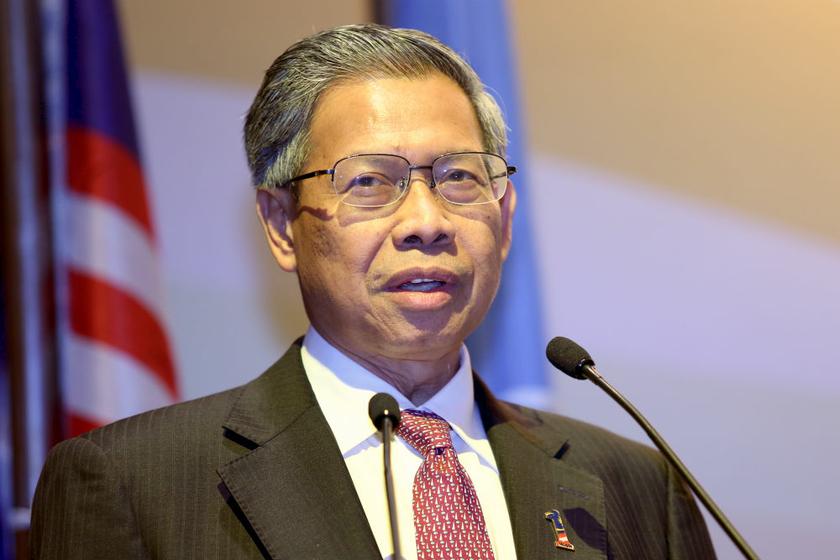 International Trade Minister Datuk Seri Mustapa Mohamed (picture) told Parliament today that Putrajaya’s refusal to disclose its approach was for “strategic” purposes, which appears to be the same reason behind why details of the negotiations must be kept confidential.
Rights and anti-free trade groups have called for more transparency since policies derived from the talks would have huge impacts on consumers.
“The cost benefit analysis… these are details that are strategic (to the negotiations). I think it would be enough for questions to be asked here by MPs and debates and the details in here,” Mustapha said in reply to a question from Klang DAP lawmaker Charles Santiago.
Santiago had during Question Time suggested that details of the negotiations be tabled in Parliament for debate or presented to a select committee.
The Najib administration is facing strong calls by business groups and the opposition to shun the TPPA following inflationary concerns, especially on prices of medicine.
Local pro-government business groups, including the conservative Malay Economic Action Council, have also called on Putrajaya to withdraw from the negotiations, arguing that small local companies would be forced to compete with cash-rich giants when the market opens up under the agreement.
Mustapa, however, maintained that the Barisan Nasional (BN) government would not agree to the TPPA if the deal would kill off local companies and push prices of basic goods like medicines up.
“There are no agreements on medicine patents. The government is firm in ensuring that medicine prices remain affordable,” he said.
The minister added that Putrajaya can refuse to agree to any provisions deemed hurtful to Malaysian interests and that any agreement under the TPPA must be reached through a consensus.
The TPPA has yet to be signed.
If signed, it will see free trade carried out between Malaysia, Brunei, Vietnam, New Zealand, Singapore, Australia, Japan, Mexico, Peru, Chile, the US and Canada.
Despite the opposition, Putrajaya appears dead set to proceed with the deal with government leaders including Deputy Prime Minister Tan Sri Muhyiddin Yassin openly supporting the move.
Mustapa said signing the TPPA would help Malaysian companies expand into new markets and also offer protection against any form of “trade barriers” as provided under the agreement.
Santiago argued that the deal would compromise Malaysia’s sovereignty, citing how countries like Germany and Australia, under their respective free trade agreements, were punished for implementing policies seen as anti-business.


