


HONG KONG, June 25 — Are you the kind of person who will travel for food? Then the next time you are in Hong Kong, treat yourself to a private dining experience at George Private Kitchen in the Tsim Sha Tsui neighbourhood.
Here, it almost feels like you're going to the cosy apartment of your foodie friend, who also happens to be a chef who can’t wait to show you dishes you’ve never tried before.
Chef and owner George Ip, 69, serves up traditional Chinese dishes with a side of history — those tied to emperors in ancient China and also to Hong Kong through the decades.
During a recent visit, the showstopper of the night was a dish where oranges were hollowed out and stuffed with crab meat before steaming, a dish which originated in China hundreds of years ago.
Ip traced this ancient dish’s origins to the emperor of the Southern Song dynasty who was gifted navel oranges from China’s present-day Jiangxi province.
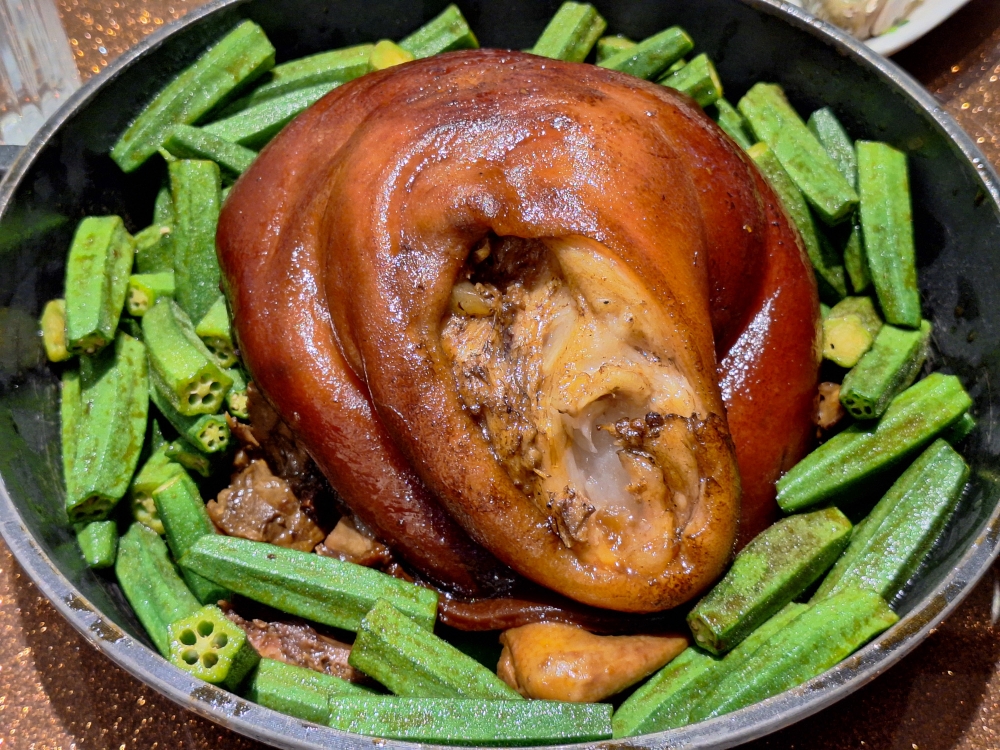
Another star was the braised collagen-rich pork knuckle with baby pigeon, which renowned Hong Kong food writer Chan Mong-yan said was a favourite dish of Qianlong Emperor.
Ip said he spent one month studying the brief descriptions in Chan’s book 食經 (Food Classics), learning how to make this dish after three tries. Then there were seven more attempts before finally identifying the lady's fingers as the perfect side dish.
The pork knuckle is simmered for three hours, with the resulting sauce used to slow-cook the pigeon until tender and juicy.
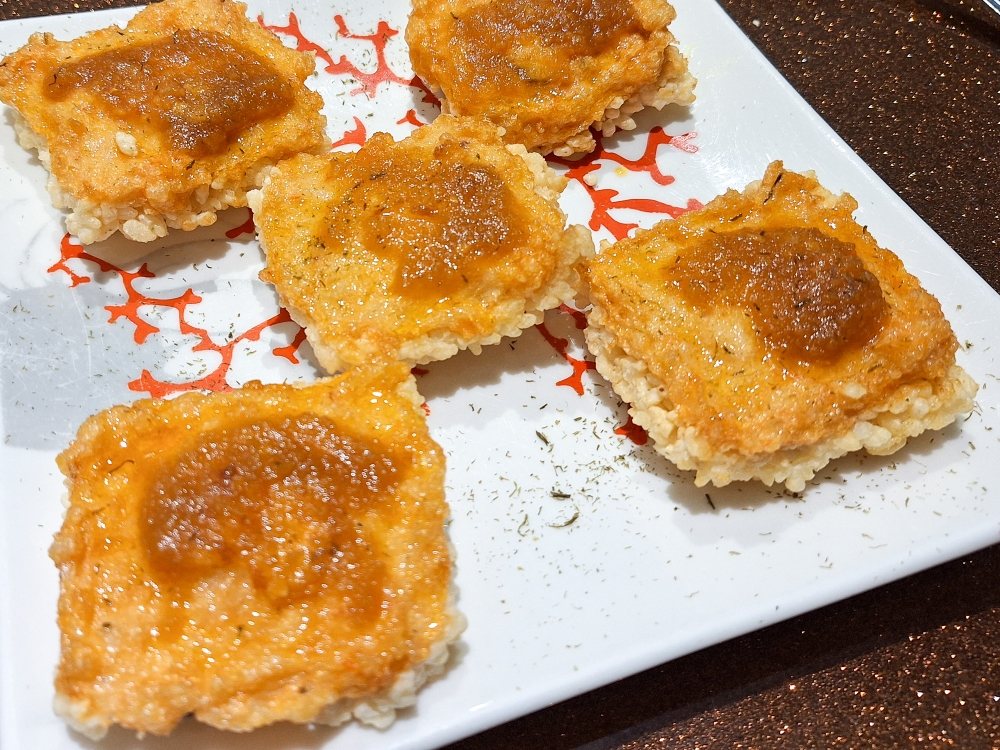
Then there was also deep fried shrimp paste on rice crust topped off with duck egg yolk, which was popular in Hong Kong in the 1960s and 1970s.
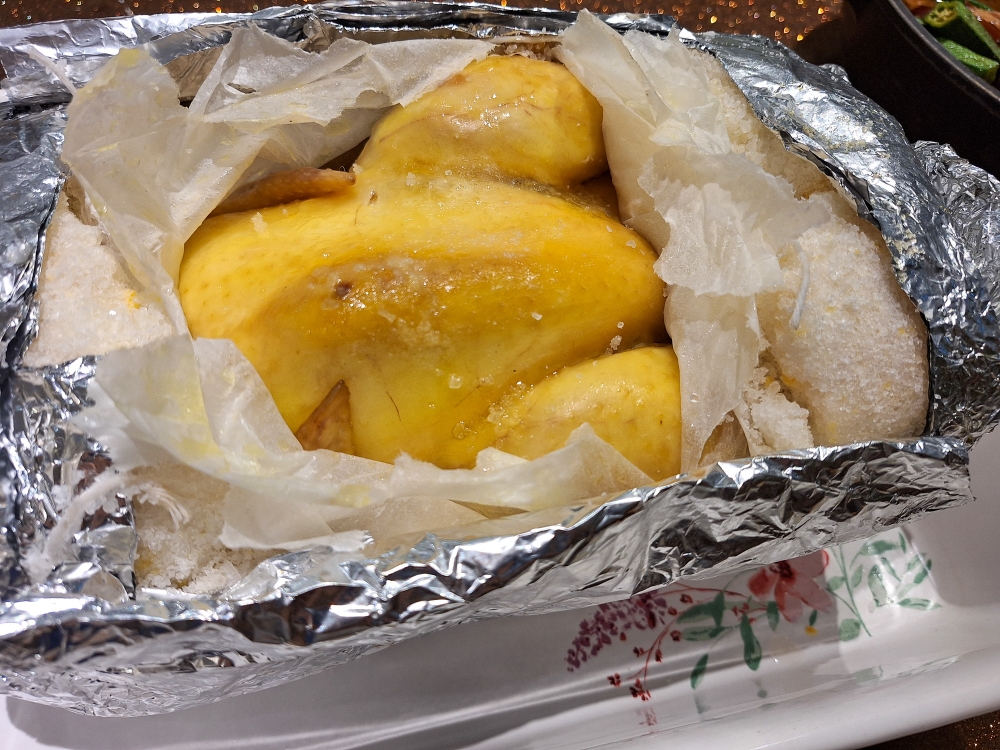
Here, you also get a peek behind the laborious process to make the dishes, along with cooking tips.
Ip says salt-baked chicken is a popular but much misunderstood Cantonese dish, as many do not realise that the chicken they order in restaurants are often simmered in salt water instead.
Ip said however that the salt has nothing to do with the taste of the chicken, but is used due to its high efficiency in transferring heat.
“So in the past when you don’t have an oven, you only have fire, you wrap chicken in salt and so the heat from the fire transfers quickly through the salt. But because the heat comes from one direction from the bottom, so after some time we turn it over to cook the other side, that’s the old way,” he said, also adding that another method involves frying and heating up salt in the wok.
Ip said there is no need to turn over the salt-baked chicken now in modern ovens as the baking temperature is constant, also noting that many Chinese restaurants are unable to oven-bake this dish as ovens are rare in their kitchens.
Using livestock chickens from Hong Kong farms that are at least 90 days old, Ip said his kitchen air-dries the chicken skin for three hours to achieve a shiny look.
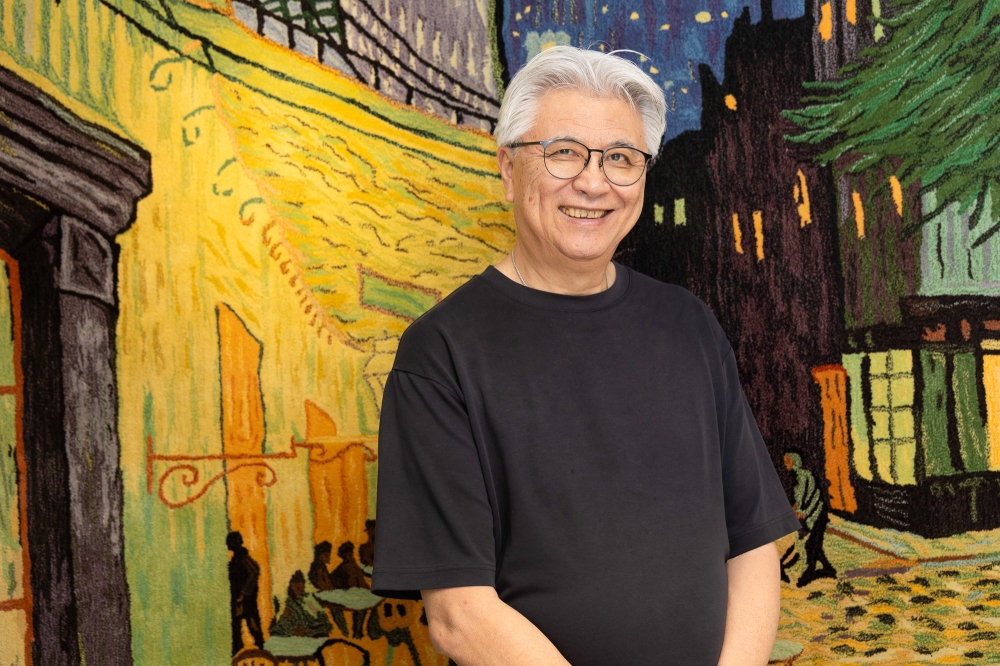
Pride in taking time to make good food with good ingredients
At George Private Kitchen, Ip takes pride in letting the natural flavour of ingredients shine with the help of minimal seasoning.
“Everything you eat in this restaurant, we don't use any MSG, we don't use any chicken powder. Everything is natural,” he said, adding that his kitchen takes time to reduce sauces instead of using starch to thicken it.
Sharing his motto of keeping it simple without too much seasoning, Ip said: “Because it’s important to let the guest taste the food, not your cooking. But too many chefs try to impress, they say, ‘I know how to cook’.
“The chef is only a servant to the food. So, the chef should actually try to have as little influence on the ingredient as possible. If you pick a good ingredient, you don’t need to do anything,” he said.
He said his restaurant’s dishes would typically not be found at commercial kitchens, because of how much time or labour it would take — such as the Cantonese-style stir-fried beansprouts with mixed fungus (which he said would be more likely to be made by one’s grandparents at home).
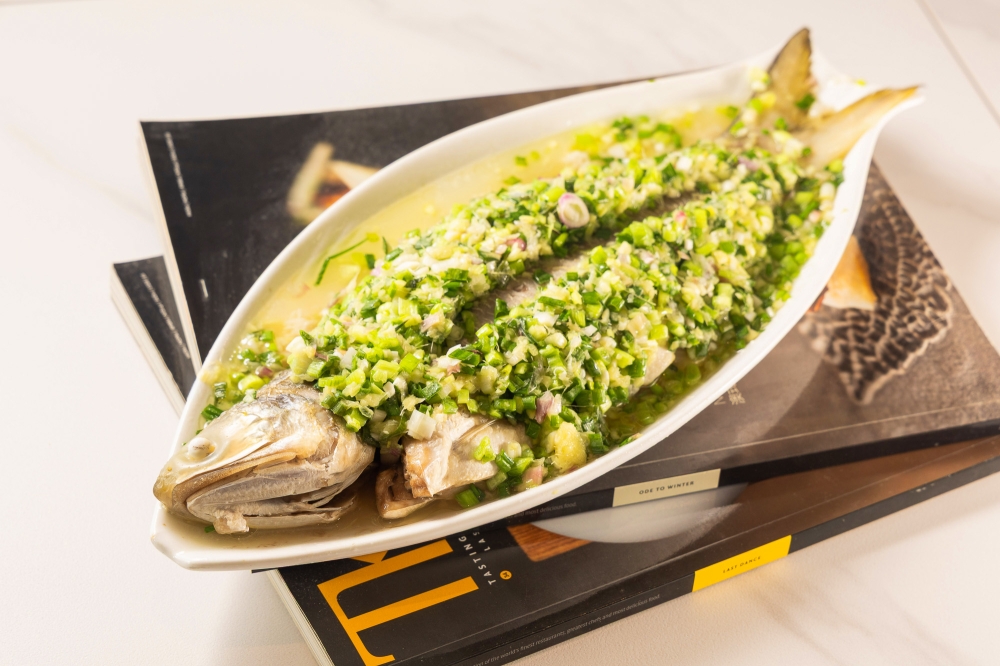
Another example is the threadfin fish (or ikan kurau in Malay) in distilled grain sauce, which Ip chose to put through a “sauna” in the steamer for 35 minutes, instead of the quick-steaming method that would usually take eight minutes.
Deboning the fish before wrapping it together with the plate in aluminium foil for the “sauna”, Ip said this slow-cooking process makes the fish melt in your mouth, while the low-temperature method also helps the green onion retain its colour since it is not exposed to direct heat.
Ip disagrees with the idea of using costly ingredients in order to put on higher prices: “Now one thing I quite insist, I don’t put expensive ingredients on a dish only for the sake of charging more money. You won’t see me put truffles. You don’t need to put fancy ingredients on the dish.”
Passing down heritage dishes
Born in China’s Anhui province to Hong Kong parents and growing up in Hong Kong since age four, Ip was not professionally trained as a chef.
Ip only started cooking as a hobby after retiring from the printing and packaging industry, and opened his restaurant several years later after meeting his cooking mentors — food writer Chan Kei-lum and his wife Diora Fong Hui-lan.
The couple, who are Mong-yan’s son and daughter-in-law, are known for their cookbooks such as the Phaidon-published definitive Chinese culinary guide, China: The Cookbook.
In November 2016, Ip opened his private kitchen, with its menu featuring Chinese cuisine largely inspired by his mentors’ cookbooks and Mong-yan’s Food Classics 食經.
“One of the reasons I do this private kitchen is to try to pass on the dishes to the next generation.
“Because as you see, all these dishes are very unusual, but they are for an ancient time, so someone needs to take it up and make it accessible, then pass on the next generation to continue the tradition. That’s the whole purpose of having this private kitchen,” he said.
If you want to try George Private Kitchen, book in advance for lunch (at least one week ahead) and for dinner via WhatsApp for a personalised tasting menu of nine to 10 courses, with the minimum being a group of four and a minimum spend of HK$600 (RM315) per person.
Floating clouds of scallops in a heritage courtyard
Also at Tsim Sha Tsui is The Queen (后園), a restaurant offering refined Cantonese food, handmade dim sum and reimagined Chinese classics in the historic 142-year-old Victorian-era building, 1881 Heritage.
At the former Hong Kong Marine Police Headquarters, we enter an enclosed courtyard that inspired The Queen, as a traditional Chinese courtyard design “siheyuan” protects the queen from outside intrusion.
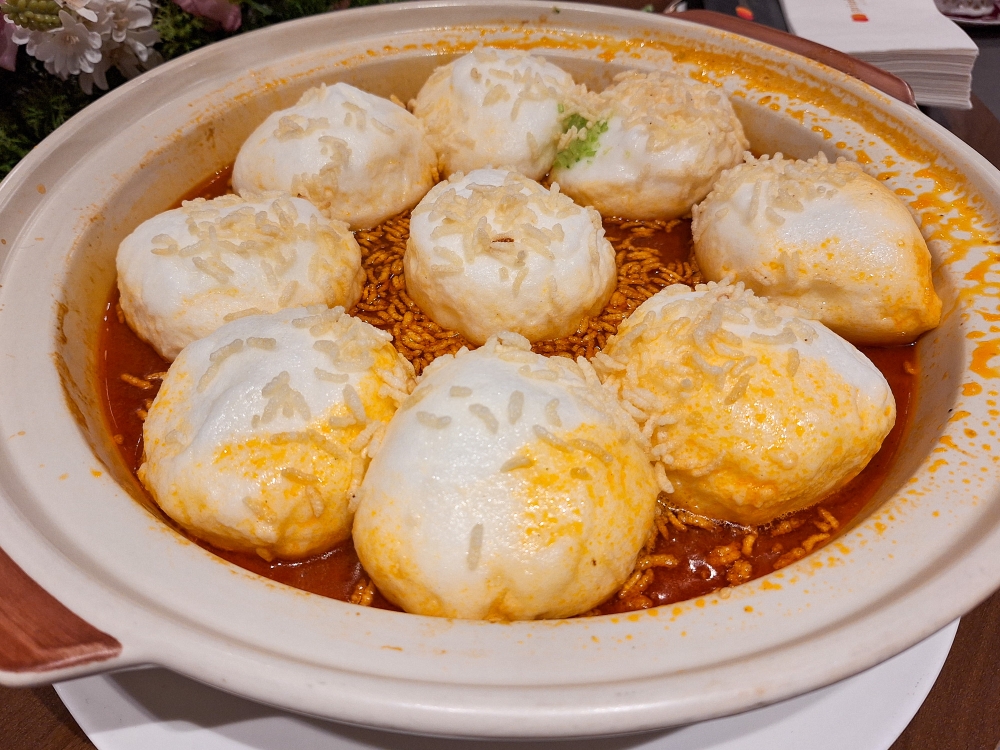
The most striking dish that we tried during dinner here was white fluffy clouds of scallop paste that almost appear to float on the sea.
The Queen’s chef Vanness Pun told Malay Mail that these white scallop balls are actually a “handmade scallop mousse — whipped egg white folded into scallop paste, shaped and gently cooked at low temperature for a light, fluffy bite”.
He said these are served in a “rich lobster broth simmered with tomato, onion and celery, with deep-fried crispy rice that starts crunchy then soaks up the soup for full flavour”.
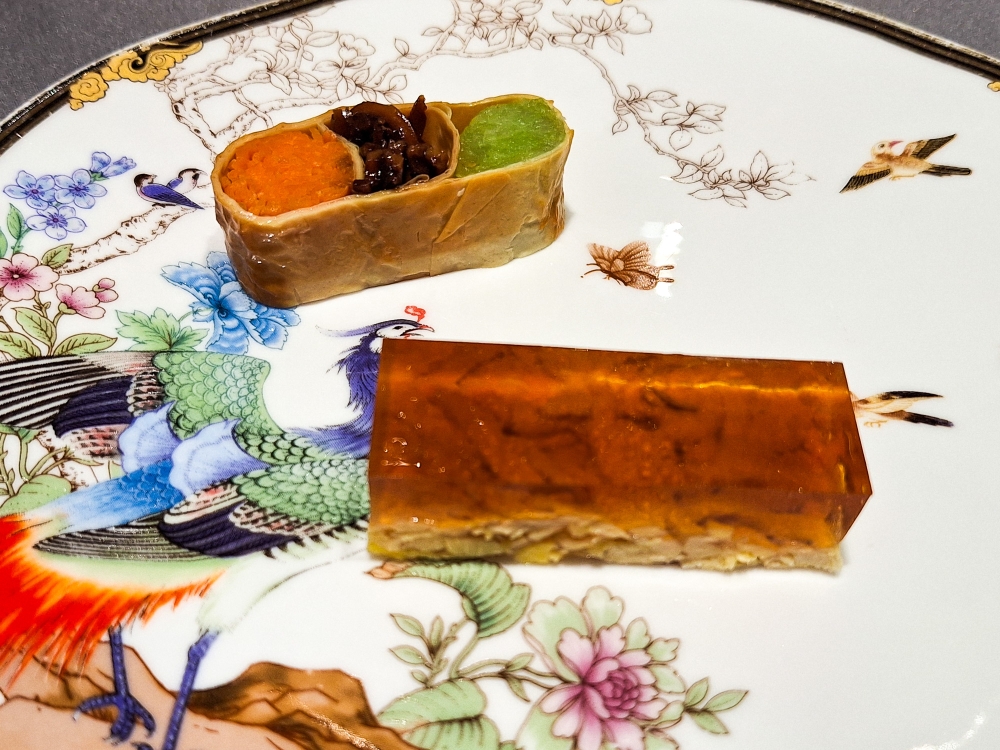
The chilled chicken with Chinese hua diao cooking wine in jelly-like form on top was a cold and refreshing bite, and paired well with the crispy bean curd skin with mixed vegetables.
Other dishes included the warm and comforting double-boiled chicken soup with black garlic and polygonatum root (a traditional Chinese medicinal herb); and a gentle dish of braised water bamboo in broth.
Dim sum with an artistic touch
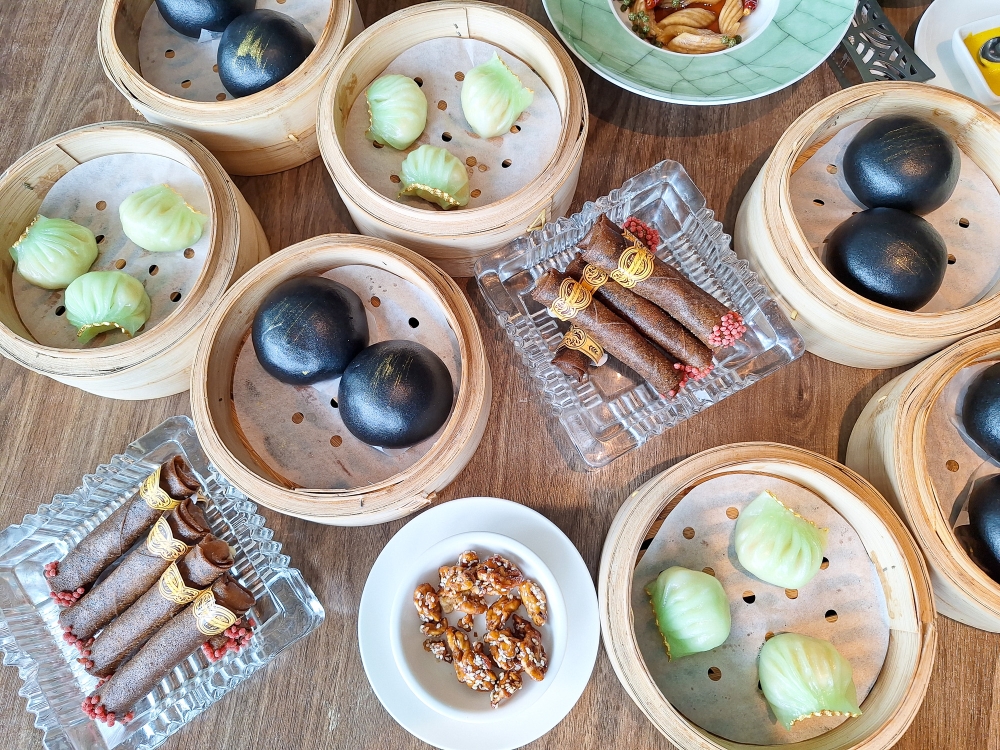
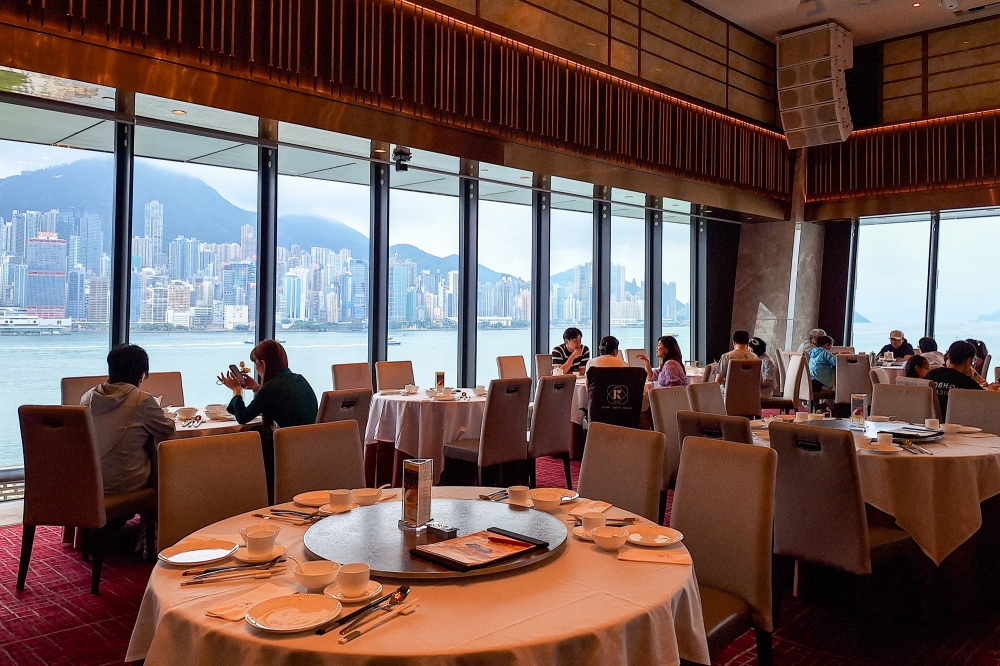
If you are spending the day museum-hopping at the West Kowloon Cultural District (WestK), make sure to head to the fourth floor of the Hong Kong Palace Museum, where King Lung Heen offers visually-delightful dim sum with a 270-degree view of the Victoria Harbour.
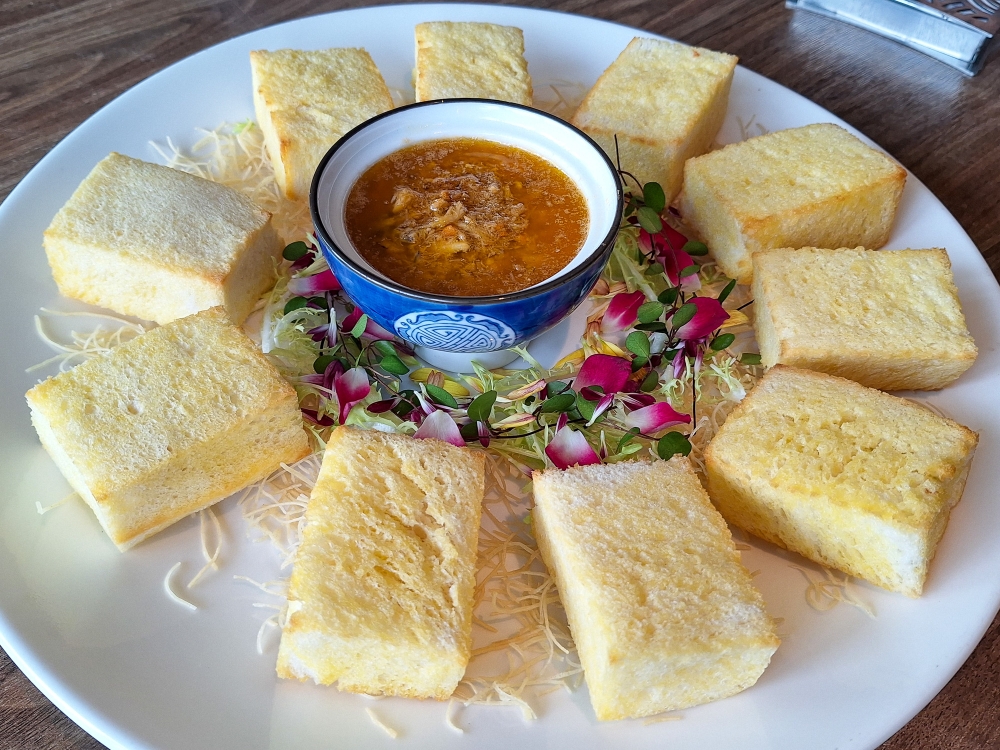
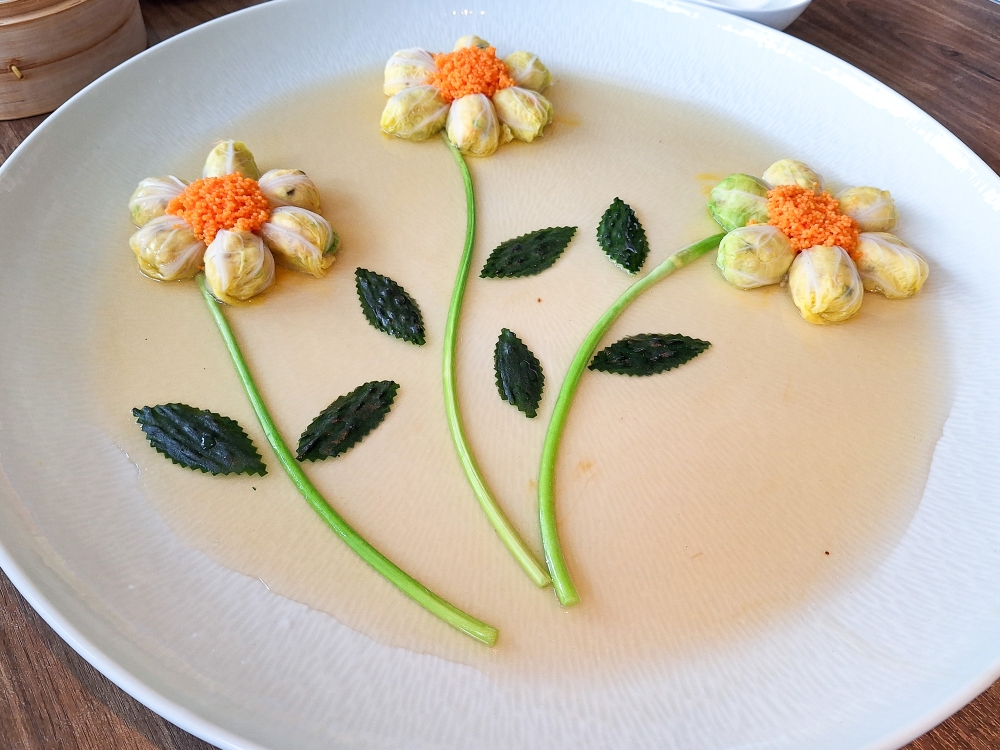
Try the spring rolls shaped like mini cigars, or the thick toast with baked crab roe, or the vegetable-wrapped cuttlefish balls that look like a work of art.
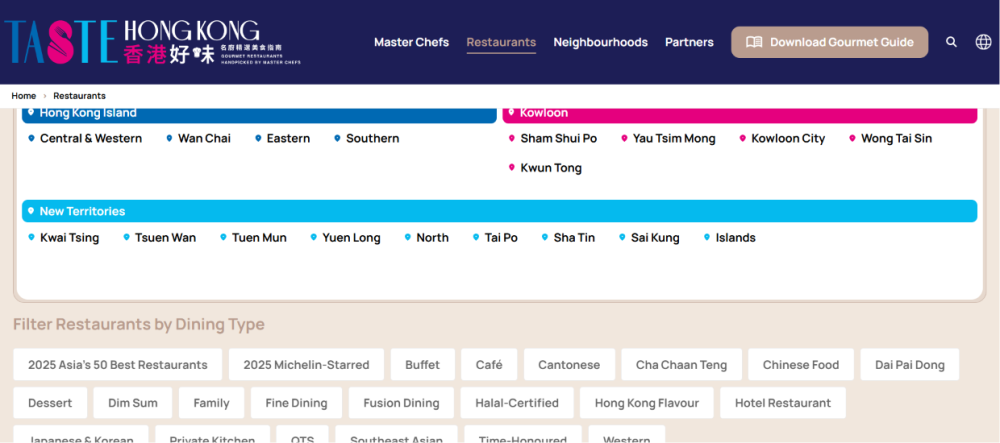
These three restaurants are part of the Taste Hong Kong gourmet guide which lists 250 eateries handpicked by more than 50 master chefs of Hong Kong.
Check out the Taste Hong Kong website: https://tastehk.discoverhongkong.com/en/restaurants
It’s really easy to use.
You can either choose one of 18 neighbourhoods, or filter the restaurants according to 22 categories (such as 2025 Asia’s 50 Best Restaurants, 2025 Michelin-Starred, Dim Sum, Cha Chaan Teng, Dai Pai Dong, Private Kitchen and Halal-Certified).
Recommended reading:


