


AUGUST 9 — There’s a joke about how lecturers in Malaysia today aren’t lecturers anymore — we’re basically administrators who happen to teach classes.
Lecturers are also counsellors, confidants, immigration liaisons, “priests” (as students often confess their sins to us), stand-in parents, translators, complaints department officers, messengers for parents who can’t talk to their kids, care-givers, anger management therapists, citizen law enforcers, accidental “motivational” speakers, marketing executives, lobbyists, fall guys, parent relations officers – you name it.
The Malaysian Quality Agency (MQA) documentation and accreditation process in itself already demands practically an entire department with hundreds of hours required in manpower and meetings (see note 1).
Some universities have a specialised centralised team. Others? Uh, just ask the lecturers to do all the work lor!
Likewise, there is an asymmetry when it comes to the academic and marketing departments i.e. in many campuses you’ll see lecturers doing “marketing” work but not the other way round.
You’ll find lecturers helping out in student recruitment events but you won’t see marketing executives, uh, taking over academic-related duties.
But the care-giver role is especially critical.
Once, many years ago, a lecturer drove me home through a storm when I was stuck after class.
Another ensured I ate before a late-night study grind. David Graeber argued that society undervalues roles rooted in care, yet they’re what keep us human (see note 2).
In Malaysia’s diverse lecture halls, this rings true, especially for foreign students navigating a new world.
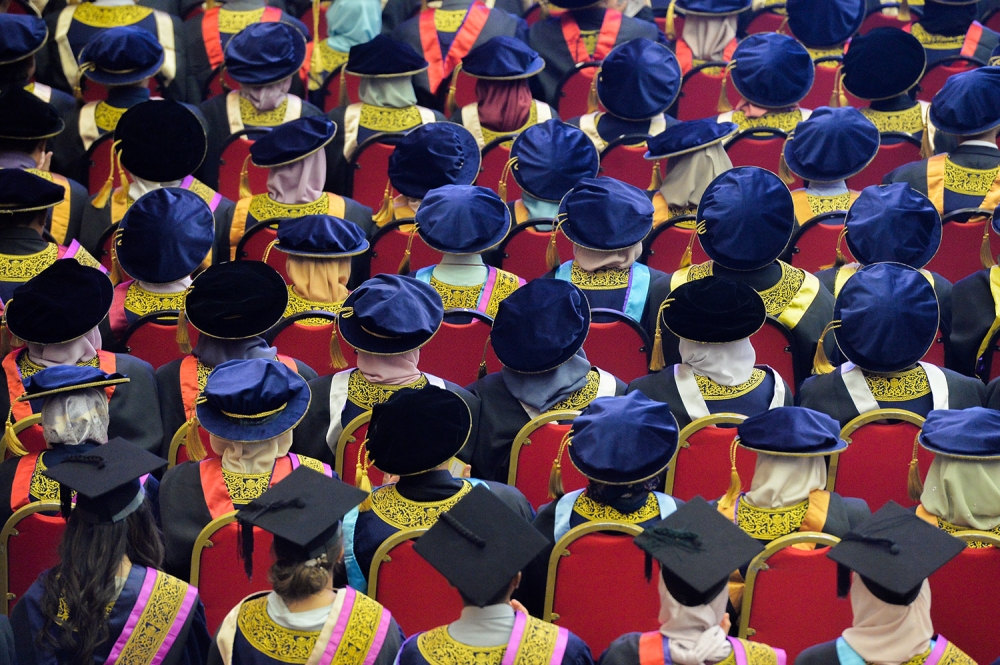
Take the thousands who flock here for affordable, quality education — Chinese, Indonesians, Africans, those from the Middle East, etc.
They arrive with big dreams but also big hurdles: language barriers, culture shock, homesickness, immigration problems, sub-par university on-boarding, confusing course-selection procedures, etc.
Every new semester, my colleagues and I need to answer the desperate questions of hundreds of students from China, all semi-panicking about why their selected courses aren’t approved yet, will their attendance be affected, how to submit assignments, when will holidays begin, is there a “Certificate of Study” given so they can show the authorities back home, etc.
Now imagine those who fly in late. We have to deal with all of them, answering their questions using Google Translator, giving them assurances we can’t really give, and so on.
I believe these moments reflect Graeber’s point: Caring work isn’t just functional — it’s transformative, building environments where people flourish.
Malaysia’s education hub status magnifies this issue.
Lecturers are cultural and institutional guides, make-shift uncles and aunties to help students, many of whom are well and truly lost procedurally, culturally and academically.
As if that isn’t enough, we’re also quasi-priests to students who somehow have many “sins” to confess. “Sir, I know I wasn’t supposed to do X but because of Y I had to choose Z which led me to X and…”
I’ve heard of a colleague hosting a potluck so foreign students can swap dishes and stories, easing their isolation. It’s not in their contracts, but it fosters belonging.
Many lecturers aren’t chasing prestige or pay — they’re fueled by passion to see these students get through college in one piece and with their love of learning intact.
That’s the caring ethos Graeber championed: work that matters because it lifts others up.
Do I have to mention that all this isn’t easy?
Picture a lecturer juggling packed classes, research deadlines, and endless paperwork, yet still finding time for a struggling student.
It’s late nights, quiet sacrifices — exhausting stuff. Caring roles demand resilience, often without fanfare.
For foreign students, that extra effort — a kind word, an hour of guidance — can shift their entire experience. One lecturer’s patience might mean a homesick student sticks it out instead of booking a flight home.
As for being the fall guy, it doesn’t take a genius to see that in many cases the institution will seek to avoid problems with their customers (i.e. the students) and top management, as we all know, is very apt at defending itself.
So when a problem occurs and the client and leaders cannot be faulted, who do you imagine will get the rap?
Next time you walk by a lecture hall, look past the slides and exams. Lecturers are Malaysia’s unsung Crisis Officers and Absorbers, shaping minds and lives — especially for those far from home. They don’t get medals, but their impact ripples.
In a country like Malaysia betting big on education, lecturers are the ones ensuring no student gets left behind, to the point that offering care — and any other form of assistance — is the real backbone of learning.
Note 1: I don’t mean to denigrate the importance of the MQA but it’s worth repeating that as at 2024 (the last time I was involved in the process) the agency still required departments to submit CD-ROMs for new program applications. This is part of the oversight for academic quality — let that sink in.
Note 2: David Graeber’s posthumous book, The Ultimate Hidden Truth of the World: Essays, published in November 2024 by Farrar, Straus and Giroux argued that co-operation and caring are fundamental to an anthropology of freedom from coercive structures and authoritarianism.
* This is the personal opinion of the columnist.


