


GEORGE TOWN, Aug 9 — For more than two decades, Lee Chee Cheng has turned plain planks into ornate signboards bearing gilded Chinese characters, dragons, qilin and other symbols of prosperity.
The 63-year-old proprietor of Sung Dynasty Wood Carving learned the traditional craft from his late uncle, who had operated from Air Itam, before eventually taking over the trade.
“I learned from my uncle for several years. Before that, I worked in sales, selling books and cars,” he said in an interview with Malay Mail.
Labour of love
Lee said he had initially resisted entering the labour-intensive trade when he was younger, choosing instead to work in other industries.
“You know how it is, when you are young, you want to do other things, you don’t want to be involved in manual work that seemed tedious,” he said.
However, when the economy slowed in 1997, it was a difficult time for his sales job so he began helping his uncle during his days off.
“I began to see the value in the trade then but I was still working at that time so I only helped out whenever I have time,” he said.
That was when he slowly learned the trade from his uncle.
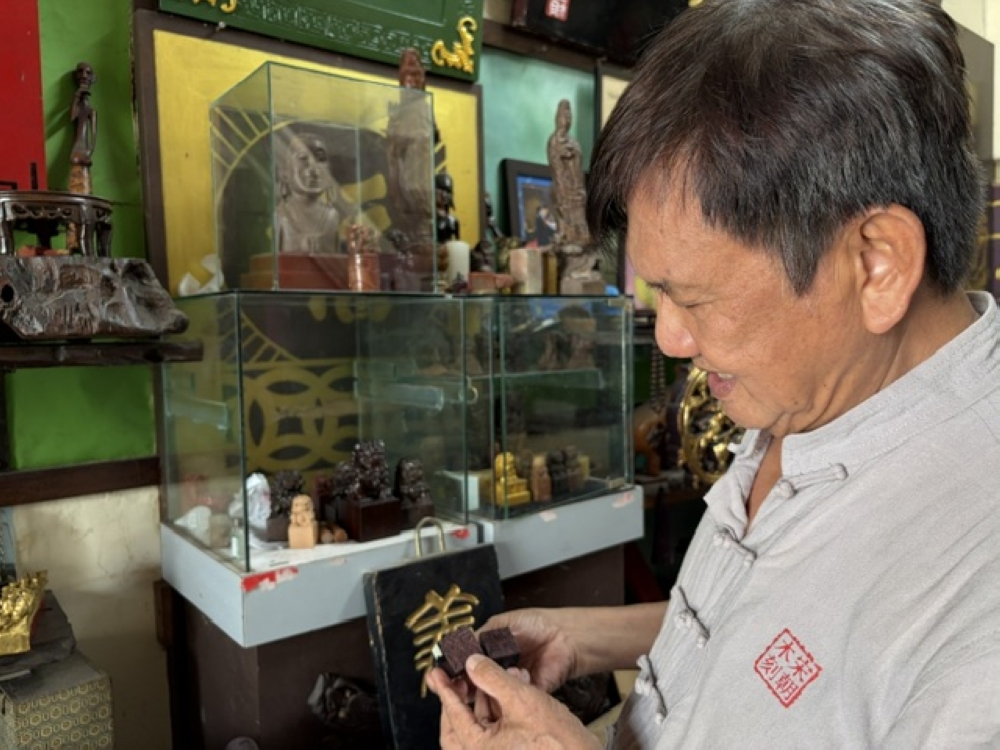
The family business
“When my uncle passed away, the family asked if I wanted to take over and since I realised my sales job was going nowhere, I decided to take over and give it a try,” he said.
That saw the birth of Sung Dynasty Wood Carving about 20 years ago, first being based in Air Itam before relocating to its current premises in Carnavon Street about 10 years ago.
“I named it Sung Dynasty because that was the era known for its artisans and craftsmen,” he said.
He said the early years of the business were difficult, with few customers and orders and he was running at a loss in the first year.
“It was because I was new in the industry so it was not easy to get customers to trust my work,” he said.
Steady demand
However, as the years go by, Lee started to gain more customers, most of whom are temples, associations and businesses.
“Business started improving about 10 years ago so finally, I was able to break even and earn a good income,” he said.
Today, his business is stable and he no longer has to worry about covering costs such as rental and utility bills.
“Now I worry about whether I can meet all the orders,” he said.
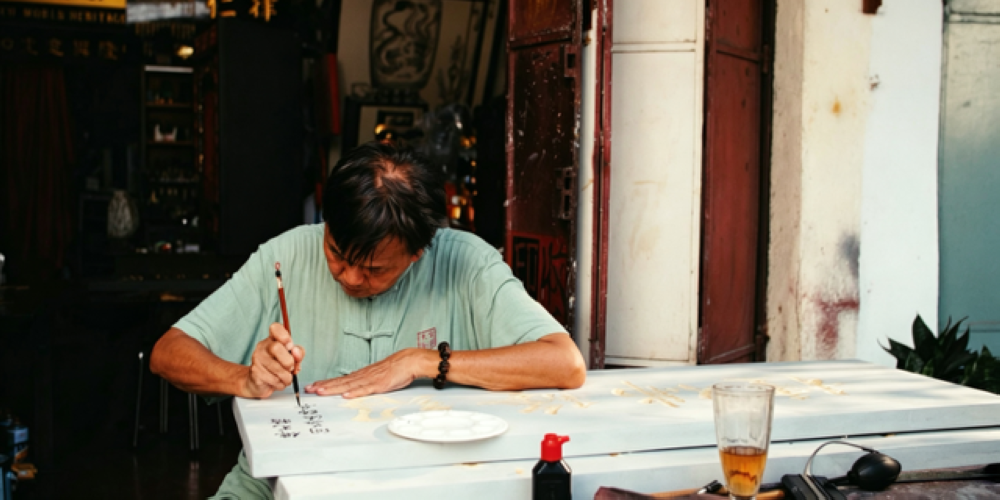
Attention to craft
Other than making new signboards, Lee also restores damaged antique deity statues and signboards.
“If the signboard was too damaged, I would have to make a new one for them but if it’s an antique, I find a way to restore it,” he said.
In addition to signboards, Lee also carve wooden altars and traditional Chinese name stamps.
“I work alone on most orders so that’s why I worry I am not able to meet customers’ orders on time but I do have an assistant who helps to carve the name stamps,” he said.
Despite working alone, Lee takes between four to five days to produce one signboard.
“The whole process is quite straightforward, I coat it first, then draw in the designs, carve out the motifs and after that I spray paint it either black or red, according to the customer’s requirement,” he said.
He said it takes a day for the paint to dry and once it’s fully dried, the last step was to apply gold leaf on the wordings, which is usually the name of the business, association or temple.
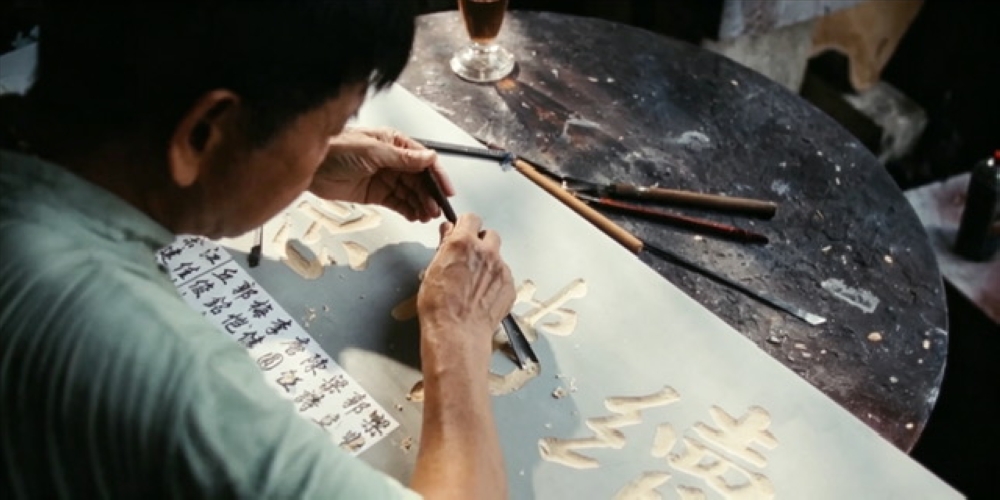
Faithful clientele
Lee said fewer people were entering the trade, which has led to more customers seeking his services for wooden signboards for businesses, temples and occasionally homes.
“These are what we called kam chee chiu pai (golden-word signboards) as the wordings are always in gold,” he said.
As for the designs, he said the placement of the wordings and motifs such as the flowers and mythical creatures like dragons and qilin must follow traditional conventions.
“I can’t simply decide to draw a durian on it, these signboards that are placed on the front of the premises must have auspicious motifs in accordance with tradition and culture,” he said.
While Lee said wood carving is not a trade that will make someone rich, he believes it is a specialised tradition that should be continued.
“With this kind of handicraft, you will not become rich, but you will not be unemployed either,” he said.
“At my age, I can accept that. Compared to working elsewhere, this is better for me. It is a craft,” he added.
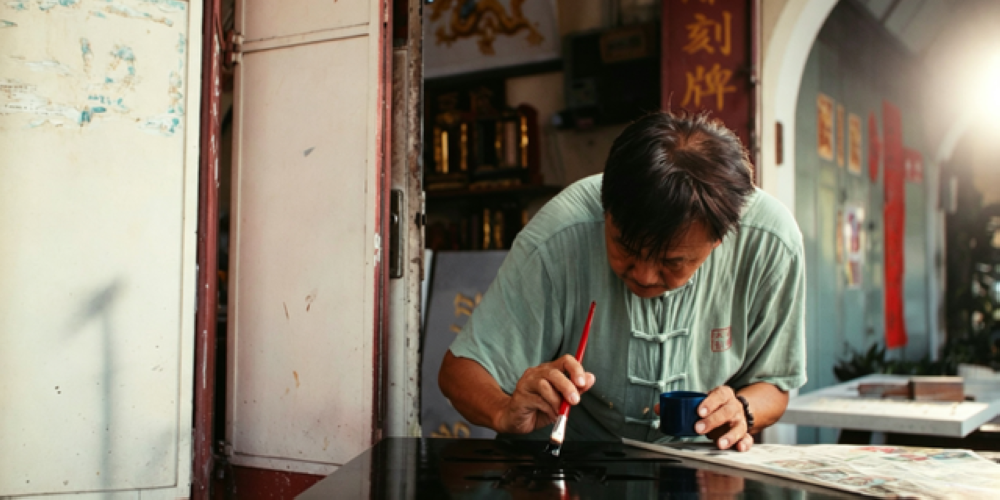
Passing on the torch
Lee’s children are not interested in taking over the business as they have their own careers but he is not opposed to teaching his trade to the younger generation.
“I will be teaching others interested in this craft under the Penang Heritage Trust’s Penang Apprenticeship Programme for Artisan (PAPA) programme,” he said.
He had even prepared the basic materials such as small wooden boards for the training programme.
Lee was among 10 traditional trades featured in Penang Global Tourism’s traditional trades campaign this year, held in collaboration with Penang Heritage Trust.
The campaign was presented for the second time following its successful debut last year and was recently launched by state tourism and creative economy committee chairman Wong Hon Wai.
The other nine traditional trades featured are Ong Chin Chye the joss stick maker, SM Badjenid and Sons, Jeruk Madu Pak Ali, San Kwan Loong Soy Sauce Factory, Eng Seng Kuih Kapit, Yeoh Siong Huat bedak sejuk maker, Teochew opera, Raju Murugesan the goldsmith and Kenny Loh the kebaya designer.


