











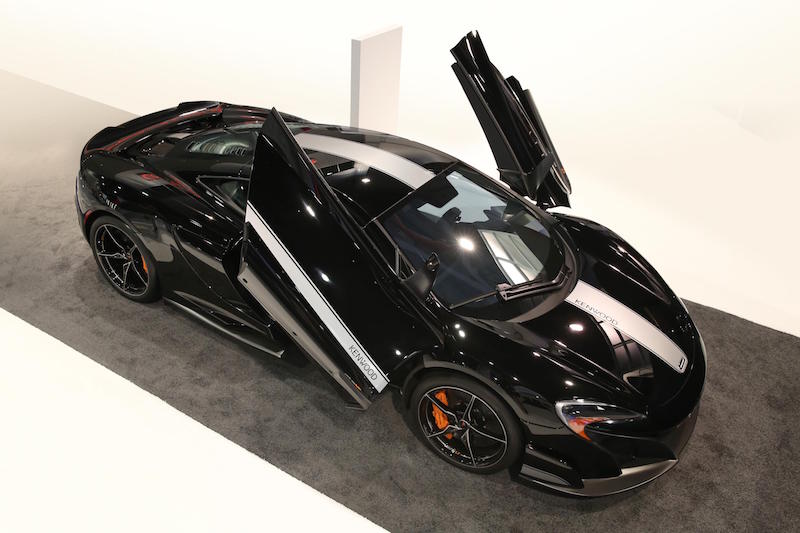


LAS VEGAS, Jan 7 — The British supercar maker that is usually only focused on squeezing horsepower out of its engines and making its dream machines stick to the road and track, has finally turned its attention to bringing its cockpits and in-car technology up to speed.
However, that doesn’t mean that the McLaren 675LT JVC Kenwood Concept unveiled at CES is packed with 4k widescreen displays and its own Netflix account.
If anything the supercar is a high-tech filter, sifting out all of the elements of next-generation infotainment and connectivity that could potentially detract, rather than enhance, the experience of owning a car capable of going from 0-100km/h in 2.9 seconds and on to an incredible 330km/h (205mph) top speed.
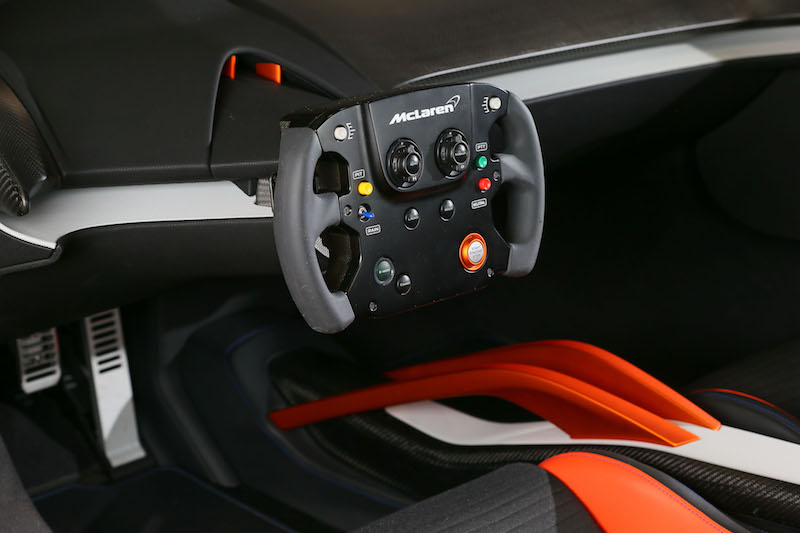
It’s also why on first glance, the cabin seems even barer than that of a standard McLaren. There’s no instrument binnacle or centre console. Instead the concept is the first McLaren to sport a Head Up Display (HUD) and it shows all relevant information including proximity warnings when other vehicles or obstacles are in blind spots.
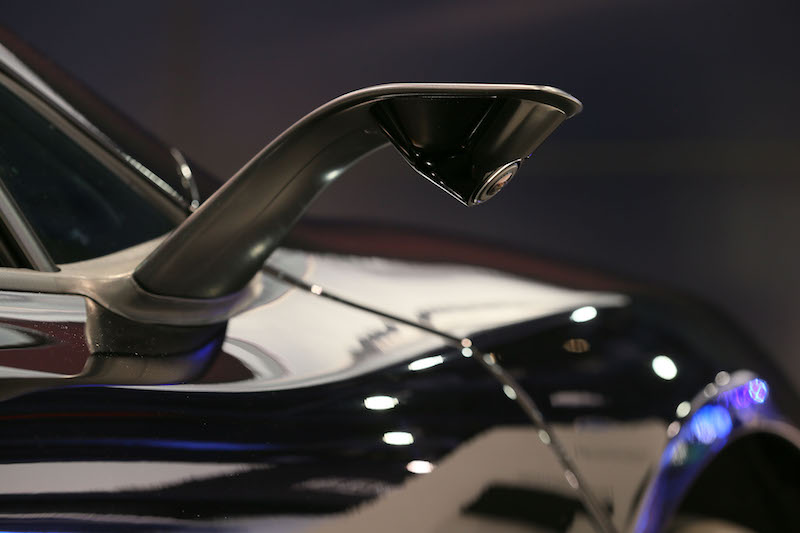
Gone too are the wing mirrors, in favour of cameras that offer a better view along the car’s sides and improve performance too, as they’re more aerodynamic. Their blade shape also means that when the car’s pushed to its limit they will help to generate more downforce keeping the vehicle glued to the road rather than dumped in a roadside ditch.
The rearview mirror has also been thrown back into the parts bin thanks to an integrated rear reversing camera. And with three cameras covering every aspect of the vehicle behind the driver, the view offered is a true panorama and something just as useful when racing on the track as when trying to negotiate a carpark.
McLaren chose to work with JVC Kenwood on the concept to mark the firms’ 25th anniversary of collaborating in Formula 1, and, as well as boosting the car’s tech capabilities, the changes have also enabled the companies to get creative in terms of cabin appointments and materials.
With so many objects jettisoned, there is space for more layers of leather that run along the transmission tunnel and wrap over the top of the dashboard. The surfaces in front of the driver have been given a waxy grain finish to eliminate potential reflections, crucial when all information is being projected onto the windshield.
However, outside, with the exception of blade-shaped digital cameras in place of traditional door-mounted mirrors, the exterior remains untouched. — AFP-Relaxnews