


JUNE 25 — Malaysia likes good news about university rankings. Each year, when our universities climb in global tables, the achievement is celebrated as proof that Malaysian higher education is becoming more competitive, international and research driven. There is reason to take pride in this. Rankings matter because they shape reputation, student mobility, research partnerships and public confidence.
But rankings also have limits. They tell us far less about whether a university is intellectually free.
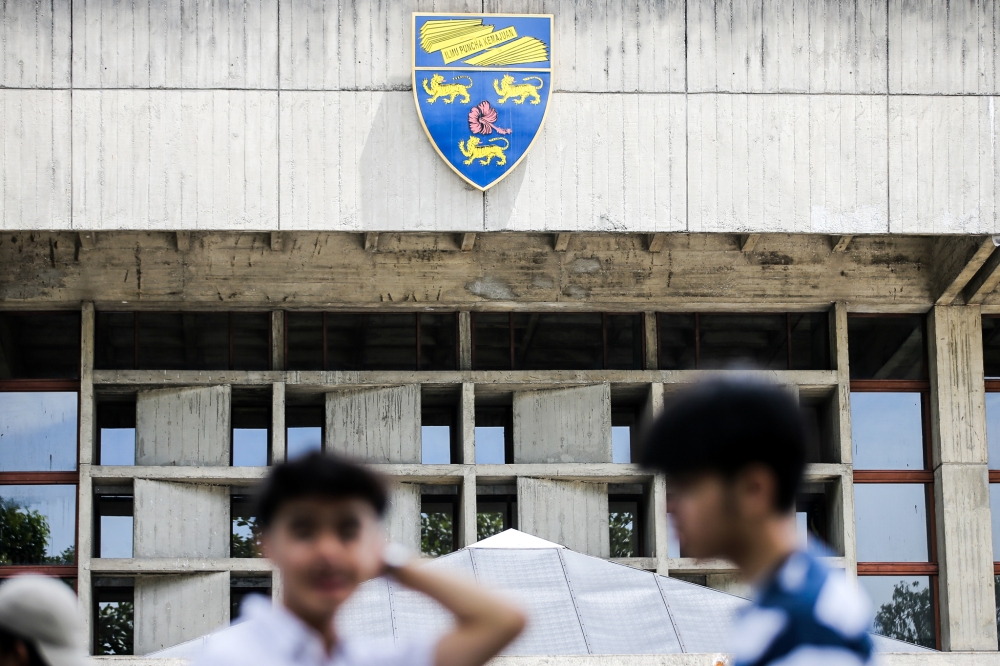
In the QS World University Rankings 2027, Universiti Malaya (UM) rose to 56th globally, its highest position ever, while five Malaysian universities entered the global top 200. Akademi Profesor Malaysia (APM) welcomed this as evidence of Malaysia’s growing international presence but also cautioned that rankings should not be treated as the only measure of a university’s value.
In the Times Higher Education (THE) Asia University Rankings 2026, the achievement was also notable: Universiti Teknologi Petronas became the first Malaysian university to enter Asia’s top 40, rising to 35th place, while 27 Malaysian institutions were listed, six entered Asia’s top 100, and 11 were ranked within the top 200; achievements Higher Education Minister Zambry Abd Kadir said strengthened Malaysia’s status as an emerging education hub. These gains matter.
But they also invite harder questions. As Malaysian universities rise in visibility, are we paying equal attention to the freedom that makes universities truly worthy of that name? Can a university be world-class if its scholars and students are not free to ask or discuss difficult questions?
Across Southeast Asia, the deterioration of academic freedom is becoming increasingly visible. In the Philippines, student activists who protested corruption have faced legal action, while the wider climate of red-tagging continues to endanger students, teachers, journalists, researchers and community organisers. The April 2026 killing of 19 people in Toboso, Negros Occidental, including University of the Philippines (UP) students, a community journalist and peasant rights researchers sent a chilling message about the risks faced by those who document injustice and work with marginalised communities.
In Indonesia, student protests have been met with arrests, tear gas and criminalisation. This is not only a law-and-order issue. Indonesia’s students have historically played a central role in democratic change, including in the fall of Suharto in 1998. When student mobilisation is increasingly treated as a security threat, it affects the entire ecology of academic life. Academics who study corruption, inequality, militarism, labour, environment or democratic backsliding understand the message: some questions are tolerated only when they do not disturb power.
Myanmar is the most brutal example. Since the 2021 military coup, the assault on democracy has also been an assault on education. Universities have been disrupted, students and teachers arrested, and scholars forced into exile, silence or survival. Academic freedom there is not an abstract principle. It is the right to teach without military control, to learn without fear, and to imagine a future beyond dictatorship.
Thailand shows another pattern, where academic debate operates under the shadow of national security and lèse-majesté laws. The case of American academic Paul Chambers, charged in 2025 over alleged royal defamation linked to an academic webinar, showed how scholarly discussion can be pulled into the machinery of criminal law. A university does not need to be formally shut down for academic freedom to shrink. Sometimes it is enough for everyone to know which subjects are dangerous.
Malaysia’s situation is different, but it would be a mistake to treat it as exceptional. Here, academic freedom is often restricted in more sophisticated ways. The pressure does not always come through dramatic arrests or open violence. It comes through procedure.
A public forum is delayed because approval is pending. A speaker is discouraged because the topic is “sensitive”. A research project is slowed by layers of clearance. A student event is subjected to screening. A university administrator advises that a title be softened, a question removed, or a discussion made “balanced”. Nobody calls this censorship. Yet everyone understands the instruction.
This is the quieter and subtler condition of academic unfreedom; not the knock on the door, but the form on the desk.
The danger is that censorship becomes routine administration. Academics learn to anticipate objection before objection is made. Students learn which issues are too risky. Universities manage controversy by avoiding it. Over time, self-censorship becomes professional common sense. People stop asking what is true and start asking what is safe.
This is why Malaysia’s ranking success should be accompanied by a more honest national conversation. If our universities are rising globally, then our intellectual freedoms must rise with them. A university cannot be truly excellent if excellence is measured only by performance indicators while critical thought is managed as institutional risk.
There is a deep contradiction in the region’s higher education agenda. Governments speak constantly of innovation, artificial intelligence, knowledge economies, research excellence and world-class universities. Yet a genuine knowledge economy cannot be built on fear. You cannot demand creativity while punishing curiosity. You cannot ask universities to produce critical thinkers while discouraging critical thought.
Academic freedom is often misunderstood as a privilege for academics. It is not. It is a public good. It protects society’s right to know itself honestly. When researchers cannot write about certain countries or topics, when lecturers cannot teach difficult histories, when students cannot organise, and when universities cannot host uncomfortable conversations, democracy loses one of its early warning systems.
This is why the on-going effort by the Southeast Asia Coalition for Academic Freedom (SEACAF) in developing a regional principles on academic freedom is crucial. At present, the region does not have a shared standard that clearly defines what academic freedom means, what forms of restriction must be recognised, and what responsibilities universities and governments have in protecting it. This absence matters. Without a regional language, violations are easily treated as isolated national incidents. Yet taken together, these cases reveal a wider pattern of shrinking intellectual space across Southeast Asia.
This is the gap that the SEACAF seeks to address. The proposed regional principles are an attempt to name the many ways academic freedom is being weakened in the region through arrests, surveillance and prosecution, but also through event screening, administrative clearance, institutional self-censorship, precarious employment, political intimidation and the language of “sensitivity”. A regional principle gives academics, students, universities, civil society and policymakers a common reference point; a language of protection, solidarity and accountability in a region where fear is too often normalised as caution.
For Malaysia, the lesson is clear. We should celebrate our universities’ rise, but we should also ask what kind of universities we are building. Are they institutions that produce rankings, or institutions that protect thought? Are they engines of knowledge, or managers of caution?
World-class universities cannot whisper. If Southeast Asia wants universities that matter, it must defend the freedom to think.
* Khoo Ying Hooi is associate professor at Universiti Malaya. She is an advisor to the Southeast Asia Coalition for Academic Freedom (SEACAF) and one of its co-founders.
** This is the personal opinion of the writer or publication and does not necessarily represent the views of Malay Mail.


