













APRIL 14 0 — In moments of acute geopolitical tension, the measure of statecraft is not loudness but effectiveness.
Malaysia’s calibrated, quiet diplomacy toward Iran – amid escalating tensions in the Strait of Hormuz – has emerged as a case study in strategic restraint yielding tangible results.
The reported facilitation of nine oil tankers linked to Petronas and Sapura underscores a deeper truth: when global chokepoints are weaponised, survival depends less on legal rigidity and more on diplomatic agility.
This approach has not gone unnoticed. Thailand, under Prime Minister Anutin, to his credit, appears to be replicating a similar pathway by engaging Oman – long regarded as a neutral interlocutor in West Asia and a trusted partner of Malaysia – to secure the passage of its own vessels. The replication of this diplomatic template speaks volumes of Malaysian diplomacy.
Rather than adopting a negative approach, Malaysia and Thailand are all for a pro active engagement.
It signals not only Malaysia’s quiet leadership, but also the emergence of a South-east Asian doctrine of pragmatic engagement in times of systemic stress.
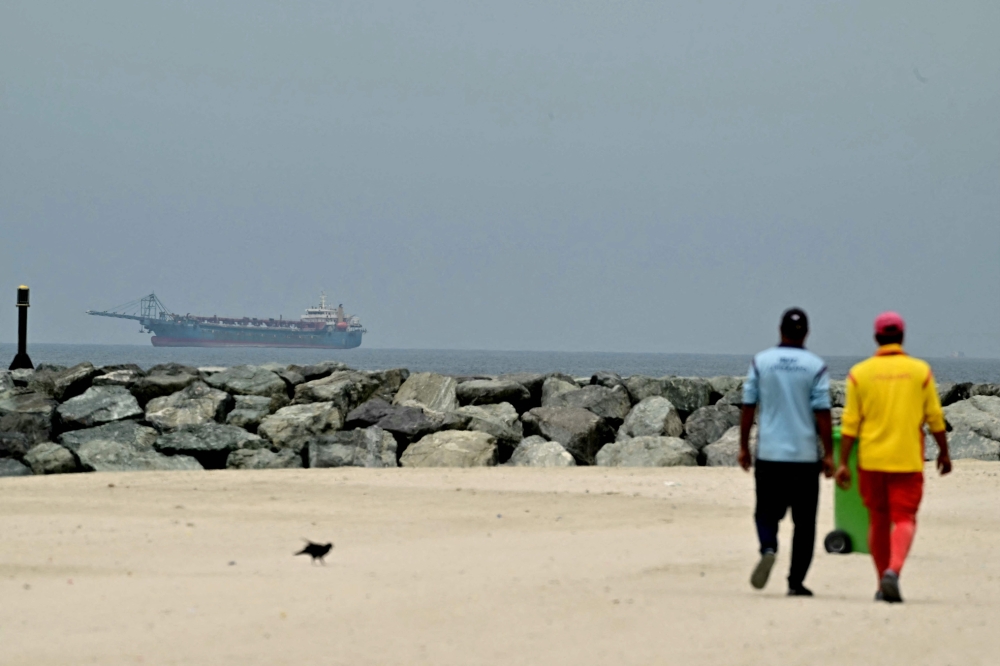
At the heart of this strategy lies a recognition that the Strait of Hormuz is no ordinary maritime corridor.
It is the artery through which roughly one-fifth of the world’s oil flows, alongside critical volumes of liquefied natural gas, fertilizers, helium, and sulphur.
Any disruption is not merely an energy crisis; it is a multidimensional shock affecting food systems, industrial production, and macroeconomic stability.
Malaysia’s approach does not undermine the United Nations Convention on the Law of the Sea (Unclose). Rather, it operates within its spirit while acknowledging the limits of legalism under extreme conditions.
When geopolitical tensions escalate to the brink of conflict, the priority of states shifts from abstract principles to concrete necessities: securing fuel, stabilising supply chains, and preventing cascading crises in food and agricultural sectors.
There are ten reasons why Prime Minister Anwar Ibrahim’s method – quiet, non-confrontational, and strategically inclusive – has proven effective.
First, it avoids escalation.
By engaging Iran through discreet channels rather than public condemnation, Malaysia reduces the risk of being perceived as hostile, thereby keeping diplomatic doors open.
Second, it leverages trust. Malaysia has long maintained balanced relations with both Western powers and Middle Eastern states, allowing it to act as a credible interlocutor without triggering suspicion.
Third, it prioritises outcomes over optics. The successful facilitation of tanker movements demonstrates that results, not rhetoric, define effective diplomacy.
Fourth, it recognises the role of intermediary states. Oman’s involvement is crucial. As a country with historical ties to both Iran and the Gulf states, Oman provides a neutral platform for negotiation, reducing friction between adversaries.
Fifth, it reflects Asean’s tradition of non-interference and consensus-building, adapted to a global crisis. Rather than taking sides, Malaysia focuses on preserving regional stability and economic continuity.
Sixth, it internalises the concept of “strategic sobriety.” In a world marked by overreaction and brinkmanship, Malaysia’s restraint prevents unnecessary entanglement in great power rivalries.
Seventh, it safeguards national economic interests. With Malaysia being a major trading nation, ensuring uninterrupted energy supplies is essential to maintaining industrial output and controlling inflation.
Eighth, it mitigates systemic risks. By securing oil flows, Malaysia indirectly stabilises the supply of fertilizers, animal feed, and petrochemical derivatives, all of which are vital to food security.
Ninth, it sets a precedent for medium sized powers. Malaysia demonstrates that even without military leverage, states can shape outcomes through intelligent diplomacy.
Tenth, it fosters regional emulation. Thailand’s engagement with Oman illustrates how successful strategies can diffuse across South-east Asia, strengthening collective resilience.
The broader implication is clear: in an era of chokepoint geopolitics, diplomacy must evolve. Legal frameworks like Unclose remain essential, but they are not self-executing in times of crisis.
They require complementary strategies – quiet negotiations, trusted intermediaries, and a willingness to prioritise stability over ideological rigidity.
Critics may argue that such engagement risks legitimising coercive control over strategic waterways.
Yet this critique overlooks a fundamental reality. When supply chains are under threat, the immediate task of governments is to prevent domestic crises.
Fuel shortages can trigger inflation, which in turn affects food prices, agricultural production, and ultimately social stability. The stakes are too high for doctrinal purity.
Indeed, the interdependence of energy, food, and industrial systems means that disruptions in Hormuz reverberate globally.
Fertilizer shortages can reduce crop yields. Rising costs of animal feed can affect protein supply. Packaging and logistics, heavily reliant on petrochemicals, become more expensive.
What begins as a maritime dispute quickly morphs into a comprehensive economic shock.
Malaysia’s approach, therefore, is not merely about securing oil.
It is about insulating the nation – and by extension the region – from a cascading crisis that could undermine decades of development.
Thailand’s decision to emulate this model further validates its effectiveness.
By working with Oman, Bangkok acknowledges that in times of uncertainty, partnerships with neutral and respected intermediaries are indispensable.
It also reflects a broader shift in South-east Asian diplomacy: from passive observation to proactive engagement.
In this sense, Malaysia’s quiet diplomacy may well represent the future of middle-power strategy.
It is adaptive, pragmatic, and deeply attuned to the complexities of a fragmented global order.
The Strait of Hormuz will remain a flashpoint for years to come.
But if there is a lesson to be drawn from Malaysia’s experience, it is this: in a world of rising tensions and shrinking certainties, the most powerful tool is not confrontation, but conversation – conducted quietly, strategically, and with unwavering focus on national and regional resilience.
* Phar Kim Beng is professor of Asean Studies and director at the Institute of Internationalization and Asean Studies, International Islamic University of Malaysia.
** This is the personal opinion of the writer or publication and does not necessarily represent the views of Malay Mail.