


APRIL 7 — The recent allocation of RM600 million to breathe life back into the historic Carcosa Seri Negara and the Sultan Abdul Samad Building marks a pivotal shift in Malaysia’s urban landscape.
For too long, these majestic icons have stood as silent witnesses to a bygone era. This government investment signals a refreshing willingness to invest in the nation’s soul and physical heritage.
However, while restoring bricks and mortar is a necessary and welcome start, we risk creating beautiful empty shells unless we simultaneously invest in what goes inside them.
If we merely repaint the walls without reimagining the purpose within, we will have spent RM600 million on scenery rather than on substance.
The next, critical step in this national rejuvenation is clear: we must craft a strategic, funded national plan to transform our museums from silent repositories into powerful economic engines.
Currently, Malaysia finds itself in the grip of a museum paradox. We are a nation rich with history— a crossroads of ancient trade routes, colonial influences, and diverse cultural traditions.
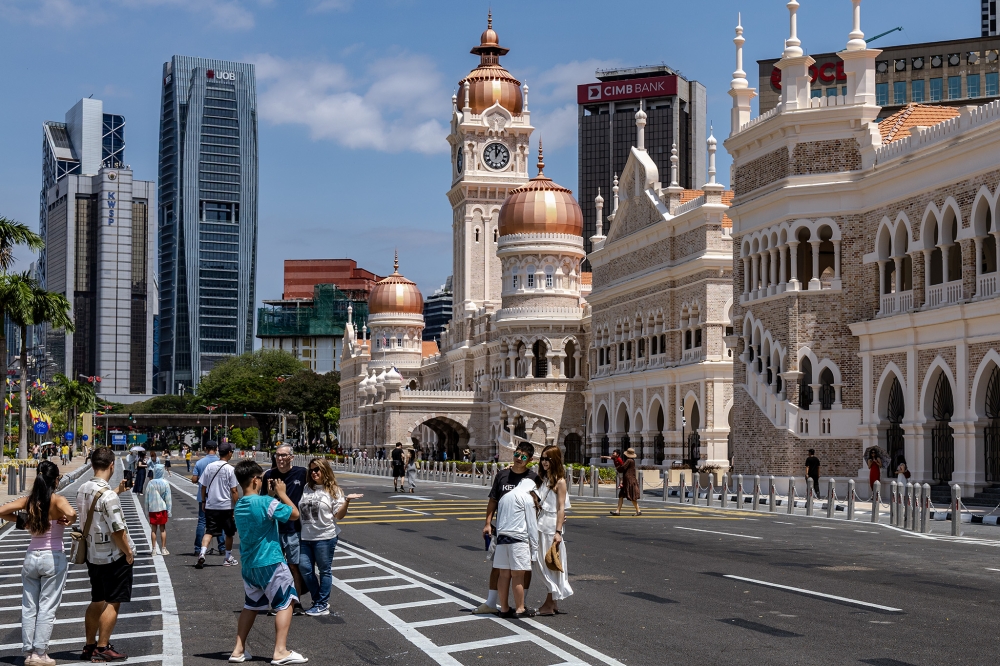
Yet, the museum experience often feels static. For many locals, a museum is a place visited once on a primary school trip and never again.
For tourists, our heritage sites are often treated as quick photo stops rather than destination anchors.
In a tourism-dependent economy still recovering and restructuring, relying solely on retail therapy at shopping malls is a limiting strategy.
Culture retains tourists longer, and longer stays translate directly to higher economic yield.
We need look no further than our global competitors to see the path forward. When we look at the Louvre in Paris or the Natural History Museum in London, we are not just looking at collections of artefacts.
We are looking at economic multipliers. These institutions anchor tourism itineraries, justify extended hotel stays, and feed the local F&B and retail economy for miles around.
A tourist visits a city for a museum, but spends money in the city around the museum.
Studies consistently show that for every dollar spent on a museum ticket, several more are spent in the surrounding economy on transport, meals, and accommodation.
This is the “Louvre Effect,” and there is no reason we cannot cultivate a “National Museum Effect” right here in Kuala Lumpur.
For a government focused on GDP growth and job creation, museums represent a surprisingly potent tool. They are not just curatorial centers; they are employment hubs for creatives, technicians, security personnel, hospitality staff, and conservation scientists.
They create a halo effect for small and medium enterprises—local artisans, souvenir makers, and freelance tour guides who depend on the foot traffic these institutions generate.
Furthermore, in the battle for global attention, a world-class museum district shapes international perception. It signals that Malaysia is not just a stopover for beaches, but a sophisticated, confident nation with a story worth exploring.
To achieve this, we need more than just funding; we need a three-pronged national strategy.
First, we must embrace Public-Private Partnerships. The government’s role should be that of an enabler — seeding the infrastructure just as it does for highways.
However, the day-to-day management and world-class curation can thrive under hybrid models involving private foundations and corporations.
The Islamic Arts Museum Malaysia stands as a shining example of how private stewardship can achieve global standards of excellence.
Second, we must invest in the Experience Economy. The days of simply walking past glass cases are over.
We must fund interactive technology, immersive storytelling, and digital archiving. A Generation Z or millennial tourist expects an experience, not a lecture.
To compete for their attention span against global entertainment giants, our museums must utilise augmented reality, hands-on exhibits, and dynamic narratives that bring history to life.
Finally, we need Integration with Tourism Malaysia. A national plan requires synergy. Museum passes should be bundled with flight and hotel packages.
Heritage trails must be mapped and marketed aggressively as anchor attractions, not just as optional side tours for a rainy day.
We must give tourists a compelling reason to extend their stay from three days to five.
The truth is we have so much to excite the world about the country’s rich history. One that remains unexploited is the story of our economic partnership with natural rubber.
The RM600 million injection for Carcosa and Sultan Abdul Samad is a commendable down payment on our national confidence.
It shows we value where we came from. Now, we must furnish those buildings with a purpose.
By crafting a masterplan for museum and heritage investment, we can ensure that these sites are not just beautiful landmarks, but bustling economic hubs that generate income and jobs for decades to come.
The world is ready to discover Malaysia’s story. It is time we built the stages to tell it properly.
* Datuk Seri Mustapa Mohamed is an Adviser at the Ungku Aziz Centre for Development Studies (UAC), Universiti Malaya, and can be reached at [email protected]
** This is the personal opinion of the writer or publication and does not necessarily represent the views of Malay Mail.


