


APRIL 5 — War has never been confined to the battlefield. It radiates outward – through markets, supply chains, currencies, and ultimately into the daily lives of ordinary citizens.
What is unfolding in West Asia today is not a distant geopolitical disturbance. It is a systemic economic shock, one that is already reverberating across continents.
Yet, amid this mounting turbulence, Asean’s collective voice remains noticeably subdued. This silence is neither trivial nor benign.
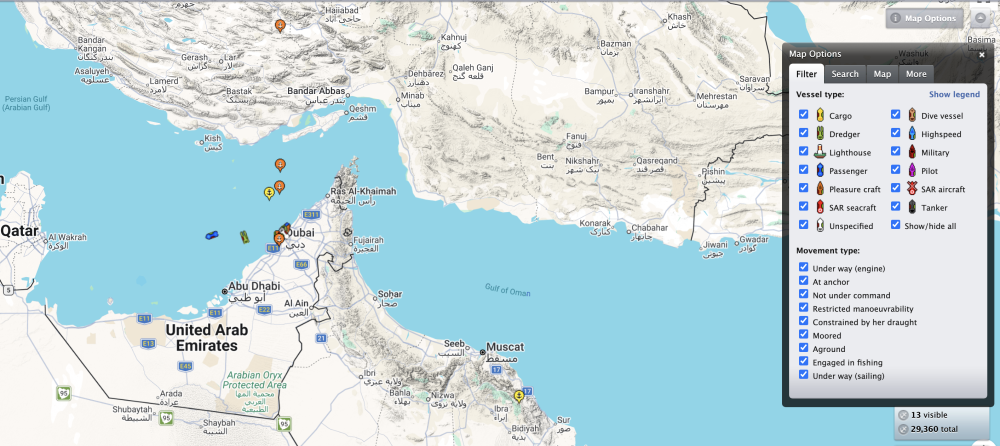
The disruptions in the Strait of Hormuz alone – through which roughly one-fifth of the world’s oil flows – have triggered cascading consequences.
Energy prices are rising sharply. Nearly one-third of the world’s fertilizer supply, tied to the region, is under strain.
The availability of helium, indispensable for semiconductor production, and sulphur, critical for industrial processes, is tightening.
These are not peripheral commodities. They are the building blocks of the global economy.
For Asean, a region deeply embedded in global trade networks, the implications are immediate.
Higher fuel prices translate into more expensive logistics.
Fertilizer shortages drive up food production costs. Inflationary pressures intensify.
Governments are compelled to expand subsidies, often at unsustainable fiscal levels.
Malaysia, for instance, has seen how quickly subsidy burdens can escalate into the billions of ringgit per month under crisis conditions.
In short, what begins as a war in West Asia quickly becomes an economic crisis in South-east Asia.
Yet Asean, as a collective, has struggled to articulate a coherent and forceful response. This is not entirely surprising.
The organisation’s long-standing principle of non-interference has historically served as a glue – binding together a diverse group of states with differing political systems and strategic orientations.
But in moments such as these, that same principle can become a constraint.
The current crisis is not about intervening in the internal affairs of states. It is about safeguarding the economic lifelines upon which Asean itself depends.
Silence, therefore, risks being misinterpreted as indifference – or worse, irrelevance.
Asean has long championed the idea of “centrality.”
It positions itself as the hub of regional diplomacy, a convener of dialogue, and a stabilising force amid great power competition. But centrality is not a static attribute. It must be demonstrated, especially in times of crisis.
At a minimum, Asean should call for de-escalation, the protection of critical maritime chokepoints, and the safeguarding of civilian infrastructure such as energy facilities and desalination plants.
These are not partisan positions. They are universal imperatives that align with Asean’s own economic interests.
More importantly, Asean must recognise that the era of compartmentalised crises is over. Security and economics are now deeply intertwined.
A missile strike on an energy facility in the Gulf can trigger inflation in Jakarta, Bangkok, and Kuala Lumpur within weeks.
The notion that Southeast Asia can remain a passive observer in such a world is no longer tenable.
There are, of course, internal challenges. Asean member states maintain diverse relationships with major powers. Their economic resilience varies. Their domestic priorities differ.
Achieving consensus is never straightforward. But consensus should not become a pretext for inertia.
If Asean does not speak, others will speak for it. The risk is not merely diplomatic marginalisation. It is strategic displacement.
The region could increasingly become an arena for external powers to project influence, rather than an actor shaping outcomes.
This would undermine decades of effort to build Asean into a credible regional institution. Conversely, a principled and measured stance could reinforce Asean’s relevance.
By advocating for the security of global commons – particularly vital sea lanes such as the Strait of Hormuz and the Straits of Malacca – Asean can position itself as a guardian of economic continuity.
This is not an abstract role. It is grounded in necessity. Asean economies are heavily dependent on open trade routes.
Any disruption – whether caused by conflict or coercion – directly threatens their growth models.
Beyond diplomacy, Asean must also think operationally.
The crisis underscores the urgency of strengthening regional resilience.
Joint energy procurement mechanisms, strategic reserves, and coordinated fiscal responses should no longer be aspirational ideas but practical priorities.
Engagement with key partners such as Japan, South Korea, and China must be deepened to ensure supply chain stability. Initiatives such as the Asean Power Grid must be accelerated, not merely discussed.
At the national level, governments are already taking steps.
But national measures alone are insufficient in the face of a systemic shock of this magnitude. Regional coordination is indispensable.
Ultimately, the question confronting Asean is a simple one: can it adapt?
The world is entering a period where geopolitical shocks are more frequent, more interconnected, and more economically disruptive.
Institutions that fail to respond will be sidelined. Those that adapt will remain relevant.
Asean has the capacity to do so. It has the diplomatic infrastructure, the convening power, and the collective economic weight.
What it requires now is political will. War is bad for the global economy.
That much is self-evident. But what is less obvious – yet equally important – is that silence in the face of such war carries its own cost.
If Asean wishes to remain central, it must first be audible.
And in a world increasingly defined by crisis, voice is not optional. It is essential.
* Phar Kim Beng is a professor of Asean Studies and director at the Institute of International and Asean Studies, International Islamic University of Malaysia.
** This is the personal opinion of the writer or publication and does not necessarily represent the views of Malay Mail.


