




CUIABÁ (Brazil), Nov 24 — Without a top football team to take it over, the idea of building a World Cup stadium in the central Brazilian city of Cuiaba might have seemed something of a folly.
But that was before an unlikely saviour stepped forward in the shape of a sport few people would associate with Brazil.
Namely, American football.
The city of some 500,000 people and the capital of Mato Grosso state is the site of an almost-finished brand new 40,000-capacity stadium, the Arena Pantanal, built as one of 12 venues for the World Cup next June.
It’s not that ‘Cuiabanos’ don’t like football and prefer their US import — it’s just that the city does not have a football team from either of the top two divisions.
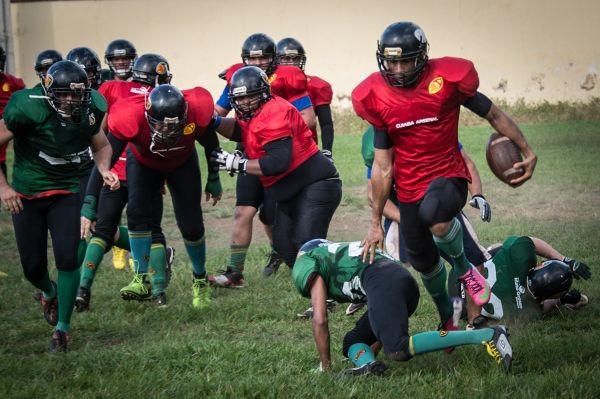
That leaves a sporting gap which gridiron exponents Cuiaba Arsenal are managing to exploit with some success.
The team started out in 2006 and won national league titles in 2010 and 2012.
Although average attendances hover around the 2,500 mark more than 4,000 saw the 2012 league final — many alerted to the spectacle on their doorstep by social media.
If those crowds are small as yet, the club is nothing if not ambitious.
“Just give us the chance and we’ll fill the Arena,” young coach Brian Guzman, 23, tells AFP.
The Arena Pantanal will host four matches at the World Cup but there had been widely-expressed fears that it might struggle to be viable thereafter.
Hence the need to look for alternatives to football.
“There is no doubt that in the short term we are going to fill this stadium and we shall see a great game of American football,” says a spokesman for the secretariat overseeing World Cup affairs in the city.
American football is still an amateur affair in Brazil to the extent that players do not receive a salary and have to pay to travel to games with their clubs.
Whereas football stars here are idolised millionaires, those practising the American variant do it “for the love of the sport”, says Hatilla Fogo, an offense star turn for Cuiaba.
“We do not expect to become millionaires but next year, who knows, we could make a bit of cash,” says Fogo as he prepares for a training session in temperatures hitting 40 degrees Celsius.
His wife, Jordana, tags along to training as well as matches — home and away.
“If he has to stay behind and paint the lines in the early hours, I stay too,” she laughs.
Not getting paid means it is a labour of love.
“When you don’t get paid, it’s fundamental to be passionate about it as you make a lot of physical and financial sacrifices,” says Guzmán, one of few players in the squad who does draw a salary.
Hatilla, for example, works in an X-ray centre and sometimes has to skip training owing to night shifts at work.
Skipper Igor Mota is a personal trainer at a gym.
Chairman Orlando Ferreira — who commentates on matches at the stadium — says he’d like to see the sport become professional here.
The key, he says, is to get the media behind them.
“Unless we turn Brazilian American football into a product for TV then we won’t bring in the cash and won’t be able to draw in big sponsors,” he says.
Although the sporting dream of most Brazilian youngsters is to play football in Europe, Arsenal’s players have a burning desire to ply their trade in the United States.
Arsenal have already exported eight players — mostly to US college teams. Mota spent a year playing in a small US league but having turned 30, rules out becoming a pro.
“Maybe a coach,” he muses.
As yet, few Brazilians know much about or understand the sport.
Yet the club are willing to help newcomers learn the ropes.
“If we identify a good athlete we are confident we can turn him into a good American footballer,” says coach Guzmán, who rules out heading abroad himself.
Fogo’s six-year-old son, Joao, who follows his father on to the pitch in the role of mascot, has already told his parents, according to his mother Jordana, that once he turns 15 he will head Stateside — to play American football. — AFP-Relaxnews


