













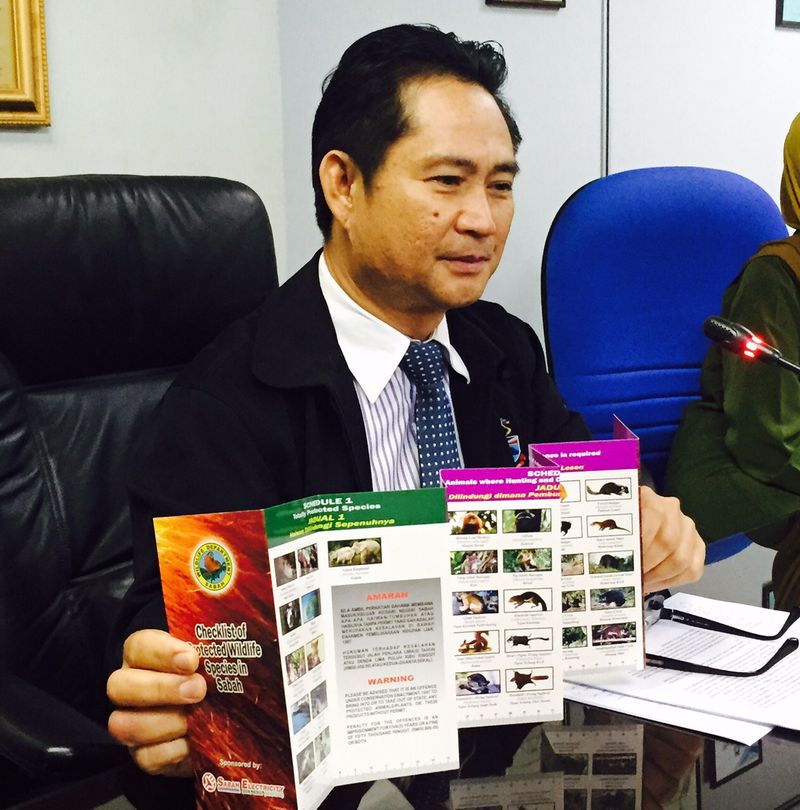


KOTA KINABALU, Aug 3 – Seeking to expand their business, illegal wildlife traders in the state have resorted to brazenly advertising their “stocks” to potential buyers on social media, Sabah’s Wildlife Department said today.
Its director William Baya said that authorities have been monitoring a Facebook group said to be trading protected species such as the Sunda clouded leopard, sun bears, slow loris, pangolins and birds such as hornbills and owls and had drawn some 27,000 followers.
The group used to operate under the name “jual beli binatang peliharaan anda (sabah)” from a
“closed group” on Facebook, but has since tightened entry into its circle further as a “secret group,” which makes it impossible to even find them through the “search” function.
“We are also monitoring a Whatsapp group and an Instagram account which also advertises exotic animals for sale, either as pets or for meat,” he said.
Lamenting that illegal wildlife traders were getting more daring and widespread, Baya said they had 23 cases in the state this year involving 35 arrests for selling or possession of protected wildlife but only one arrest from a social media tip group.
A local man, believed to be the administrator of the Facebook group selling animals, was charged in court last Thursday, July 30 for possession of a clouded leopard in Sulaman central, a totally protected species under the Wildlife Conservation Enactment 1997. The suspect will sit for trial in September.
“It is not easy to arrest perpetrators for possession or hunting of protected species, because of the challenges faced in order to get evidence but we are trying our best to monitor their activities and crackdown on them,” he said.
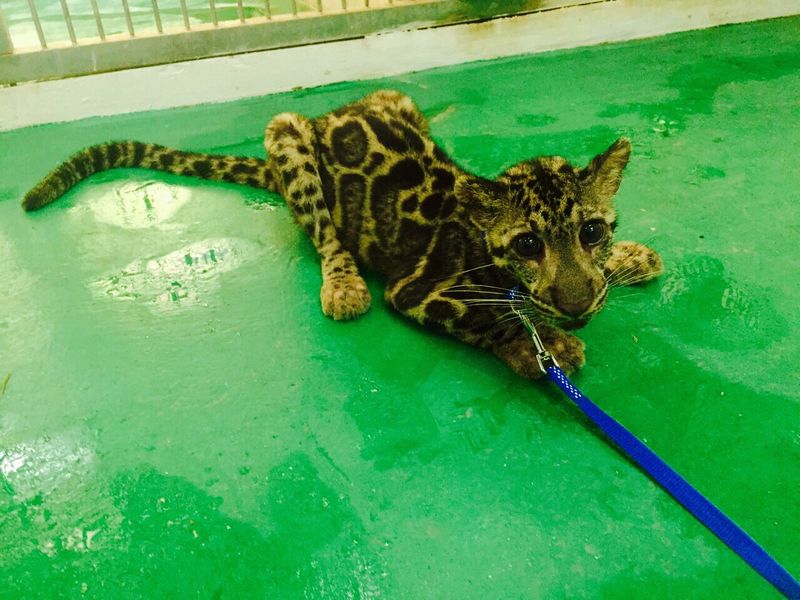
Baya said the traders usually operated by working with rural native villages who live near forests as well as visiting tamus (local open markets in small towns)
Once villagers capture any kind of animal of interest, they will alert the dealers who will then post a picture of the animals on the social media pages to attract buyers.
Buyers can then haggle over the cost of the animal. Pangolins, whose meat are in demand, cost up to RM160 per kilo while a Sunda clouded leopard costs about RM6,000.
Baya said buyers can consist of restaurant operators who offer exotic meat on their menu illicitly as well to exclusive clienteles in the know.
Baya said that the extensive network of illegal wildlife traders who worked covertly were hard to clamp down on but there were also thousands of sympathisers who would alert authorities which has led to arrests in past cases.
He called on those in possession of protected species to come forward and surrender the animals or face the possibility of being arrested in impending crackdowns.