


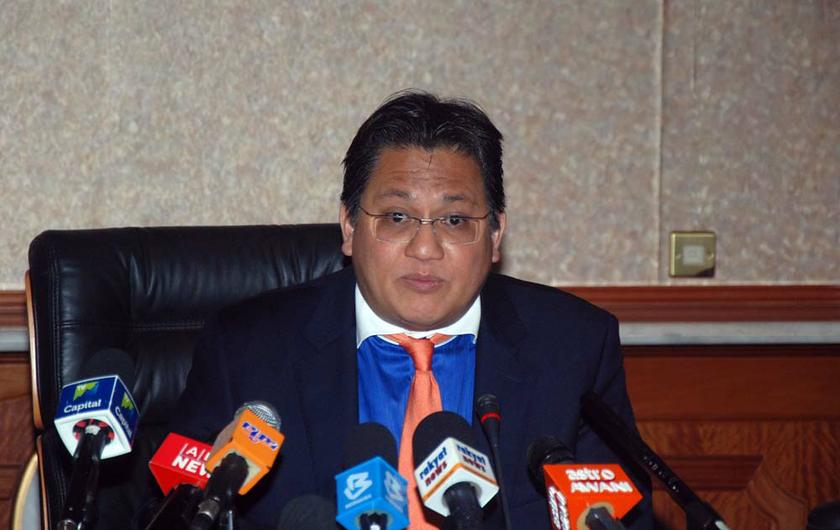


KUALA LUMPUR, March 30 — The Kelantan government’s failure to work with the National Security Council (NSC) had contributed to the inadequate mitigation of the massive floods last year, Public Accounts Committee (PAC) chairman Datuk Nur Jazlan Mohamed said today.
Nur Jazlan pointed out that the Kelantan government, which is led by PAS, “did not attend” the meetings last year with the NSC before the monsoon period to prepare for the annual floods.
“This is human factor... maybe (it is) political, but for last year, they wanted to hold the joint meeting but there was no cooperation from the state government,” the Pulai MP from Barisan Nasional (BN) told reporters after the PAC listened to explanations from the NSC and the Finance Ministry.
“When there is no coordination meeting, so when the floods happened, all are not prepared. If a meeting was carried out, planning was done earlier, maybe it won’t happen like this,” he said.
“They did not cooperate with MKN last year. First time last year, before this they cooperated,” he added, referring to the NSC by its Malay initials.
Kelantan was one of the worst-hit states in last year’s flood crisis.
DAP’s Kepong MP Tan Seng Giaw, who is also the PAC deputy chairman, told reporters the procedure used by NSC was “out of date” and could not be used to “deal with big disasters”.
Nur Jazlan said, however, that the standing order on policies and mechanisms for disaster management for the NSC has been in place since 1997, with the detailed procedures updated in 2012.
“The procedures are very detailed, it’s not that they were not prepared. They were prepared but last year it was unexpected so new approaches will have to be taken to predict flood areas,” he said.
He also said the NSC admitted its weaknesses in flood preparations, saying that the council will improve its procedures this year.
The NSC will seek to use a “scientific” approach and data to predict areas that will be hit by flood and also water flow during heavy rain, he said.
It will also shift its transmitters to higher areas and use generators during the flood to tackle the problems of communication breakdown, he said.
The NSC will also apply for additional funds from the government to buy equipments such as helicopters, boats and to prepare Forward Supply Bases or places to store flood relief supplies.
Last December, The Star daily reported NSC secretary Datuk Mohamed Thajudeen Abdul Wahab as saying that the council’s disaster management plan in the east coast of peninsular Malaysia was affected as its personnel were also hit by the massive floods.
Thajudeen said they were severely disadvantaged during the peak of the floods between December 23 and 27, 2014, when it had been virtually "impossible" to access many areas either by land, air or water due to strong winds and turbulent currents.
He then said their biggest problem was figuring out where help was needed and the extent of the damage caused by the floods in each district, despite having managed to stockpile donations of food and supplies from the public and companies.


