


MARAN, Jan 7 — Taking a few final puffs of his hand-rolled cigarette before putting it out, Amok Sin Chua flashed a toothy grin at the convoy that had just arrived in five four-wheel drives moments before sunset.
"You're finally here. We were waiting. I was wondering when you would all turn up," the 64-year-old exclaimed before personally greeting each and every one of the visitors who had come to Kampong Paya Besar to deliver much needed essential supplies like bags of rice, cooking oil, toothbrushes, noodles and towels.
Amok's village, like many Orang Asli settlements nestled deep within the heart of palm oil plantations in the interior of Pahang, was badly affected by the floods which hit more than eight states in Peninsular Malaysia over the last month.
In a flood relief mission which took 12 hours from Kuala Lumpur to Kampong Paya Besar yesterday, Malay Mail Online accompanied volunteers from the Kuala Lumpur Methodist Church who had collected bulk supplies to be delivered to the Orang Asli community there.
Long and winding road
We learned first hand just how difficult it was for volunteer groups to reach out to affected Orang Asli villages and to physically deliver the supplies to them.
The trip from Mentakab town centre (where the supplies were divvied up to the vehicles) to the village was a frustrating one of closed main roads and treacherous inner routes along the hilly slopes of oil palm plantations.
Our guide told us that the usual route there through Bera had been blocked due to the floods and although the water levels had subsided slightly, it was still impossible to traverse via car.
Throughout the drive through the oil palm plantation, drivers of each four-wheel drive communicated with each other using walkie-talkies to guide each other and give warnings every time there was a big hole along the bumpy, gravel path or whether a wrong turn would lead to a dead end or worse — the edge of the hill.
Adequate supplies but villagers squabble
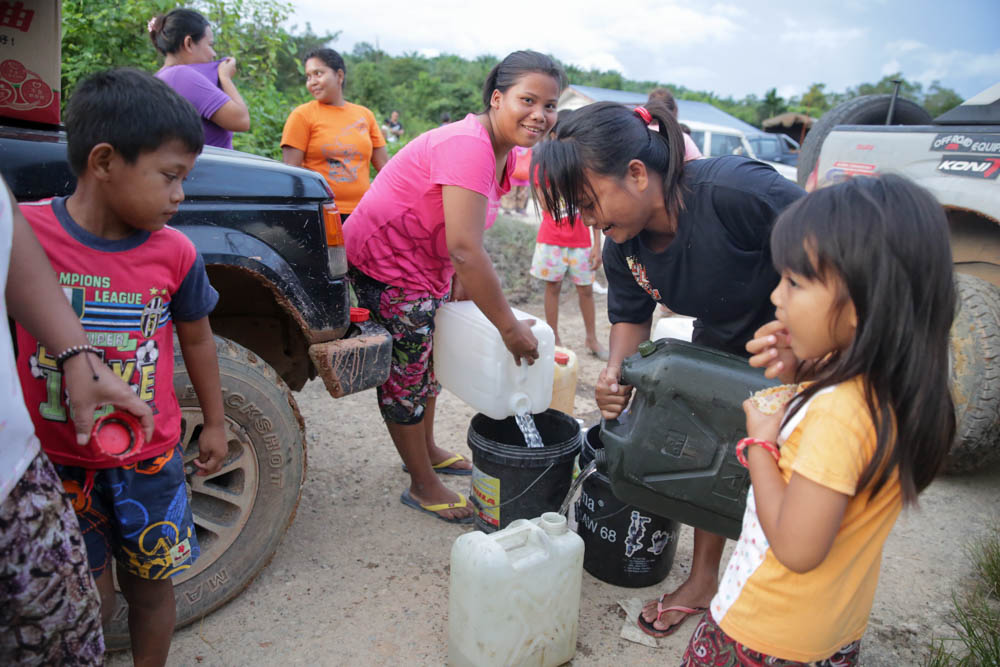
Our biggest surprise was when we were told by the Orang Asli villagers that they were not short of any essential items as they had anticipated the floods this time around to be very "strong and powerful."
"We have managed so far by ourselves, we have been stocking up.
"Help is there but it is at drop-off centres, and we are separated by the flood waters so we take a sampan to get there and get what we need," Amok told Malay Mail Online, pointing 600 metres ahead to a small field which he said had been consumed by flood waters just days ago.
The water did not affect his home but it separated one end of the village from the other, the village leader added.
But villagers were seen arguing over the distribution methods of the supplies, and several leaders — including Amok — had refused a suggestion by volunteers to deliver the items to each house.
"We cannot do this, then they (families) will come back tomorrow and ask for more. They will demand more.
"We will draw up a list tomorrow, and then we will make sure each family gets supplies... if your family is small, you get to eat more lah!" he said, laughing.
A few were not convinced of this arrangement.
An elderly lady with dyed brown hair, who refused to give her name, claimed that the village leaders practised favouritism and did not distribute the needed items equally.
"They (the village committee) have a sampan as a means to get to the other side to get supplies, I don't and my family doesn't.
"But when we need to get across, they refuse to let us use the sampan. I need a sampan by next September, can you please put in a word for me? But I don't want to get into trouble," she told Malay Mail Online.
No politicians here
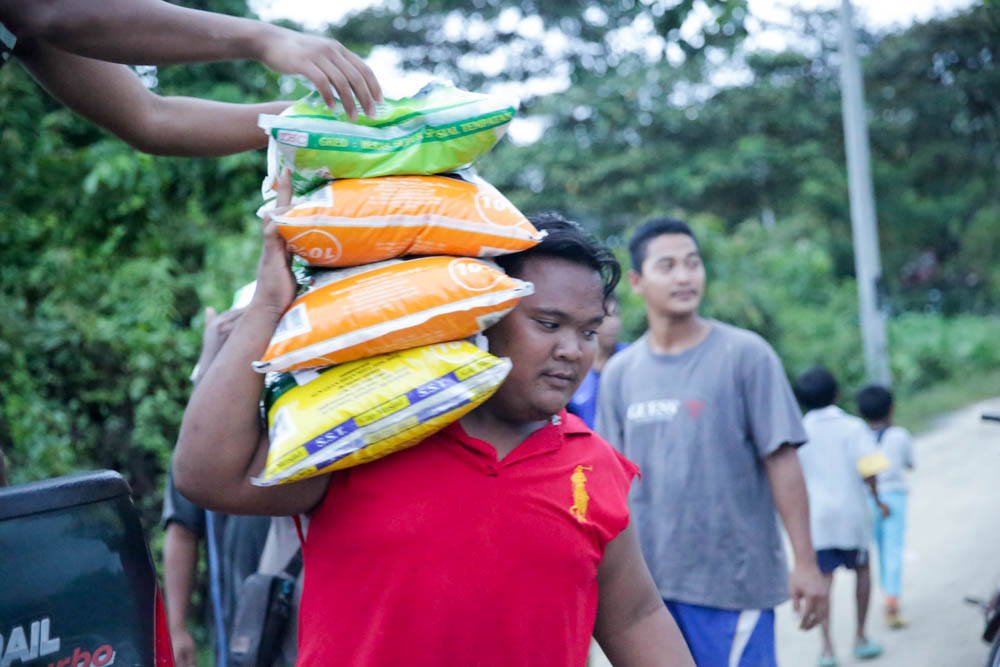
According to the villagers, neither Barisan Nasional (BN) or Pakatan Rakyat (PR) leaders have made any attempts to meet them since the floods started.
"The government just drops off the food at a drop zone, and we collect it," Amok added.
He said that church groups have been active in assisting them even though the majority of the 50-odd families were not Christian.
"Hallelujah, I am thankful for this," Amok said while pointing to a half-completed single-storey brick building not too far from the village area.
"That is the church, but it is not yet complete. I don't know how long it will take now, maybe it will be like that for a while," he added.
Pastor Mazlan Mattoot, a representative of the Sidang Injil Borneo (SIB) church in the district, said that although the flood waters were receding, it was still difficult for people to get across to these areas unless they used boats or cut across the hills.
"It is tough. Banjir macam putus-putus (floods disconnect) making transportation for help not easy."


