


GEORGE TOWN, Aug 5 — One is a 30-year-old art festival in the middle of the desert while the other is a young seven-year-old arts and culture festival on an island.
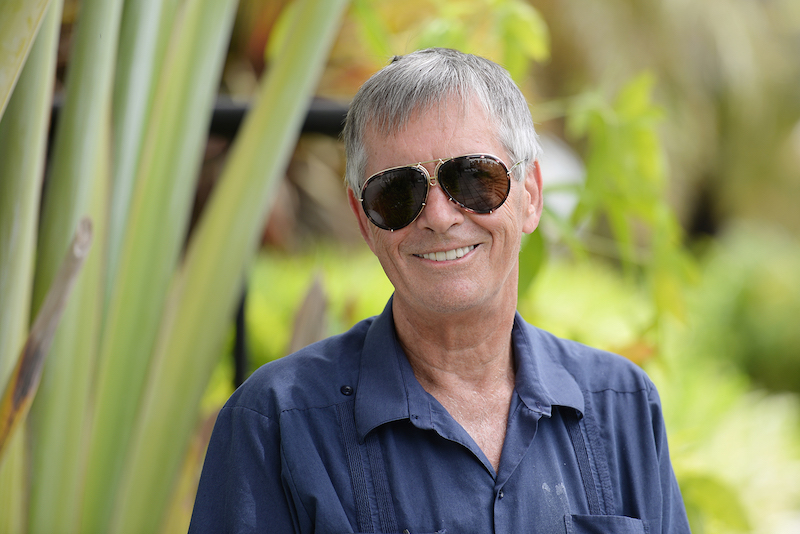
Yet when Burning Man Festival co-founder Larry Harvey came to Penang for this year’s George Town Festival, he felt the young festival has a far larger audience than Burning Man.
“Our population (in Black Rock City) is around 74,000 but it isn’t terribly a lot and George Town Festival attracts more people than that… around 150,000, maybe more,” he said in an interview with Malay Mail Online recently.
He believes the popularity of Burning Man isn’t because of the number of participants, or “burners” as they are known, but it is the scale of the event where the festival’s temporary town, Black Rock City, is transformed into a metropolitan for eight days.
Though he was in Penang for only a week, Harvey found GTF to be an eclectic festival.
“I didn’t get a chance to see many things, half of my time spent here was as a little vacation but I liked it and I’ve met some interesting people, some interesting artists,” he said.
He noted that Penang was given more freedom in artistic expression “as compared to elsewhere” and believes that this should be the case everywhere.
“We can get away with anything through art, and through humour too,” he said.
On the Burning Man Festival, Harvey said this is its 30th year; it kicked off with just 20 participants all those years ago.
The annual festival will see its temporary town, Black Rock City, take form and become Nevada’s third largest city for eight days from August 28 to September 5 this year.
Harvey said the festival’s phenomenal growth is expected to continue as more “burners”, including international ones from various countries, clamour to take part in it.
“Burners” are participants who attend and take part in the festival that is solely dedicated to the community, art, self-expression, creativity and self-reliance.
“The festival is known everywhere, it has a unique value that no other festival offers and that’s why the demand for tickets continue to rise and is now four to one,” he said, explaining this means there are four buyers to every ticket sold.
After three decades, he said many seem to think that it is now “denatured” or has lost its character and strayed from its principles.
“That hasn’t happened and this is because we didn’t begin as a financial enterprise, it grew out of a culture that was bohemian in San Francisco, and we have retained the ethics and manners of that scene… we came to build an international city founded on bohemian values,” he said.
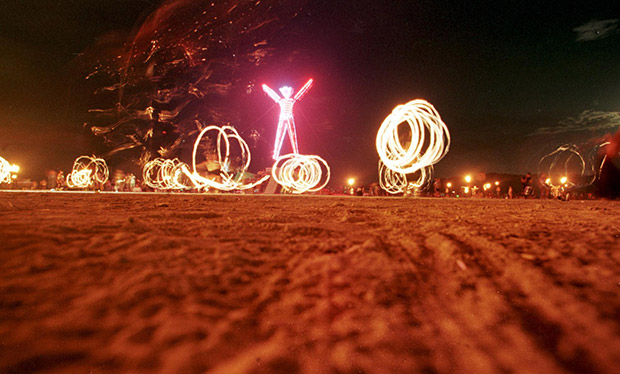
The festival has a set of 10 principles as a set of ethics that participants are encouraged to comply with and these are radical inclusion, gifting, decommodification, radical self-reliance, radical self-expression, communal effort, civic responsibility, leaving no trace, participation and immediacy.
Due to its culture of gifting and decommodification where no commercial sponsorship, transactions or advertising are allowed in Black Rock City, Harvey said some participants see Burning Man as a “moneyless Utopia where money is evil.”
“Some people fantasise that we just come together without any organisation but if Burning Man is to become a movement, it will need money and they want to look away from the fact that we run it as a business,” he said.
Last year, US$32 million (RM129 million) was spent to create Black Rock City and though the city only exists for eight days, the creation was a year-round effort as it involves a large team putting into order a complex and organised society just for the event.
“Burners themselves spent around US$60 million (RM242 million) in the marketplace, outside the camp, to equip themselves so that they are able to give gifts along with supplies and their art.
“We are talking about US$90 million going into the city although the transactions take place outside the city,” he said.
Far from just letting the festival be an annual festival, Harvey said it could become a movement that is compelling to produce culture bearing actions.
“It is a culture that reproduces itself outside the event, it is real and not a sentiment,” he said.
Harvey was one of the speakers in GTF’s first talk series on the arts during the opening weekend of the month-long festival.
GTF events are held throughout this month, find out more at georgetownfestival.com while more information on Burning Man can be found at burningman.org.


