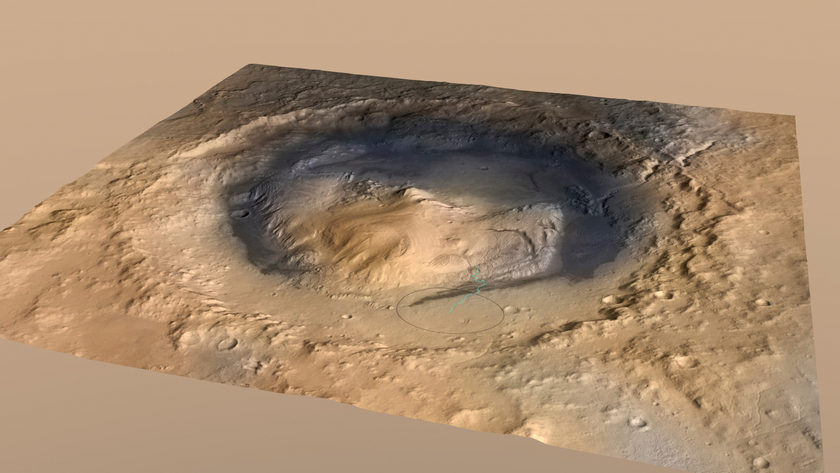















WASHINGTON, Dec 10 — The Curiosity Mars rover has captured photos suggesting that Aeolis Mons, unofficially known as Mount Sharp, was created by sediments deposited in a large lake bed over tens of millions of years, NASA says.
NASA scientists say photos of what look like evidence of water currents and sediments add to the theory that Mars maintained a climate that could have produced long-lasting lakes. Such lakes could have also supported microbial life for millions of years.
The Curiosity rover has been observing the lowest sedimentary layers at Mount Sharp, which is a section of rock that stands 500 feet high inside the 96-mile-wide Gale Crater.
Scientists have long tried to determine how Mount Sharp was created. The rock layers within Mount Sharp alternate between lake, river and wind deposits, which suggest there was a once lake around it that continued filling and evaporating for a long period of time.
NASA has already previously theorized that Mars held water. In 2012, the space agency said photos sent back from the Curiosity rover showed gravel-like rocks that looked like they had been smoothed by water and pushed into the shape of an alluvial fan. — Reuters