


KUALA LUMPUR, Oct 10 — The flood of Chinese food and restaurants into the Klang Valley has brought wave after wave of regional dishes, from the many varieties of hotpot to la mian and suan cai yu.
Among these is the lesser-known shaokao: skewers of heavily seasoned, grilled meat that serve as China’s answer to the kebab.
Previously, the best chance of finding these was at restaurants specialising in Chinese Muslim cuisine – the main type, yang rou chuan, or lamb skewers, originated in Xinjiang centuries ago, before its popularity spread across China in the late 20th century.
In the past year or two, many places specialising in chuan (Mandarin for skewers) have popped up, and it was only a matter of time before the Chinese chains came knocking.
In February, Yum Yum BBQ Yang Bu Tong opened on Jalan Kamuning, Imbi, just outside Market Lane at The Exchange TRX.
The brand traces its origins to Yanji City in 2009. In 2018, it rebranded as Yang Bu Tong and began expanding across China, before opening its first international locations in Japan and the Philippines in 2023.
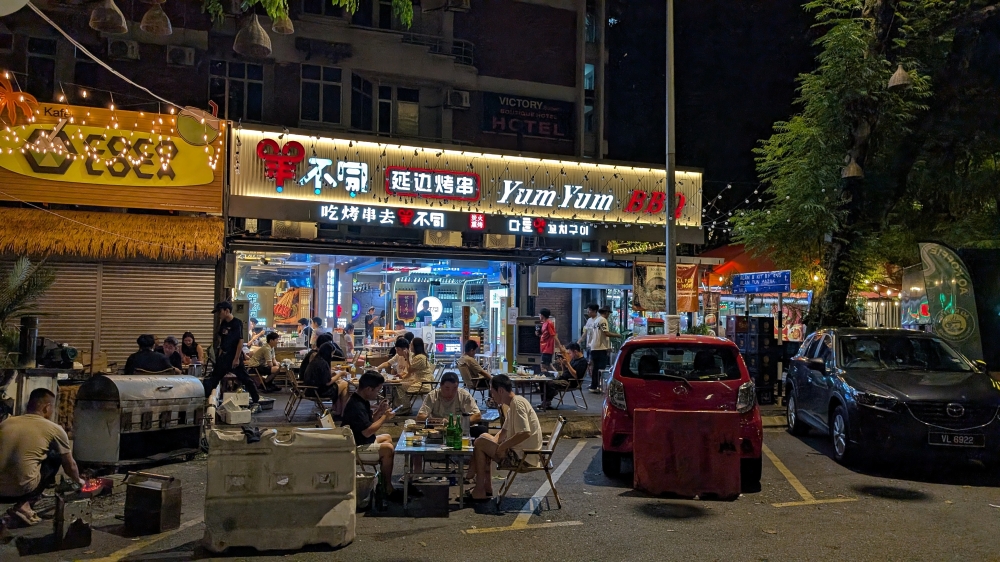
Yanji City is the capital of the Yanbian Korean Autonomous Prefecture in northeastern China, which borders North Korea to the south and Russia to the east – and it’s a long, long way from Xinjiang; in fact, it’s on the opposite side of the country.
The popularity of yang rou chuan means the skewers have made their way all the way to Yanbian, complete with the heavy presence of cumin and similar spices typical of that region.
But Yang Bu Tong also reflects the distinct culture and cuisine of Yanbian, home to the majority of ethnic Koreans living in China.
Referred to as chao xian zhu (literally, Joseon ethnicity), these are Chinese citizens of Korean descent, tracing their lineage to Korean immigrants who arrived en masse in the late 19th and early 20th centuries, driven by economic hardship or political persecution, including the Japanese annexation of Korea in 1910.
Which is why you’ll see Korean hangul alongside Chinese hanzi on the signs, why there’s a banchan counter, and why you’ll find kimchi and naengmyeon, Korean cold noodles, on the menu.
But this is firmly a Chinese “BBQ” spot, so don’t come expecting samgyupsal or galbi – skewers are the name of the game, ranging from lamb, beef, and pork to plenty of offal too.
Yang Bu Tong doesn’t take reservations, so be prepared to queue during peak hours. You can, however, call ahead to book one of the private rooms – which is what I did.
For a room of six, the minimum spend is RM588, which is very, very easy to hit, especially if you’re drinking.
And you almost certainly will; these spicy, salty skewers demand a potent mix of Jinro soju and watery Tsingtao beer.
If nothing else, the temperature alone will drive you to a drink or two. Indoors or outdoors, the sheer number of tables with roaring charcoal pits means the radiant heat is through the roof, and the ceiling air-conditioning units don’t quite cut it.
Cool off with a plate or two of garlic cucumber (RM15), a terrific cold starter of slightly smashed cucumbers absolutely smothered in raw garlic.
Between bites of cool, crunchy cucumber, get acquainted with the table’s many features: utensils and flatware are tucked away in a drawer below; small trapdoors on the surface take care of miscellaneous rubbish (mostly plastic and tissue); and the holes for used skewers let you drop them down the chute like pocketing balls in pool.
On each plate lies three packets of seasoning: BBQ spice, which consists of cumin, Sichuan peppercorn and the like; chilli spice, which is the same but with a lot more chilli and Sichuan peppercorns; and sesame spice, which omits the spice entirely in favour of melon seeds.
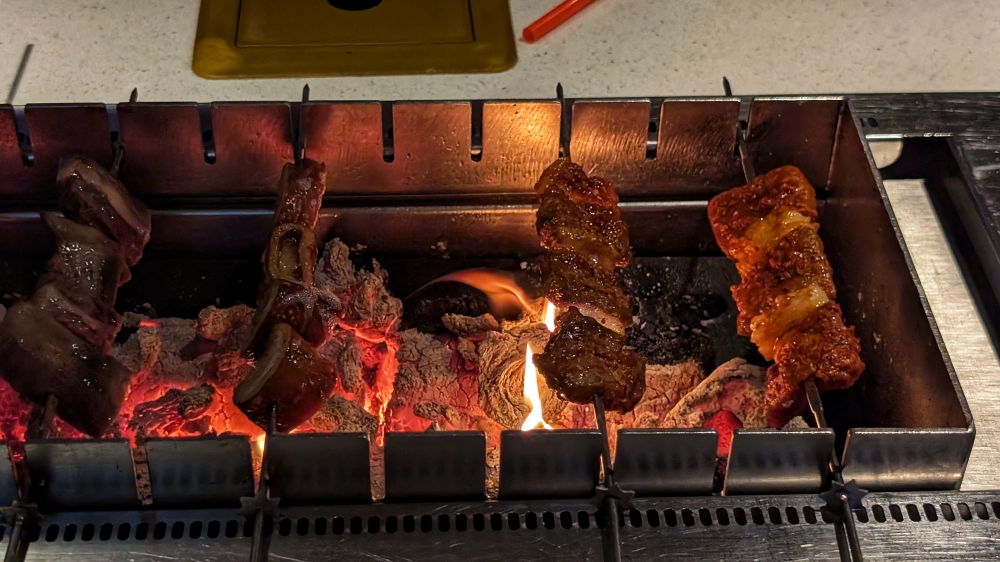
The centrepiece is an automatic rotating grill that does all the work for you, as long as you slot the skewers into the grooves correctly. Behold: the pleasures of modernity.
Next, order by skewer. The menu is extensive, a wild catalogue from which highlights include the signature lamb skewer (RM3.98), signature beef skewer (RM3.98), Xinjiang lamb skewer (RM3.80), marbled pork collar (RM3.80), beef tendon skewer (RM3.98), grilled beef tongue (RM3.80), and pork intestine skewer (RM3.50).
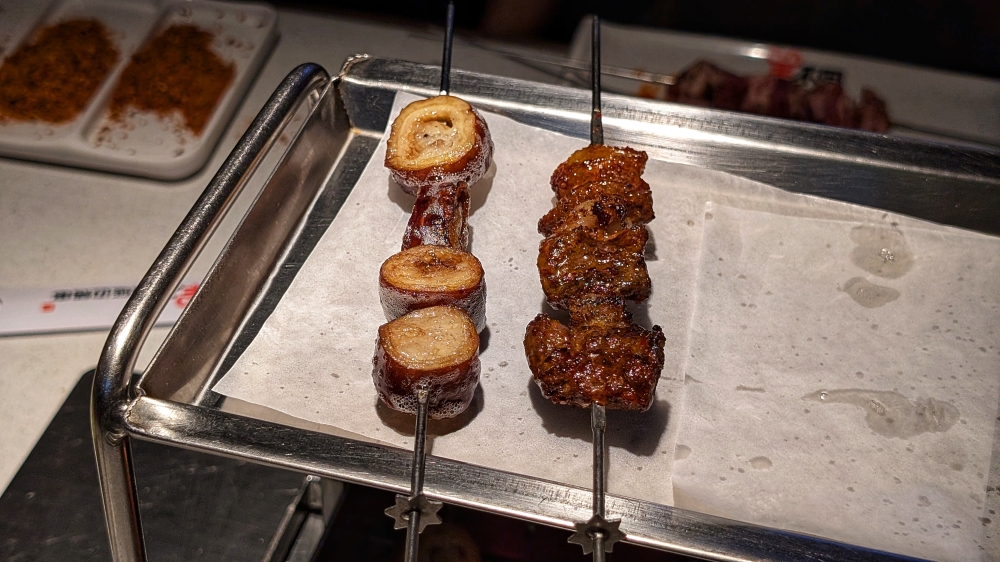
The lamb is the tastiest, its rendered fat luxuriating in the warmth of cumin. The beef is leaner, its muted flavour better suited to those who don’t enjoy the gaminess of lamb (though one wonders why they’d come here at all).
But it’s the offal that ends up stealing the show. The tendon is chewy and snappy, the tongue firm yet yielding, and best of all, the intestine, fattier than one might expect, becomes soft yet crispy once all that fat renders out. Simply divine.
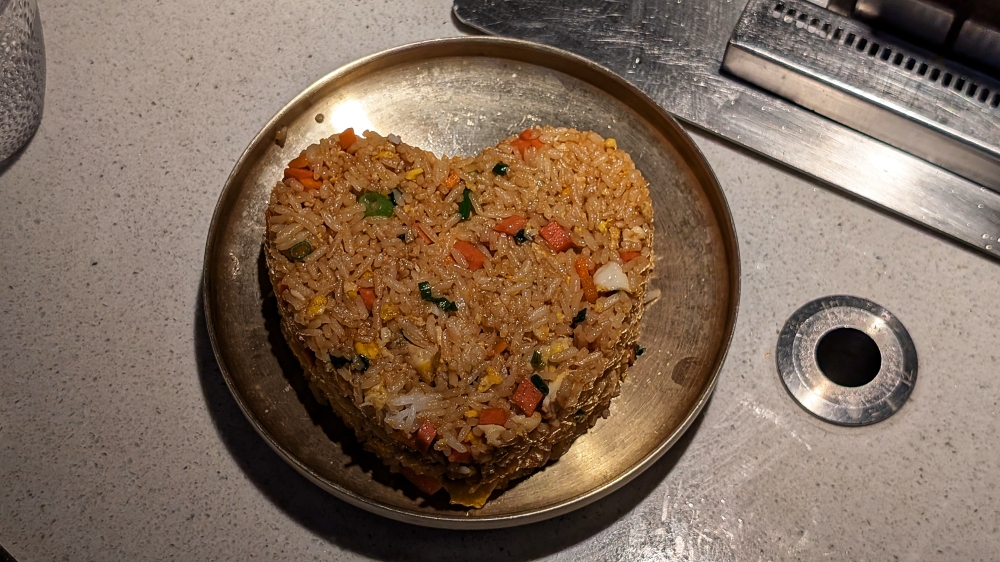
Perhaps the biggest surprise comes from the kitchen’s cooked dishes. Among them is the unassuming but excellent egg fried rice (RM12), hilariously kitsch in the shape of a heart, but fluffy, salty, and perfectly tailored for taste buds numbed by alcohol and spice.
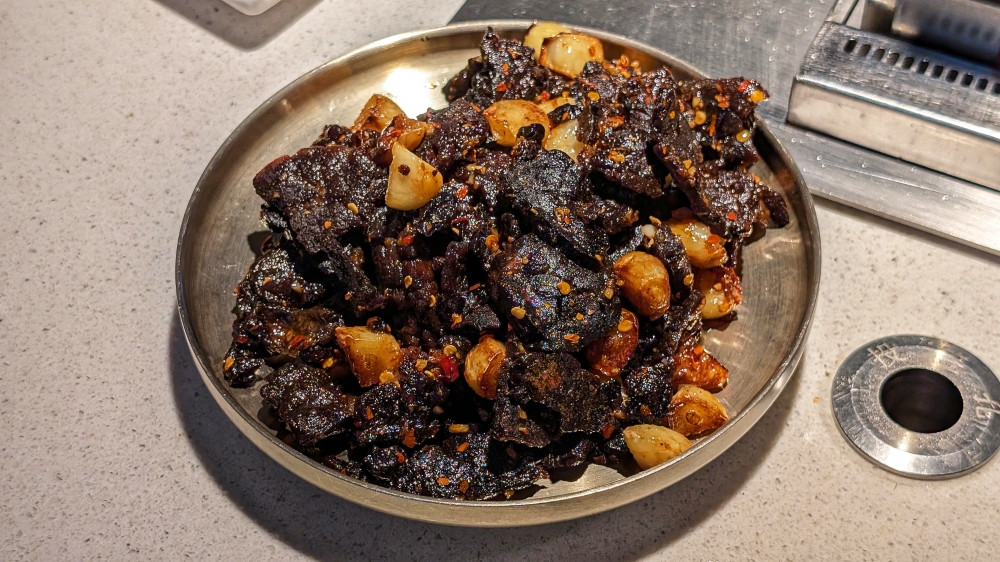
Then there’s the spicy stir-fried beef lung (RM28), which is unbelievably good. Spicy and showered with whole cloves of sweet, soft garlic, a plate of this is like the best paru goreng berlado you’ve ever had in your life.
Most importantly, the lung is light and crispy, not the dreaded rubbery, powdery texture that so often plagues the organ.
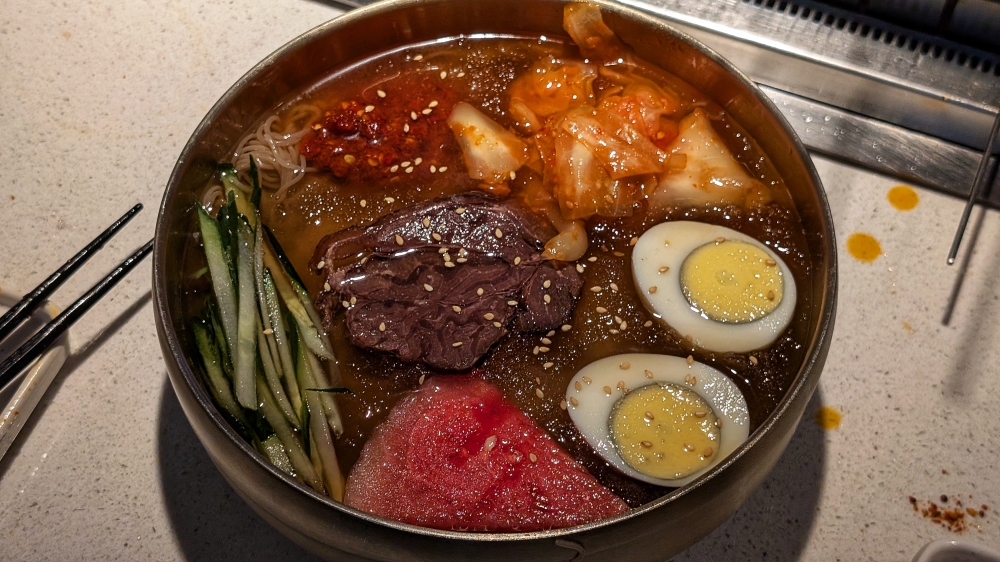
We ended the meal in true-blue Yanbian style, with Yanbian cold noodles (RM19.80), which differ slightly from the typical North Korean mul naengmyeon.
Alongside the usual toppings of kimchi, sliced cucumbers and boiled eggs, the noodles were a little chewier than you’d expect from buckwheat (possibly made from sweet potato), and the ice-cold, slightly slushy broth was distinctly sweet and sour, both trademarks of Yanji-style leng mian.
It’s the ideal palate cleanser, stripping your mouth of spice, salt and oil, and after all that heat and smoke, nothing feels better than the chill of those noodles.
Yum Yum BBQ Imbi Yang Bu Tong 羊不同 Imbi
19, Jalan Kamuning,
Imbi, Kuala Lumpur.
Open daily, 12pm–2am.
Tel: 03-2110 2650
* This is an independent review where the writer paid for the meal.
* Follow us on Instagram @eatdrinkmm for more food gems.
* Follow Ethan Lau on Instagram @eatenlau for more musings on food and self-deprecating attempts at humour.


