










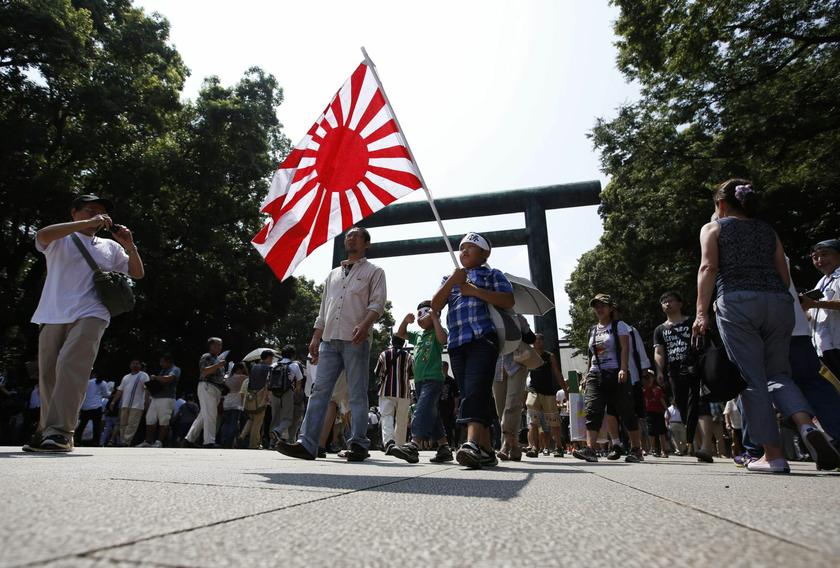


TOKYO, Aug 15 — Japanese Prime Minister Shinzo Abe avoided visiting a Tokyo shrine on the anniversary of the country’s World War II defeat, sending a donation instead in an attempt to avoid new damage to regional ties.
Two members of Abe’s cabinet paid their respects at the Yasukuni Shrine, seen by many in Asia as a symbol of Japan’s past military aggressions. A group of about 90 lawmakers, including the policy chief of Abe’s ruling Liberal Democratic Party, prayed together at the site.
“I sent a donation to mourn and offer my thanks to those who fought for the country and gave their precious lives,” Abe told reporters today at his official residence in Tokyo. “This is a day to pray for peace.” He declined to comment on whether or when he would visit the shrine again.
Visits to Yasukuni by senior government officials risk worsening ties with China and South Korea, both of which are embroiled in territorial disputes with Japan. The site commemorates Japan’s veterans, including 14 convicted war criminals, and visits by politicians risk reviving ill feelings in countries that suffered under Japanese occupation.
“Japanese leaders should show their courageous leadership to heal wounds of the past so that both countries can develop as a true cooperative partner that the people of the two nations hope for,” South Korean President Park Geun Hye said in a speech in Seoul marking the end of Japan’s 35-year occupation of the peninsula that began in 1910.
Disputed islands
Ties with China have deteriorated since Japan bought three of five East China Sea islands last September that are also claimed by China. Trade and investment links between Asia’s two largest economies have been damaged, and no bilateral summit has been held for more than a year. Japan is also embroiled in a territorial spat with South Korea over another set of islands.
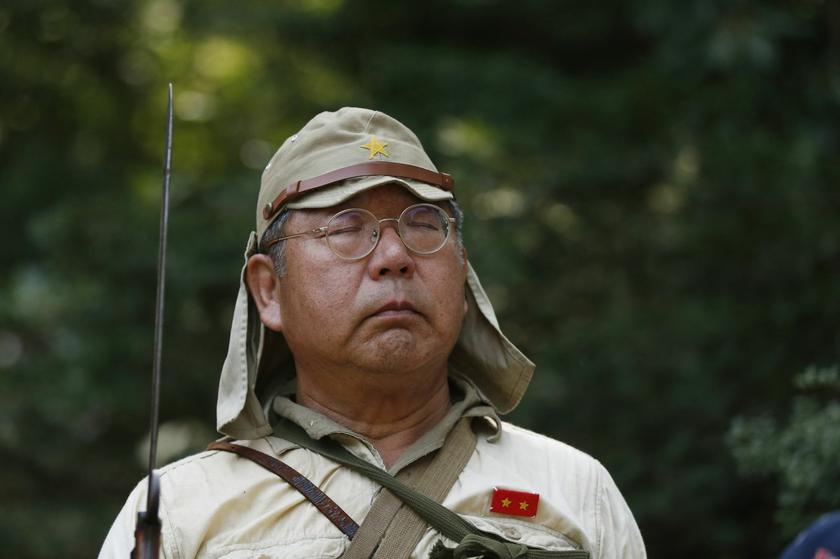
Internal Affairs Minister Yoshitaka Shindo told reporters he had paid his respects as a private individual. National Public Safety Commission chairman Keiji Furuya said at the site that it was not for other nations to dictate whether Japanese officials could honour the country’s war dead.
Abe, who is also seeking to avoid alienating nationalist supporters of his plans to strengthen the military and revise Japan’s US-drafted pacifist constitution, declined to say if he would visit Yasukuni again, adding he did not want it to become a political issue. He paid his respects there last year before coming to power in December elections and will offer prayers today at the Chidorigafuchi National Cemetery.
Looking to future
“I think his decision today is one that’s very clear, very thoughtful and looking toward the future,” Robert Mendendez, chairman of the US Senate Foreign Relations Committee, told reporters after a brief meeting with Abe at his official residence. Such efforts to avoid being “cemented in the past” were good for Japan, he said.
US pressure may have contributed to Abe’s decision to avoid Yasukuni, Lu Hao, a researcher in the Japan research department at the Chinese Academy of Social Science wrote in China’s official People’s Daily today.
“The US fears that Japan, because of excessive historical revisioninsm, will cause relations with neighbours to deteriorate, which will lead US relations with Asia-Pacific nations into a conundrum,” Lu wrote.
Chief Cabinet Secretary Yoshihide Suga reiterated that it was a matter of course for Japanese to mourn the war dead and said the government would not express a view on Abe’s decision.
“South Koreans will inevitably chafe at a Yasukuni visit by top Japanese officials,” said Lee Won Deog, director of Japan studies at Seoul’s Kookmin University. “The shrine is a symbol of past sufferings to victims,” he said.
Praising Nazis
Finance Minister Taro Aso visited Yasukuni earlier in the year, sparking the cancellation of a planned visit by South Korean Foreign Minister Yun Byung Se. Aso has also attracted criticism for a speech last month in which he said the government could learn about how to change the constitution from the Nazis. He later retracted the remarks.
Chinese Foreign Ministry spokesman Hong Lei said Japanese leaders’ attitudes toward Yasukuni will show whether the nation can examine its history and respect the feelings of victim countries, the official Xinhua News Agency reported. He urged Japan to reflect on its past aggression in the region, Xinhua said. — Bloomberg