













CAIRO, July 8 — Egypt’s new leadership scrambled to overcome differences that have delayed the naming of a prime minister, seeking to fill a political vacuum as supporters and opponents of ousted Mohamed Mursi rallied across the nation.
Against the backdrop of protests and the threat of violence, Ziad Bahaa-Eldin, a former lawmaker and ex-head of the Egyptian Financial Supervisory Authority, emerged as a strong candidate for the premiership, Ahmed El-Meslemani, media adviser to army-installed interim President Adly Mansour, said by phone.
Opposition leader Mohamed El-Baradei, whose own nomination for prime minister was opposed by a key Mansour ally, is being discussed as a potential vice president, the adviser said, adding announcements may be made today.
The military forced Mursi out, just a year into his term, after months of discontent with his leadership came to a head in days of mass protests.
Hundreds of thousands took to the streets to demand he step down, accusing him of betraying the 2011 revolution that toppled Hosni Mubarak by grabbing power for his Islamist backers and exacerbating Egypt’s economic plight and political rifts.
The turmoil convulsing Egypt after Mursi’s removal sparked clashes on July 5 that killed about three dozen people and wounded more than 1,000. Compounding the unease is what Mursi’s backers say has been a crackdown on the Muslim Brotherhood, the group from which Mursi hailed.
Bahaa-Eldin told Al Hayat television late yesterday that he was “seriously” considering the job of prime minister. “The difficulty is that the country is severely divided,” he said.
“We now need a national project that people can unite around” regardless of ideological differences.
Salafi Opposition
The Salafi Nour Party, which opposed naming ElBaradei as prime minister citing his opposition to Islamist groups, appeared divided over Bahaa-Eldin. Nour official Ibrahim Abaza said that while the party was yet to take a final decision on its support, it favored a non-political figure for the post. Bassam Al Zarqa, a deputy leader of the party, had earlier described Bahaa-Eldin as a “qualified, respectable, liberal figure” on Al Hayat.
Mansour faces the challenge of lifting the Arab world’s most populous nation from its political crisis, a situation made worse by a weak economy. Net international reserves fell to US$14.9 billion (RM47.5 billion) in June, the central bank said yesterday, less than half the level when Mubarak was overthrown.
Growth is near its feeblest in two decades and unemployment at a record 13.2 per cent. A bid for a US$4.8 billion International Monetary Fund loan has yet to be accepted, and the country has been relying on aid, primarily from Qatar.
Shares Fall
The EGX 30 Index fell 0.4 per cent yesterday, the most since June 23, to 5,311.51 at the close in Cairo. Shares valued at about 525 million pounds (US$75 million) traded compared with a six-month daily average of 304 million pounds. The measure surged 14 per cent last week, the most since the week ended June 28, 2012, when Mursi was declared president.
“Building and maintaining a level of consensus and inclusivity in governance that was so lacking under Mursi is key for the transitional government,” Oliver Coleman, senior Middle East analyst at Maplecroft, a risk analysis company in Bath, England, said in a response to e-mailed questions. “If they are to avoid constant and potential violent protests, this will mean bringing the Muslim Brotherhood into the process to end the polarization that has caused this crisis. If they don’t manage this, the divides will remain.”
Egypt’s ambassador to the US, Mohamed Tawfik, said on ABC News’ “This Week” that members of the Brotherhood need to acknowledge the mistakes that they made, and should join the national dialogue so elections can take place “as quickly as we possibly can put it together.”
Military Protection
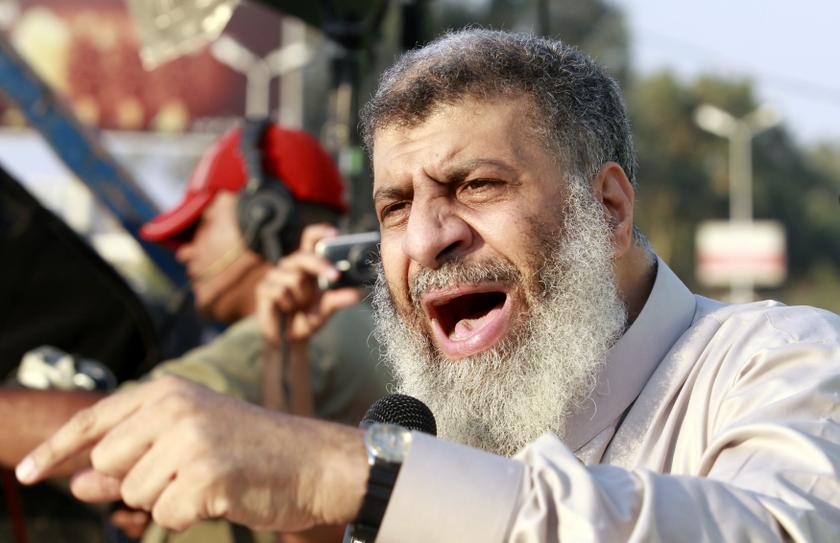
Waving Egyptian flags, anti-Mursi protesters descended on the iconic Tahrir Square and on a presidential complex in Cairo yesterday. Backers of the ousted Islamist president also gathered including in the capital’s Nasr City district, with some chanting “Mursi is my president,” according to television footage.
The military vowed to protect “peaceful protesters in all of Egypt’s squares” and warned against any “provocative acts” in a statement on the Facebook page of its spokesman.
“Our country is finally back and we shall defend what we have achieved,” 19-year-old Ahmed Ali, who took part in one of the marches to Tahrir, said yesterday. “There’s no place for those who use Islam to deceive and control people in the new Egypt.”
Mursi’s supporters decry what they say is a “military coup” and say they want him re-instated.
The National Coalition for Supporting Legitimacy, an alliance of groups backing Mursi, said in an e-mailed statement that it will continue with “peaceful escalation” to achieve its ends.
Standing in front of a group of opposition and religious figures late on July 3, Defense Minister Abdelfatah al-Seesi said Mursi had “failed to meet and conform with the demands” of the people. – Bloomberg