










NOVEMBER 20 — Does anyone still care about Bersih? I have been wondering. Ten years ago, on November 19, 2016, Malaysians came out in yellow for Bersih 5.
Bersih, the electoral reform coalition that grew into something much larger, turns 20 this month.
I had hoped to feel a little happier about the anniversary, but looking at where Malaysian politics has taken us, I find myself with rather mixed feelings.
I have spent a rather large part of my academic life with Bersih: a doctoral thesis, an academic book, journal articles, public commentaries, and numerous media interviews over the years.
When I started, some wondered why I took a protest movement so seriously. Would it last? Could it really change anything? Was it worth spending years studying?
Those were also years when the political climate was far less forgiving, when even being associated with a protest movement could invite intimidation.
Maybe I was naive, but I believed there was something important happening among those ordinary Malaysians who had decided to come together.
We have a much longer history of protest than we sometimes care to remember. There were the demonstrations against the Malayan Union in 1946, the Teluk Gong land struggle in 1967, the farmers’ protests and student demonstrations in Baling in 1974, Reformasi in 1998, Hindraf in 2007, the anti-Lynas movement and Himpunan Hijau in the early 2010s, alongside countless labour, environmental and student struggles.
These movements had different grievances, political orientations and visions of the country.
Bersih belonged to this larger history, but did something remarkable in its own right. It brought Malaysians who disagreed about plenty of other things together around a common demand: clean and fair elections.
Of course there were interests involved. Parties saw opportunities, organisers disagreed, and participants carried different hopes into the crowd.
Movements are coalitions, not collections of saints. I have written about those tensions myself. But treating Bersih as merely opposition politics misses what happened among ordinary people.
I think of the yellow gatherings organised by Malaysians overseas, far from Kuala Lumpur. And in May 2018, when postal ballots arrived so late that volunteers carried them on flights, passed them from person to person, and delivered them to returning officers. People changed their plans to carry somebody else’s vote. They simply believed the ballot mattered.
I still find that more moving than most speeches about patriotism.
One thing I have learned from studying social movements is that their significance cannot be measured simply by whether they succeed in changing a government or achieving their demands.
Sometimes their more enduring contribution lies in how people begin to see themselves, their place in politics, and what they can accomplish together.
I think those small acts of solidarity, including the extraordinary effort to bring postal ballots home, tell us something about that.
Not everyone involved was necessarily a Bersih activist, and that is precisely the beauty of a movement. It would be a terrible mistake to judge all of that simply by what became of the politicians who later came to power.
Then came 2018. A government changed, and we had reason to hope something deeper might change too.
Yet the years since have shown us how flexible Malaysian politics can be when powerful people need one another. Former enemies become coalition partners. Old declarations are quietly revised. We are told this is maturity, the necessary art of compromise.
What I find particularly disheartening is the possibility that we have not only lost our appetite for street protests, but also our faith in what they can achieve.
I have heard the argument that Malaysians are doing reasonably well economically, so there is little reason to take to the streets anymore. I wish it were that simple.
It is rather convenient to mistake the absence of protests for public satisfaction. People may still be angry, disappointed, or deeply concerned about the direction of the country, but no longer believe that gathering in the streets will make much difference.
Also, it hardly helps that we continue to associate protests with chaos and violence, as though citizens gathering peacefully are somehow a danger to society.
Violence should never be excused, but peaceful assembly is a constitutional right under Article 10. What troubles me is not simply that fewer people seem willing to protest, but that we may be losing faith in one of the very ways ordinary Malaysians once believed they could change their country.
Anwar Ibrahim’s political life is inseparable from Reformasi, yet his government now includes Barisan Nasional (BN).
In April, three activists were arrested after protesting during the anti-corruption chief’s speech. In August, groups gathered outside the Home Ministry to demand progress on reforming the Peaceful Assembly Act. We are still protesting the restrictions on protest.
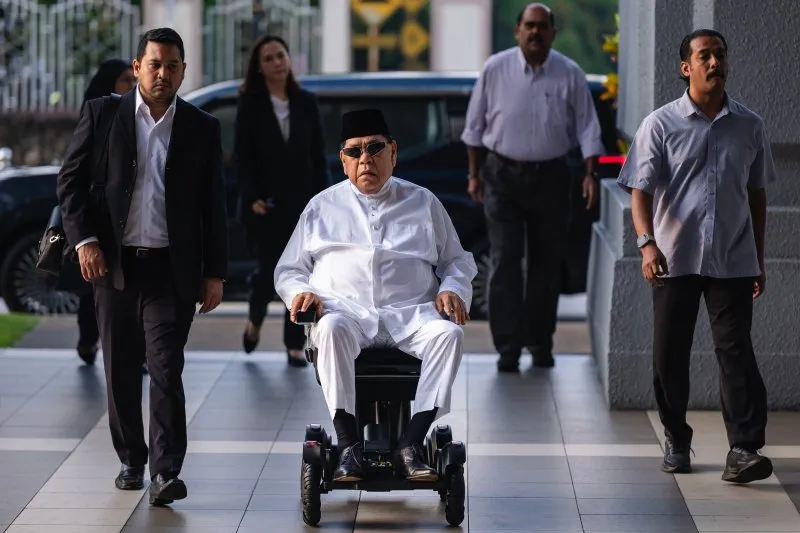
And now Najib Razak is home, though still under house arrest. But on the tenth anniversary of Bersih 5, it is hard not to think of the thousands who took to the streets demanding accountability, and to wonder what they are thinking now. What a strange anniversary this has become.
None of this means Bersih achieved nothing. Undi18 and automatic voter registration widened participation.
In 2025, the Federal Court struck down the criminal penalty for failing to notify the police ahead of an assembly. These are real gains. Bersih helped create a public that expected more. Disappointment should not make us careless about that history.
When I began studying Bersih, perhaps naively, I imagined that one day my research would feel like history. Instead, here I am, still asking many of the same questions, and wishing we had moved further than we have.
Could there be another Bersih? I don’t know, and maybe we should not expect the next generation to recreate what came before.
Movements emerge from their own circumstances, and younger Malaysians will have their own grievances and ways of making themselves heard. Some may even find themselves protesting against people who once marched in yellow.
* Khoo Ying Hooi, PhD, is an Associate Professor at Universiti Malaya. Her doctoral research on the Bersih movement was published as a book in 2020, titled, “The Bersih Movement and Democratisation in Malaysia: Repression, Dissent and Opportunities”.
** This is the personal opinion of the writer or publication and does not necessarily represent the views of Malay Mail.