








KUALA LUMPUR, Nov 20 — Chef Masashi Horiuchi had just stepped out of the shower on his day off when he finally looked at his phone.
It had been pinging for a while. The first message he opened was from his head chef at Entier, his first restaurant in Malaysia. He assumed it was urgent.
It read: “Congratulations, chef!”
He hadn’t realised it was announcement day. “I thought, ‘Oh, that’s it? That’s good!’” Then the rest arrived — from long-time customers, from the bosses, from everyone who has backed the team since he came to Malaysia.
He went through the messages one by one, trying to give each an honest reply, and couldn’t keep up. “I felt surprised when I first heard the news.”
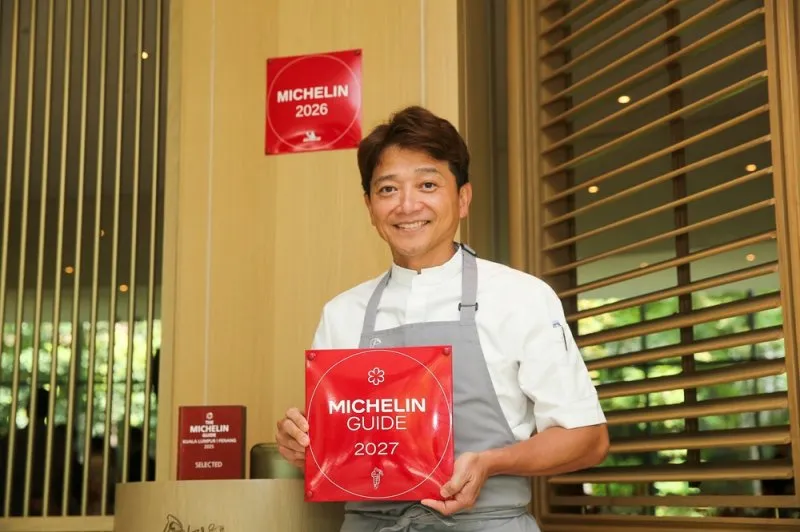
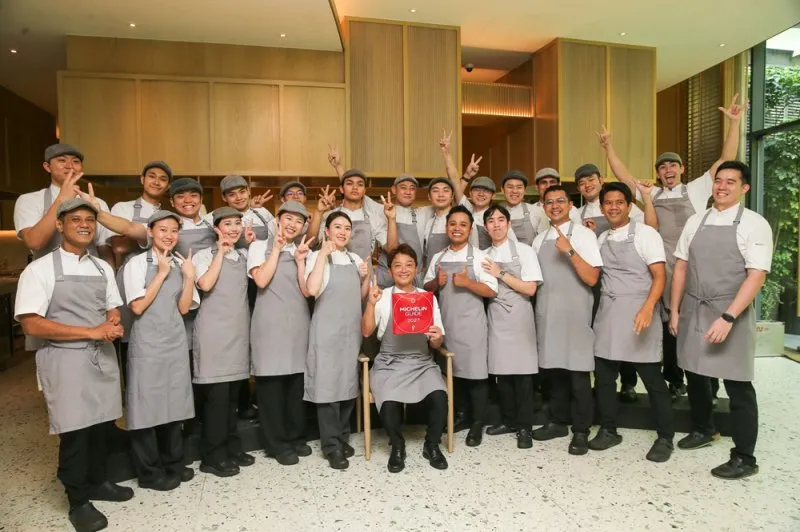
Potager, the contemporary French restaurant in Bamboo Hills, had earned its first Michelin star in the Michelin Guide Kuala Lumpur & Penang 2027, as announced on November 4 by press release rather than a ceremony. It had been listed as Selected in the two previous editions.
“To finally get this recognition is amazing, and my heart feels the happiest it’s been in a while,” he says. “It’s a dream come true.”
Horiuchi, 53, worked in Michelin-starred kitchens in Lausanne, Alsace, Bourg-en-Bresse, Paris and London for two decades before coming to Malaysia.
Among the chefs he worked under was Georges Blanc, whose restaurant in Vonnas has held a Michelin star since 1929, longer than any other.
Another was Antoine Westermann, who in 2007 asked the Guide to remove the three stars from Le Buerehiesel, his restaurant in Strasbourg.
Horiuchi’s last post in Europe was five years as sous chef at L’Atelier de Joël Robuchon in Covent Garden, which has since closed.
What he took from those years, he says, is simple. “It’s the simple basics I teach my team every day: the fundamental point of hospitality is to create a pleasant experience for guests. Don’t disappoint the customer. That’s it.”
It goes beyond French cooking: “any category of restaurant needs to provide a pleasurable experience for its customers to keep them coming back.”
Malaysia was not the first stop after Europe. Singapore was, and it was “quite a shock.”
Singapore’s ingredients were the first thing he noticed. “All the ingredients are imported from Japan, France, Australia, etc., to cook in a small kitchen; everything is ordered and feels unnatural.”
The feeling went beyond the kitchen. He says he sometimes felt the Singapore “system” was “fake,” then corrects himself: not fake, but unable to get the original, so it arranges what it can get into whatever is wanted.
He found that disappointing. A restaurant spends heavily, brings in a big-name chef, and closes within a few years.
In his words, diners at a Michelin-starred restaurant there aren’t there to appreciate what the chef wants to cook, or the message of the food, or to understand the wine. “It’s not about that.” He expects Singaporeans will be angry with him for saying so.
The most complaints he ever got were in Singapore, he says. Guests wanted dishes arranged their way. “I’m not saying to give in to the chef’s ego, but I learned this style of cuisine in France, so I’m following French recipes. It’s not my ego.”
He grants that the city is cosmopolitan, with many kinds of guests who each need handling differently.
There were supporters, chef Julien Royer of three-Michelin-starred Odette among them, and a few collaborations that “really opened [his] mind beyond just the French way, to be more flexible in making [his] style of ‘original’ cuisine.”
Then Malaysia became a possibility. “And why not? There are so many potential ingredients for farm-to-kitchen, which is much more aligned with my cooking philosophy; that’s why this restaurant is called Potager.” The word is French for a vegetable garden.
He came in 2018 to open Entier first — French for “whole” or “entire” — and the refined brand of nose-to-tail dining proved a hit.
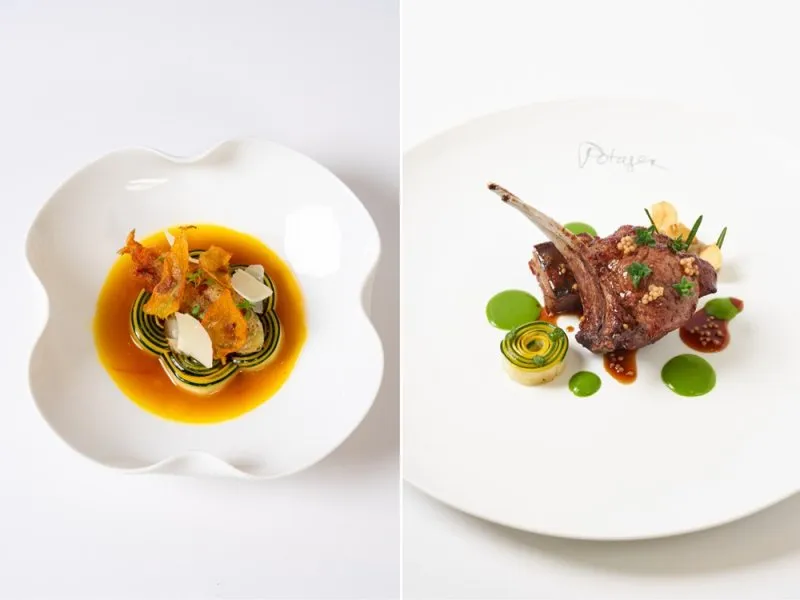
After five years, he followed up with Potager, whose tagline is “the hands that laboured”: the Malaysian farmers and producers whose ingredients he intends to shine a spotlight on.
“We’ve had many farmers become friends who support me and our kitchen, and we’re really lucky that we can create original dishes to showcase the ingredients.”
Today, he is far from the only chef in Kuala Lumpur cooking this way, and he is quick to credit a peer. “To me, Darren Teoh is a pioneer of what can be done with ingredients from this country.” Teoh runs Dewakan, which holds two Michelin stars.
“He’s very smart, cooking contemporary Malaysian cuisine with these ingredients after coming back from Noma. It makes a lot of sense to me.” Teoh also has “a bit of a French culinary background, so we think similarly,” Horiuchi says, and the two stay in regular contact.
Horiuchi still leans French in his approach, but goes looking for it in Malaysian ingredients. “I wanted to convey that feeling of spring in France, when ingredients are great,” he says. “I’ve found quite a few Malaysian ingredients that I’m happy to use consistently.”
But sourcing from small farms means an uneven supply, and he doesn’t pretend otherwise. “Yes, it is a challenge.”
The relationships have grown strong since the start, and the farmers know a shortfall is a problem for the kitchen and for guests. “Still, we have to adapt every day and work with what we have on the day itself.”
What he hadn’t planned on was the return of a familiar face: Michelin.
“Honestly, the first year that Michelin arrived in Malaysia, it gave me a headache.” That was 2022: the Guide announced its Malaysian debut in October and unveiled its first Kuala Lumpur and Penang selection that December.
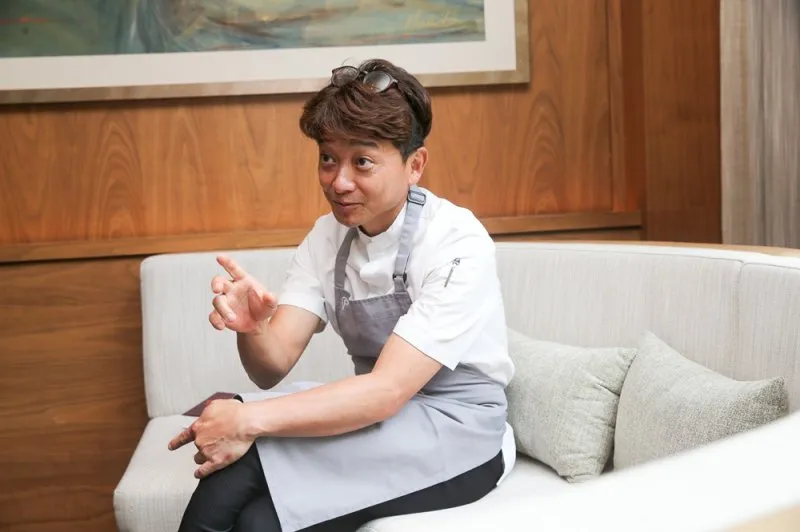
After over 20 years of working under that kind of stress in Europe, he had come to South-east Asia hoping for less of it. “I just wanted to focus on enjoying cooking for the customers and myself.”
Then Teoh came to him with news. “‘Chef! Malaysia is getting a Michelin Guide, confirmed.’ I thought, ‘Oh, sh*t. I’m not ready.’”
Potager was still in development. He knew from experience what the Guide would ask of a restaurant: the quality and level of detail, in hospitality and in what he calls “human discipline and mentality.” The restaurant, he says, “wasn’t ready yet.”
Potager opened in late 2023. Then came 2024, and a diagnosis of stage 3 lymphoma.
“I got cancer when Potager had only been open for a few months.” Many collaboration dinners with chef friends had been arranged to bolster the new restaurant, and he was forced to cancel many of them.
“It was a real shock. When you cannot work, it feels so hard; my heart was literally in pain. I couldn’t stand in the kitchen.”
Treatment took away his sense of taste. Asked how bad that is for a chef, he does not sugarcoat it: he says he wanted to end his life.
“I couldn’t even drink. If I drank water, I would vomit. My weight dropped to 43 kg. I was skin and bones.”
He credits his wife with supporting him through the worst of it, which she has done for many, many years. “My wife has supported me a lot ever since London,” he says.
He would leave for work early and come home late, in the first years of their life together, he told her that a chef is not an easy husband.
“And I said, ‘Are you sure?’ And she said yes, and she’s supported me ever since.” He has known her since they were children; he went to London first, and she followed.
In November 2024, Potager entered the Michelin Guide, listed as Selected. A year later, it was Selected again.
Many of his fellow chefs had expected a star, if not in the first year then in the second, and were surprised when it didn’t come.
Horiuchi was not. Customers asked him why Potager had no star, and so did some of his own team. “For me, the results are the results; I know what points can be improved and what we need to do more.”
When the star came, he congratulated the team, and repeated a simple mantra that he ultimately wants to pass on to the kitchen: that if they never give up, they can achieve anything, including results like this.
But life has a way of shifting priorities. “Darren Teoh always says the most important thing is family,” Horiuchi says. “Of course, this has always been a priority for me. But now I have a new priority. To have no regrets when I die. Even if I die tomorrow, I want to have no regrets.”
His son and daughter, who he says are “quite big now”, are both swimmers, “quite good,” and though still young, dream of the Olympics.
At New Year’s this year, he asked each what their target was for the year. Both said the same: a personal best. Then his son asked what his goal was.
“I just said, ‘I think I want to get a Michelin star’, but I didn’t expect it!” He burst into laughter. On that day, he messaged his son, already at school: “Hey, your papa got a Michelin star.” He laughed again.
When asked where he wants Potager and the team to be in five years, he is focused on the team: “We try to continue to progress and improve the whole team, to make better-quality restaurant and hospitality experiences that are on an international level.”
Will he push for a second star? “Yeah, why not? Yes. Darren Teoh [Dewakan] has two stars; why not us? We will try to achieve it. Never give up, you know?”
* Follow us on Instagram @eatdrinkmm for more food gems.
* Follow Ethan Lau on Instagram @eatenlau for more in-depth conversations.
* If you are lonely, distressed, or having negative thoughts, Befrienders offers free and confidential support 24 hours a day. A full list of Befrienders contact numbers and state operating hours is available here: www.befrienders.org.my/centre-in-malaysia