











NOVEMBER 20 — The discovery of dangerous drugs at the Royal Malaysian Air Force (RMAF) base in Subang on November 17, 2026, is a serious matter that must not be underestimated.
It raises questions not merely about individual misconduct but also about the integrity, discipline and operational security of Malaysia’s armed forces.
Yet the incident also demonstrates something important. The military’s internal inspection procedures were sufficiently effective to uncover suspicious activities within its own premises. This deserves recognition.
According to an official media statement issued by Defence Minister Datuk Seri Mohamed Khaled Nordin on November 19, the Ministry of Defence views the incident with utmost seriousness.
The statement confirmed that the RMAF conducts regular internal inspections to ensure that its organisation remains free from drug-related activities.
Indeed, this was the first such discovery during its routine inspections.
The incident was detected by RMAF personnel themselves while conducting routine checks on luggage intended to be loaded onto an RMAF aircraft at the Air Movement Building (AMS), Subang Air Base.

The inspection uncovered five suspicious pieces of luggage and one box.
The discovery was immediately reported to the RMAF Central Zone Investigation Branch, which subsequently contacted the Narcotics Criminal Investigation Department of the Royal Malaysia Police (PDRM) in Bukit Aman.
At approximately 5.20pm on November 17, police personnel arrived at the location and confirmed that the materials discovered were dangerous drugs.
All five pieces of luggage and the box were seized as evidence.
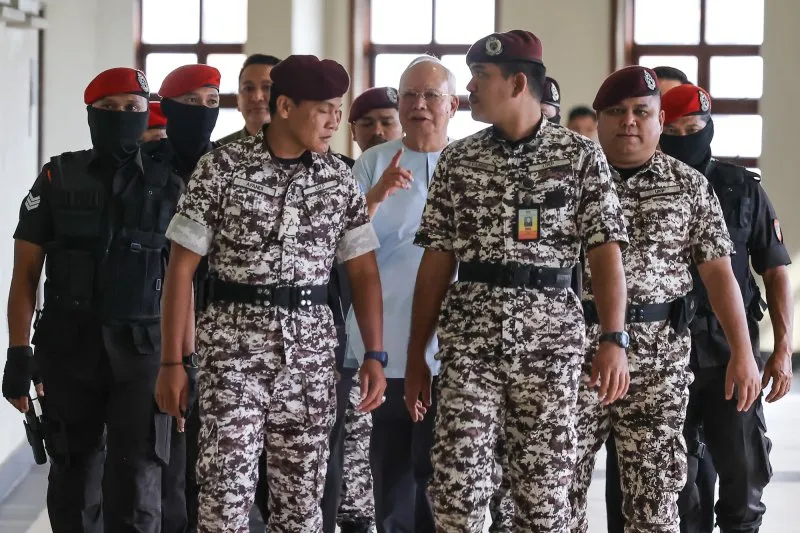
More seriously, five RMAF officers suspected of involvement were detained by the police.
The RMAF immediately handed the case over to the police for further investigation and pledged its full cooperation throughout the investigative process.
The Ministry of Defence has also declared that it will not compromise with any criminal activity.
Firm action will be taken against personnel proven to have been involved or complicit.
The ministry further emphasised transparency, accountability and intensified internal inspections and enforcement operations to ensure that the Malaysian Armed Forces remain free from drug-related activities.
These are the essential facts contained in the official statement. However, the broader implications deserve careful examination.
Military discipline is a matter of national security
An air force is not an ordinary organisation. It operates sophisticated aircraft, manages sensitive military installations and handles personnel and equipment that are indispensable to national defence.
Any attempt to exploit military facilities or aircraft for the movement of prohibited substances represents a potentially serious breach of institutional trust.
The fact that the suspicious luggage was intended for loading onto a military aircraft makes the incident particularly troubling.
Military aviation operates within a system of restricted access, operational authorisation and security procedures.
These safeguards exist precisely because military assets must never be misused for unauthorised purposes.
If drugs can be introduced into the military logistics chain, questions must be raised about the adequacy of existing controls.
However, these questions must be addressed through evidence rather than speculation.
The police investigation must establish the origin of the drugs, their intended destination, the identities of those responsible and whether any wider network was involved.
The official statement does not establish that the drugs were successfully transported, nor does it identify an organised trafficking syndicate.
It would therefore be premature to draw such conclusions.
Nevertheless, the discovery warrants a comprehensive review of the procedures governing military cargo, baggage inspections and access to aircraft.
The RMAF deserves recognition for detecting the incident There is another side to this episode that must not be overlooked. The suspicious luggage was discovered by RMAF personnel conducting their own routine inspection.
The military did not wait for an external agency to uncover the problem.
Its personnel identified the suspicious items, reported them through the appropriate channels and involved the police.
This is how an accountable military institution should function.
An organisation’s integrity cannot be measured solely by whether misconduct ever occurs.
It must also be assessed by its ability to detect wrongdoing, respond decisively and cooperate with independent law enforcement.
In this respect, the RMAF’s immediate response provides an important example of institutional responsibility.
The Ministry of Defence under Datuk Seri Mohamed Khaled Nordin has likewise adopted the appropriate position by publicly acknowledging the incident rather than concealing it.
Prime Minister Datuk Seri Anwar Ibrahim also gave a press conference in Shenzhen, China on the importance of addressing this issue head-on.
Transparency is essential to maintaining public confidence. Yet transparency must be accompanied by sustained institutional reforms.
Zero tolerance must apply regardless of rank
The detention of five RMAF officers suspected of involvement is particularly serious.
Military personnel are entrusted with responsibilities that extend beyond ordinary public service.
They are expected to uphold discipline, loyalty and professional conduct.
Any proven involvement in drug trafficking would constitute a profound betrayal of that trust.
Nevertheless, those detained remain suspects unless and until their guilt is established through due process.
The presumption of innocence must be respected.
The principle of zero tolerance should therefore operate alongside the rule of law.
No officer should be protected because of rank, connections or institutional influence.
Equally, no individual should be condemned before the evidence has been properly examined.
A professional military must uphold both discipline and justice.
Malaysia cannot afford a culture in which wrongdoing is concealed to protect an organisation’s reputation.
Indeed, institutional credibility is strengthened when the authorities demonstrate that no individual stands above the law.
Malaysia’s strategic geography demands greater vigilance
Malaysia occupies one of the most strategically important locations in South-east Asia.
The Strait of Malacca, the South China Sea and the country’s extensive maritime and aviation networks place Malaysia at the intersection of major regional trade and security routes.
These advantages also expose the country to transnational criminal activities.
Drug trafficking networks have long exploited weaknesses in transportation, logistics and border controls across the wider region.
Military installations must remain especially resistant to such exploitation.
The incident at Subang should therefore encourage stronger coordination among the Ministry of Defence, the Malaysian Armed Forces, the Royal Malaysia Police and other relevant enforcement agencies.
The objective must not be to create unnecessary suspicion against military personnel.
Rather, it should be to strengthen safeguards that protect the overwhelming majority of officers and service members who perform their duties honourably.
Effective security procedures protect both national interests and the reputation of the armed forces.
Institutional integrity is a strategic asset
Malaysia’s armed forces have an important responsibility in preserving national sovereignty and regional stability.
Their effectiveness depends not only on aircraft, ships, weapons and military expenditure. It also depends on institutional integrity.
A military equipped with advanced technology but weakened by corruption, criminal infiltration or poor internal discipline cannot fulfil its responsibilities effectively.
Conversely, a military that detects misconduct and responds transparently strengthens public confidence.
This is why the Subang incident should be treated as an opportunity for institutional improvement.
The Ministry of Defence should review cargo screening procedures, strengthen internal compliance mechanisms and ensure that military personnel receive continuing education on the dangers of drug-related criminal activities.
There should also be appropriate safeguards for personnel who report suspicious conduct.
Whistle-blowers and conscientious officers must never fear retaliation for protecting the integrity of their institution.
Such measures would reinforce the message that military discipline is inseparable from national security.
The Defence Ministry must see the investigation through
The immediate response of Mohamed Khaled Nordin and the RMAF deserves acknowledgment.
But the ultimate test will come after the initial publicity subsides.
The police investigation must proceed independently and thoroughly.
Where evidence establishes criminal wrongdoing, appropriate prosecutions should follow. Where administrative or security weaknesses are identified, they must be corrected.
The Ministry of Defence should also communicate the broad findings and institutional lessons to the public when legally appropriate, without compromising investigations or operational security.
Malaysia’s military reputation should never depend on pretending that problems do not exist.
It should rest on the willingness to confront those problems decisively.
The discovery of dangerous drugs at Subang Air Base is undoubtedly disturbing.
Yet the fact that the RMAF uncovered the suspicious luggage through its own routine inspection also demonstrates that internal safeguards can work.
The challenge now is to ensure that they work consistently across the Malaysian Armed Forces.
National defence begins with institutional discipline. Without integrity, even the most sophisticated military assets cannot guarantee national security.
Malaysia must therefore insist on zero tolerance for drug-related criminal activities, full respect for due process and uncompromising accountability throughout its defence establishment.
That is how the RMAF can emerge from this incident not merely with its reputation intact, but with its institutional integrity strengthened.
* Phar Kim Beng, PhD is the Professor of Asean Studies at International Islamic University of Malaysia and Director of Institute of International and Asean Studies (IINTAS). Lutfy Hamzah is a research fellow at IITAS.
** This is the personal opinion of the writers or publication and does not necessarily represent the views of Malay Mail.